Key Takeaways
- The 17th European Space Conference emphasized Europe’s need for unity to maintain leadership in space exploration.
- ESA plans significant funding increases and developments in Earth observation with new satellite missions.
- Collaborations with commercial satellite companies will enhance the Copernicus programme’s data capabilities.
European Space Conference Focuses on Unity and Innovation
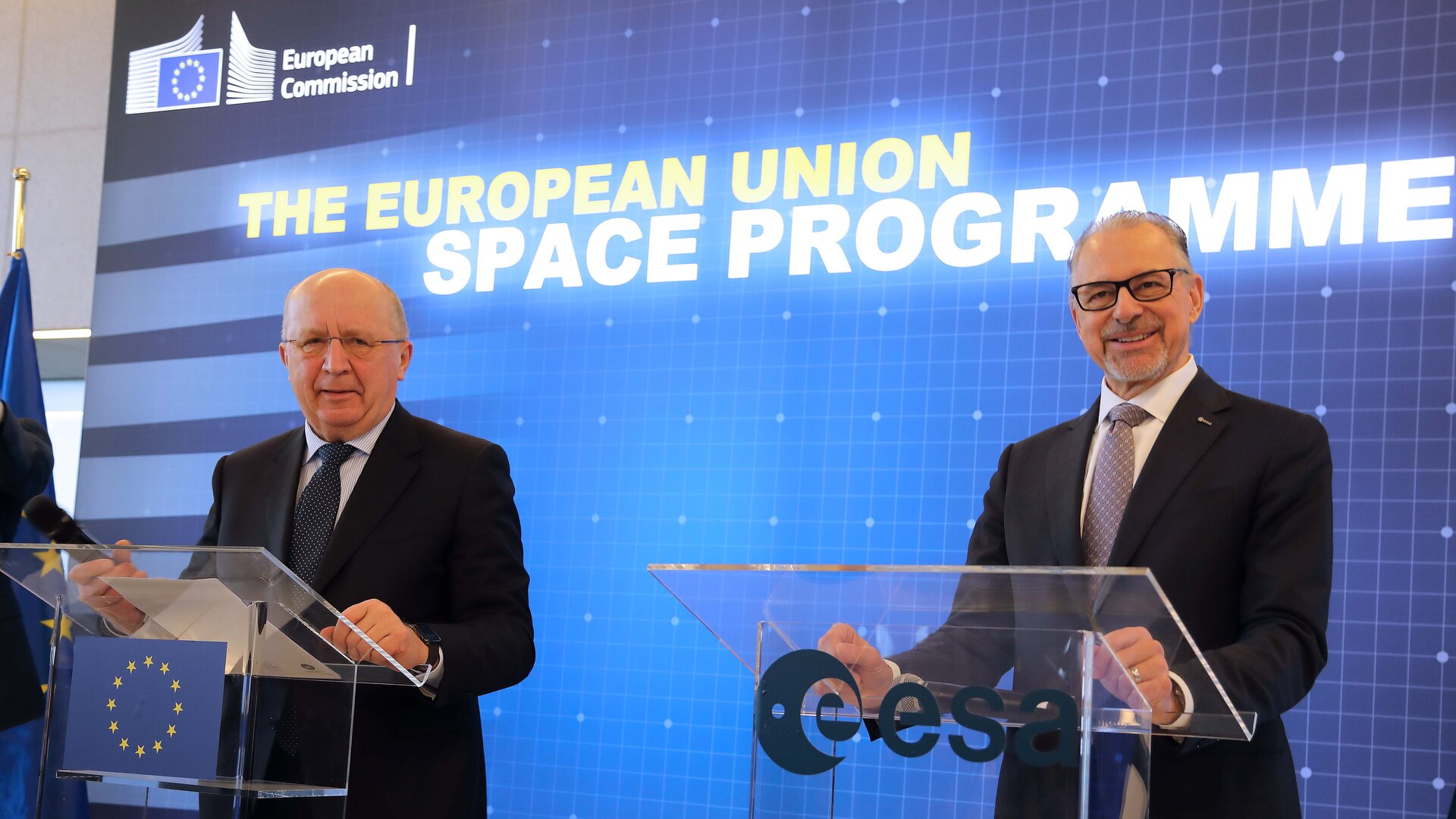
The 17th European Space Conference commenced on January 28, 2025, in Brussels, marking the first participation of Andrius Kubilius, the European Commissioner for Defence and Space. In his opening address, Commissioner Kubilius highlighted the critical need for unity within Europe’s space sector, asserting that “Who controls space, controls the future.” He emphasized the importance of the upcoming ESA Ministerial Council meeting, stressing that collaborative efforts are essential for maximizing investments and ensuring Europe remains a prominent player in space exploration.
ESA Director General Josef Aschbacher also addressed the conference, underscoring the necessity for increased funding at both the European Space Agency and EU levels. He articulated that achieving success in space requires “effort, vision, and determination.” The call to action focused on strengthening partnerships and delivering a comprehensive vision to elevate Europe’s space endeavors.
In the realm of Earth observation, ESA has made strides by securing a contract with Arianespace for the launch of the Sentinel-1D satellite. This satellite will be the fourth in the Copernicus Sentinel-1 mission and is scheduled to launch later this year aboard the new Ariane 62 rocket. Sentinel-1D will replace the aging Sentinel-1A, which has exceeded its expected operational lifetime of 11 years. The Sentinel-1 mission utilizes a pair of satellites in orbit to optimize global coverage and enhance data delivery.
Additionally, ESA announced an advancement in the launch timeline for the MetOp Second Generation satellite. This collaborative effort among ESA, Eumetsat, the European Commission, and Arianespace aims to deploy the MetOp-SG-A1 satellite, which includes the Copernicus Sentinel-5 mission, by August 2025. This satellite will monitor atmospheric trace gases crucial for understanding air quality and climate change.
In a further commitment to climate monitoring, the European Commission and ESA have commissioned the development of a third satellite for the Copernicus Anthropogenic Carbon Dioxide Monitoring mission. This third satellite will support expedited and extensive measurements of carbon emissions, thereby enhancing evaluations of climate mitigation efforts.
A noteworthy development at the conference was the announcement from ESA and the European Commission regarding support for Copernicus Contributing Missions (CCMs). Nineteen satellite data companies have entered into agreements to provide supplementary services, contributing to refreshed data and insight for Copernicus. Ten established companies from the European space industry and other noteworthy Earth observation data providers have joined forces, enhancing the program’s ability to deliver vital information on the Earth’s environment.
In addition to these initiatives, Sentinel-2C has recently become fully operational, marking a milestone in the Copernicus programme. Launched in September 2024, Sentinel-2C is equipped with advanced imaging capabilities to monitor land and water resources.
The conference also witnessed the signing of a Memorandum of Intent between ESA and Mercator Ocean International, which aims to bolster collaborative efforts in Earth observation and oceanic studies. Such partnerships are crucial for refining the Copernicus environmental monitoring system.
Lastly, ESA is progressing towards launching the Envision spacecraft, which will conduct detailed investigations of Venus, furthering our understanding of this inhospitable planet. Contracts were also established for rapid access to orbit through rideshare services, enabling efficient testing of innovative satellites under the In-Orbit Demonstration and Validation (IOD/IOV) programme. These advancements represent a significant push towards deepening Europe’s capabilities in space science and technology.
The content above is a summary. For more details, see the source article.