


Key Takeaways
- UNSW researchers achieved a record 13.2% efficiency in kesterite solar cells enhanced with hydrogen.
- Kesterite, made of abundant elements copper, zinc, tin, and sulfur, offers an environmentally friendly alternative to traditional solar cells.
- The breakthrough advances the potential use of kesterite in tandem solar cells, aiming for 20% efficiency and commercialization by 2030.
Record-Breaking Kesterite Solar Cells
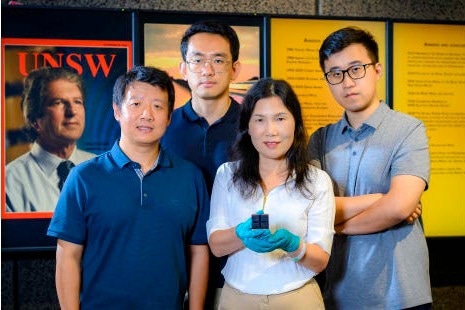
A research team from UNSW Sydney has set a new record for the efficiency of kesterite solar cells, achieving 13.2%. Kesterite, a naturally occurring mineral composed of copper, zinc, tin, and sulfur, offers a cost-effective and non-toxic alternative to traditional silicon solar cells. The successful enhancement of kesterite is attributed to a hydrogen annealing process that addresses defects commonly found in the material, resulting in improved photovoltaic efficiency.
Historically, the efficiency of kesterite solar cells had stagnated at around 11% for six years. However, through the use of hydrogen during production, researchers have managed to significantly boost this efficiency. Scientia Professor Xiaojing Hao and her team have outlined their research findings in the peer-reviewed journal Nature Energy, reinforcing the potential of kesterite as a viable material for future solar technology.
The importance of this advancement lies in the drive to make solar electricity cheaper and more environmentally sustainable. As silicon cells approach their theoretical efficiency limits, there is an urgent need for new materials that can enhance solar energy capture. The introduction of kesterite as a newer generation of solar cells addresses this need, with the goal of producing higher efficiency panels that are ideal for applications in space-restricted environments.
Professor Hao emphasized the bottom-up approach taken by her team to identify and enhance the best properties of kesterite. By carefully controlling the production process and using hydrogen to mitigate defects, they have laid the groundwork for future advancements. Currently, kesterite panels are expected to achieve efficiency levels as high as 15% within the next year, with aspirations for commercialization by 2030.
The research team is also exploring other alternatives for tandem solar cells. Perovskite, for instance, exhibits higher efficiency but poses challenges due to its instability and the presence of toxic materials like lead. The team believes that while perovskite could initially deliver better performance, its sustainability remains a concern due to rapid degradation.
Professor Hao remains optimistic about the potential for kesterite in the solar market, stating that it meets crucial criteria for an ideal solar material: abundance, sustainability, and long-term performance stability. Continued research will focus on minimizing production defects to further increase efficiency and ensure that kesterite plays a crucial role in the future of photovoltaic technology.
Overall, the efforts at UNSW highlight the importance of innovation in the field of renewable energy, with kesterite solar cells emerging as a key player in the quest for more efficient and sustainable solar solutions. The work not only marks a significant milestone in the quest for improved solar energy capture but also contributes to the ongoing dialogue surrounding the future of renewable energy technologies.
The content above is a summary. For more details, see the source article.









