

Key Takeaways
- An agreement among Finland, Canada, and the U.S. aims to bolster Arctic cooperation and enhance icebreaker construction.
- The Icebreaker Collaboration Effort (ICE Pact) seeks to build advanced icebreakers for year-round Arctic operations.
- Despite geopolitical tensions, Canada affirms its commitment to the ICE Pact amidst U.S. leadership changes.
Collaborative Efforts in Arctic Icebreaker Development
A recent agreement between Finland, Canada, and the United States seeks to enhance cooperation in Arctic navigation through the construction of advanced icebreaker ships. The Icebreaker Collaboration Effort, or ICE Pact, was established in July 2024 during NATO’s 75th anniversary summit in Washington. This pact combines the expertise and resources of the three nations to address the challenges of increased maritime traffic in Arctic regions influenced by climate change.
The primary goal of the ICE Pact is to collaboratively develop top-notch icebreakers capable of operating year-round in polar waters. This strategy not only aims to improve operational efficiency but also seeks to reduce costs and expedite delivery times for the involved countries. As the strategic importance of the Arctic grows, officials signed an additional memorandum of understanding in November to underscore the necessity for deeper economic and security collaboration in the polar regions.
Recent comments by U.S. President Donald Trump have raised concerns regarding the territorial integrity of Canada and Greenland. Trump insinuated that these regions should become part of the United States, prompting swift pushback from Canadian and Danish leaders, both of whom reaffirmed their sovereignty. However, Canadian officials have indicated that the ICE Pact remains unaffected by these tensions. A spokesperson for Public Services and Procurement Canada confirmed that the nation’s commitment to the agreement is unwavering, and collaboration with Finland and the U.S. continues as planned.
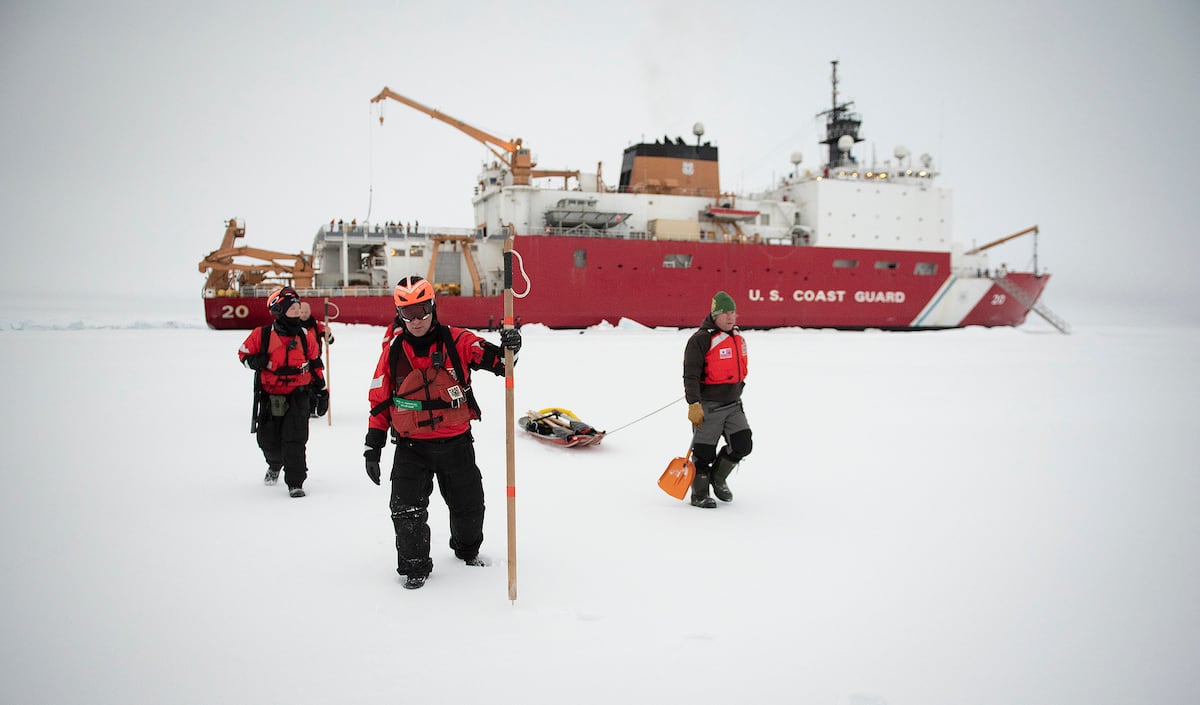
Under the ICE Pact, each nation has deployed a coordination team tasked with developing a comprehensive action plan via four working groups. During his initial term, Trump emphasized the importance of expanding the U.S. icebreaker fleet. In a 2020 memo, he articulated a vision for “ready, capable, and available” polar security icebreakers to be fully operational by fiscal year 2029. However, the U.S. currently operates only one heavy icebreaker, while Russia maintains a fleet of approximately 40, highlighting a significant disparity.
Different countries employ varying classification systems for icebreakers. While the U.S. and Canada classify their vessels as light, medium, or heavy, Russia categorizes its fleet based on mission type and technical characteristics. Additionally, in 2023, Canadian shipyard Davie acquired Finland’s Helsinki Shipyard, which contributed over half of the global icebreaker fleet. This acquisition enabled the transfer of valuable expertise and resources from Finland to Canada, aligning with the high demand for specialized icebreakers.
With over 80 projects open among Western nations as of July, the ICE Pact is expected to significantly enhance the U.S. defense industrial base. As the American naval shipbuilding industry grapples with delays and budget overruns, experts view this collaboration as a potential catalyst for growth and efficiency. The strategic implications of the ICE Pact are profound, as it represents a united front among Arctic nations in the face of growing competition from Russia and China.
As the Arctic continues to undergo transformation due to climate change, the successful implementation of the ICE Pact will be critical for ensuring safe and sustainable maritime operations in these crucial waters.
The content above is a summary. For more details, see the source article.