


Key Takeaways
- Over 10,000 patients in Scotland have utilized da Vinci robotic-assisted surgery since 2021 due to expanded access.
- The Scottish government invested in 12 additional da Vinci systems to enhance surgical outcomes and minimize open surgery.
- This initiative supports the Scottish Cancer Action Plan and aims to improve recovery times for patients undergoing colorectal and gynaecological procedures.
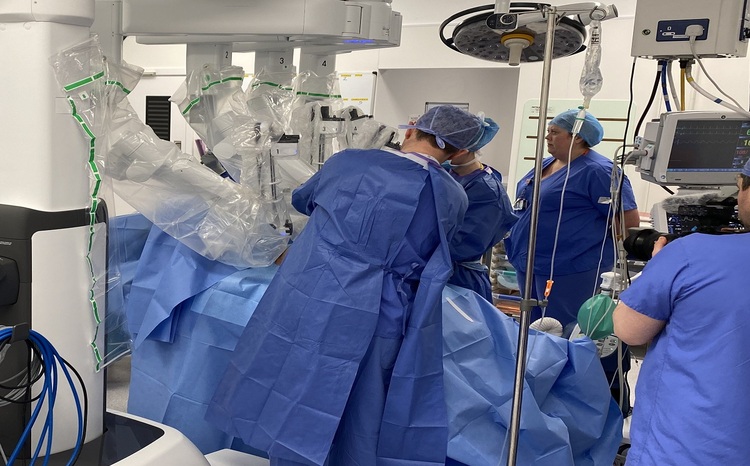
Since 2021, more than 10,000 patients across Scotland have benefited from da Vinci robotic-assisted surgery (RAS) thanks to a significant investment by the Scottish government. The initiative has seen the introduction of 12 additional da Vinci surgical systems across the nation, particularly within NHS Greater Glasgow and Clyde, at Glasgow Royal Infirmary (GRI) and Queen Elizabeth University Hospital (QEUH). This expansion is designed to reduce the prevalence of open surgery, enhance equity in patient access, and increase NHS operational productivity.
Professor Campbell Roxburgh, a consultant colorectal surgeon at GRI and the University of Glasgow, expressed pride in the advancements made possible by this investment. He noted that the initiative has successfully decreased open surgery rates while improving patient access to robotic-assisted procedures, thus enhancing overall surgical outcomes. The initiative reaches a pivotal milestone that reflects its effectiveness.
The primary focus of the expansion was to improve access to robotic-assisted surgery for patients undergoing gynaecological and colorectal operations, which historically had high rates of open surgery. The program also facilitated growth in surgical specializations such as urology, thoracic, and head and neck surgeries.
Scottish Health Secretary Neil Gray highlighted the transformation brought about by these surgical robots, noting that they improved patient experiences and eased the physical demands on surgeons. The additional opportunities for robotic-assisted procedures are expected to attract a wider range of surgeons, contributing to a stronger National Health Service in Scotland.
Da Vinci robotic-assisted surgery employs minimally invasive techniques, allowing surgeons to conduct complex operations through small incisions. David Marante, vice president of Intuitive UK and Ireland, the manufacturer of the da Vinci surgical system, praised the efforts of NHS surgeons and care teams for their role in promoting minimally invasive surgery. He reiterated the commitment to supporting NHS Scotland’s expansion of this technology to enhance patient outcomes while improving surgical productivity.
This improved access to da Vinci RAS has become instrumental in furthering national healthcare goals, aligning with the Scottish Cancer Action Plan for 2023-2026. Jennifer Bamforth, head of policy and influencing at Bowel Cancer UK, pointed out that bowel cancer ranks as Scotland’s fourth most common cancer, and surgery remains the primary treatment option. She welcomed initiatives that minimize hospital stays and recovery times, noting the significant positive impact of the da Vinci RAS on patient care.
The content above is a summary. For more details, see the source article.









