


Key Takeaways
- A Russian spy ship, the Kildin, experienced a fire while drifting off the Syrian coast on January 23, prompting radio communication for help.
- Despite being advised to keep distance, the Kildin did not accept assistance from nearby NATO vessels and eventually regained control.
- The incident highlights the logistical challenges Russia faces in maintaining naval operations in the Mediterranean due to geopolitical factors.
Fire on Russian Spy Ship Raises Concerns
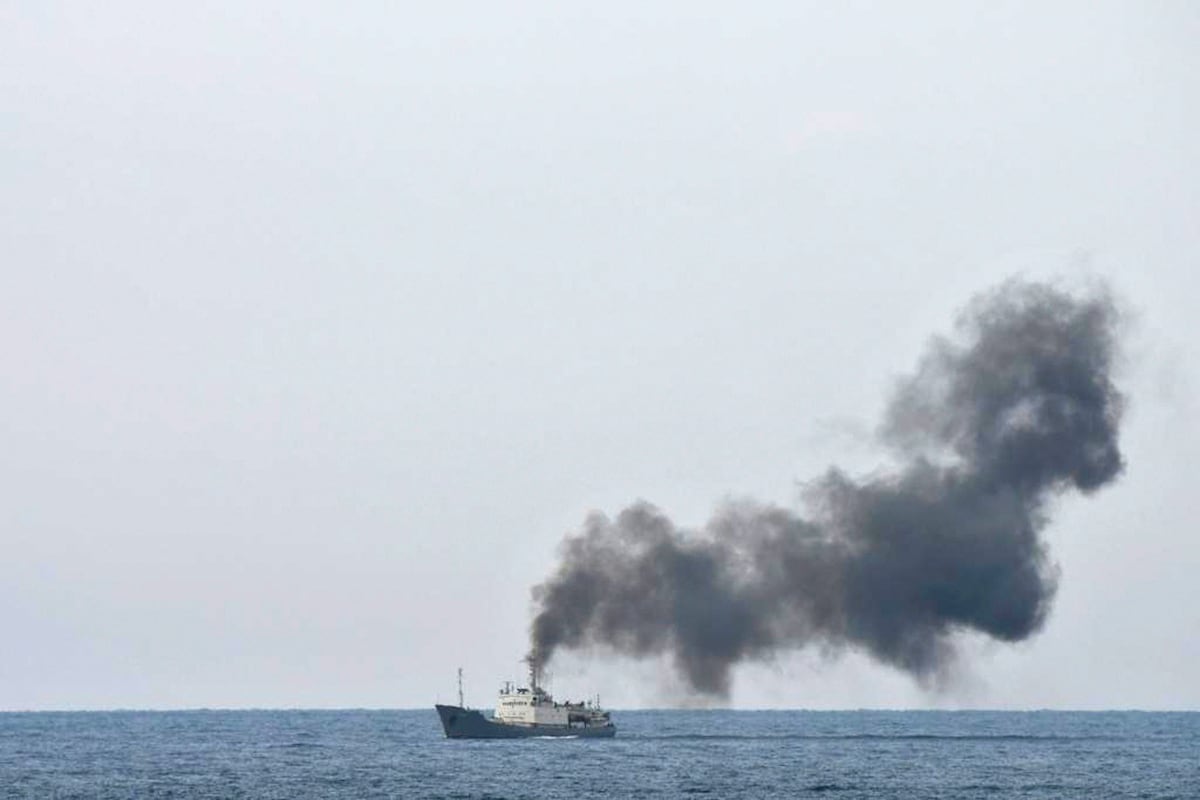
A recent incident involving the Russian spy ship Kildin has brought attention to the precariousness of Russian naval operations in the Mediterranean. On January 23, the Kildin, which is equipped for intelligence-gathering, issued a distress call indicating that it was drifting and not under command due to a fire that lasted for at least four hours. Video and audio evidence from nearby NATO vessels captured this exchange, revealing the seriousness of the situation as flames and smoke billowed from the ship.
Reports indicate that the Kildin was stationed near naval exercises conducted by NATO ally Turkey prior to the fire. It was engaged in monitoring NATO activities in the Mediterranean when it encountered trouble. The crew attempted to utilize lifeboats but never launched them, as indicated by the eventual recovery of the ship, which continues to gather intelligence off the port of Tartus, accompanied by a frigate and supply vessel.
In the audio footage obtained, a 75-second exchange occurs between the Kildin and a Togo-flagged cargo ship, Milla Moon. During the conversation, the Kildin identifies itself as drifting and requests Milla Moon to steer clear. The cargo ship acknowledged the warning and altered its course accordingly.
Despite the distress signal, military officials reported that the Kildin did not accept assistance from the NATO vessel that was nearby. The Kremlin’s spokesperson, Dmitry Peskov, claimed he was unaware of the incident and dismissed concerns regarding the Russian naval fleet’s preparedness, suggesting that evaluating fleet capabilities based on a single incident is unprofessional.
The firefighting efforts and subsequent recovery of command underscore the challenges Russia faces in sustaining its naval presence in distant waters. Retired French Vice Admiral Michel Olhagaray emphasized the complications involved for Russian supplies and personnel operating in the Mediterranean, especially with the ongoing conflict in Ukraine and Turkey’s restrictions on the passage of the Russian Black Sea Fleet to these waters.
This event highlights a growing concern among NATO nations regarding Russia’s potential threats to vital underwater infrastructure in the Mediterranean. Previous behavior by Russian vessels, such as the Yantar, which have been noted to loiter near critical undersea sites, raises alarms about intentions amid escalating geopolitical tensions.
The Kildin’s incident serves as a reminder of the complexities of naval operations far from a home base, particularly in light of the overall state of relations between Russia and Western nations in the ongoing context of regional security concerns.
The content above is a summary. For more details, see the source article.









