

Key Takeaways
- Local government officials and safety advocates call for increased traffic enforcement and roadway infrastructure improvements to address rising U.S. traffic fatalities.
- Over 40,000 traffic-related deaths occurred annually from 2021 to 2023, with significant increases in fatalities among pedestrians and cyclists.
- Federal investment is deemed essential for employing effective safety measures, such as speed cameras and improved road designs that accommodate all users.
Traffic Safety Concerns Highlighted in House Hearing
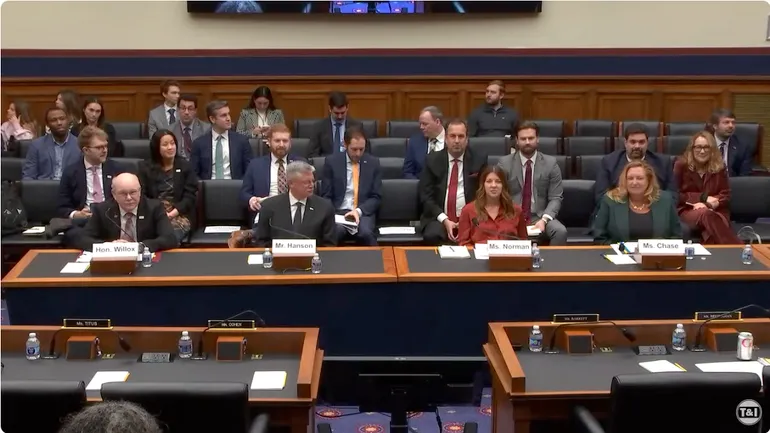
Local government officials and safety advocates underscored the urgent need for enhanced traffic enforcement, improved roadway infrastructure, and sustained federal funding to mitigate the alarming rates of traffic fatalities in the United States. These discussions took place during a subcommittee hearing of the House Transportation and Infrastructure Committee on February 12.
Bipartisan agreement emerged among committee members about the importance of continued federal investment in traffic safety. Rep. David Rouzer, R-N.C., emphasized the necessity for strategic funding that can successfully save lives. The hearing also called attention to the increasing vulnerability of road users, particularly pedestrians and bicyclists, who have faced a sharp rise in fatalities.
According to statistics from the National Highway Traffic Safety Administration, traffic collisions claimed over 40,000 lives annually between 2021 and 2023. The Governors Highway Safety Association reported that in 2023 alone, 7,318 pedestrians and 1,149 bicyclists lost their lives in car crashes. During the hearing, Rouzer pointed out that underfunded and understaffed police forces were contributing to a lack of consequences for reckless driving behaviors, such as speeding and impaired driving.
Michael Hanson, Chair of the Governors Highway Safety Association and director of the Minnesota Department of Public Safety Office of Traffic Safety, echoed concerns regarding the prevalence of alcohol-impaired driving, which remains a significant highway safety issue. He noted an uptick in drug-impaired driving incidents as well, along with a worrying trend of drivers combining both drugs and alcohol.
Hanson also highlighted a concerning perception among drivers that speeding is acceptable, reflecting low expectations of being cited for traffic violations or causing accidents. He advocated for the broader implementation of speed safety cameras, citing their success in reducing speeding incidents.
The hearing also focused on the crucial need for roadway infrastructure enhancements to ensure safety for all road users. Cathy Chase, president of Advocates for Highway and Auto Safety, argued that without safe roadway conditions, vehicles cannot perform as required. Recommended infrastructure improvements include better lighting, curb extensions, accessible sidewalks, separated bike lanes, and pedestrian signals that allow additional crossing time.
Chase pointed out the necessity of integrating infrastructure enhancements with behavioral changes on the roads. She stressed that safe roadway design can positively influence driver behavior, while poor driver behavior can negate even the best-designed infrastructures.
Chase advocated for federal programs that support projects like Complete Streets, which aim to create road environments suitable for everyone, including pedestrians, cyclists, motorists, and public transport users. Despite the recent removal of the Complete Streets information page from the Federal Highway Administration’s website, resources remain accessible through existing search functions.
The discussions at the hearing reflect a growing consensus that comprehensive measures involving both infrastructure and enforcement are essential to improving traffic safety and reducing fatalities across the nation.
The content above is a summary. For more details, see the source article.