

Key Takeaways
- Farmers like Tom Gamble embrace AI technology in vineyards to improve decision-making and crop management.
- AI applications in viticulture enhance sustainability and efficiency, helping reduce waste and optimize resources.
- Smaller vineyards face challenges in adopting AI due to costs and lack of training resources, raising concerns over scalability.
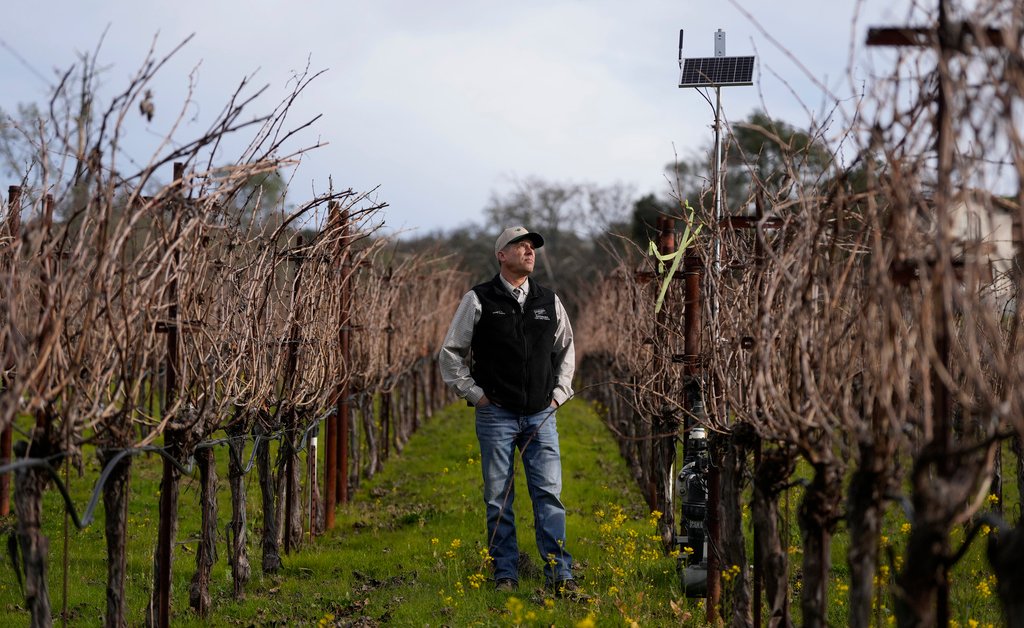
In the ever-evolving wine industry, farmers are beginning to embrace artificial intelligence (AI) technology to improve their vineyards. Tom Gamble, a third-generation Napa Valley farmer, highlights the benefits of using an autonomous tractor, which he plans to deploy for self-driving operations this spring. The tractor’s AI sensors will map the vineyard and aid in crop management through precision farming, allowing for informed decisions while reducing labor fatigue.
Gamble anticipates AI’s role will increase due to economic and environmental factors, asserting that autonomous tractors could diminish fuel usage and pollution levels. Experts note that AI is already showing its potential in the wine sector by allowing farmers to operate more sustainable and efficient vineyards. AI technologies enable better monitoring of resources like water, as well as more accurate assessments of plant health and yield estimates.
Prominent companies, such as John Deere, are also integrating AI into their equipment, using Smart Apply technology to minimize waste. This tech ensures that materials are only applied where necessary—within grape canopies—thus promoting environmental sustainability. Other vineyard management firms, like Redwood Empire Vineyard Management, are beginning to use AI for smart irrigation systems, which can identify leaks and automatically halt water flow when excessive usage is detected.
Despite the optimism surrounding AI, concerns arise regarding access for smaller, family-owned vineyards that dominate the U.S. wine market. These small growers may struggle with the costs of investment, particularly for expensive technologies like robotic arms and drones. Questions of training and the availability of skilled workers further complicate their ability to adapt to AI innovations.
Professor Angelo A. Camillo of Sonoma State University indicates that while AI can track crop health, some smaller vineyards may find it difficult to implement due to limitations in resources and operator capacity. For example, coordinating drone operations on large properties can prove unmanageable for a single operator, emphasizing the scalability challenges these technologies pose.
On the other hand, experts like Mason Earles from UC Davis advocate for AI’s ability to enhance productivity by providing crucial insights into vineyard conditions. AI can swiftly analyze extensive datasets, helping vintners project yields early in the growing season, which is essential for labor and supply planning for winemaking.
Ultimately, while AI brings tremendous potential for optimizing vineyard management and mitigating labor challenges, the disparity between large and small wineries highlights the need for strategies that ensure equitable access to these advancements.
The content above is a summary. For more details, see the source article.