


Key Takeaways
- Stanford students face backlash for interest in defense technology, with many expressing negative views on social media.
- The university’s historical ties to defense funding have played a crucial role in its growth and innovation.
- Advancements in defense technology are positioned as essential for global stability amid rising geopolitical threats from Russia and China.
Backlash Against Defense Technology Interest at Stanford
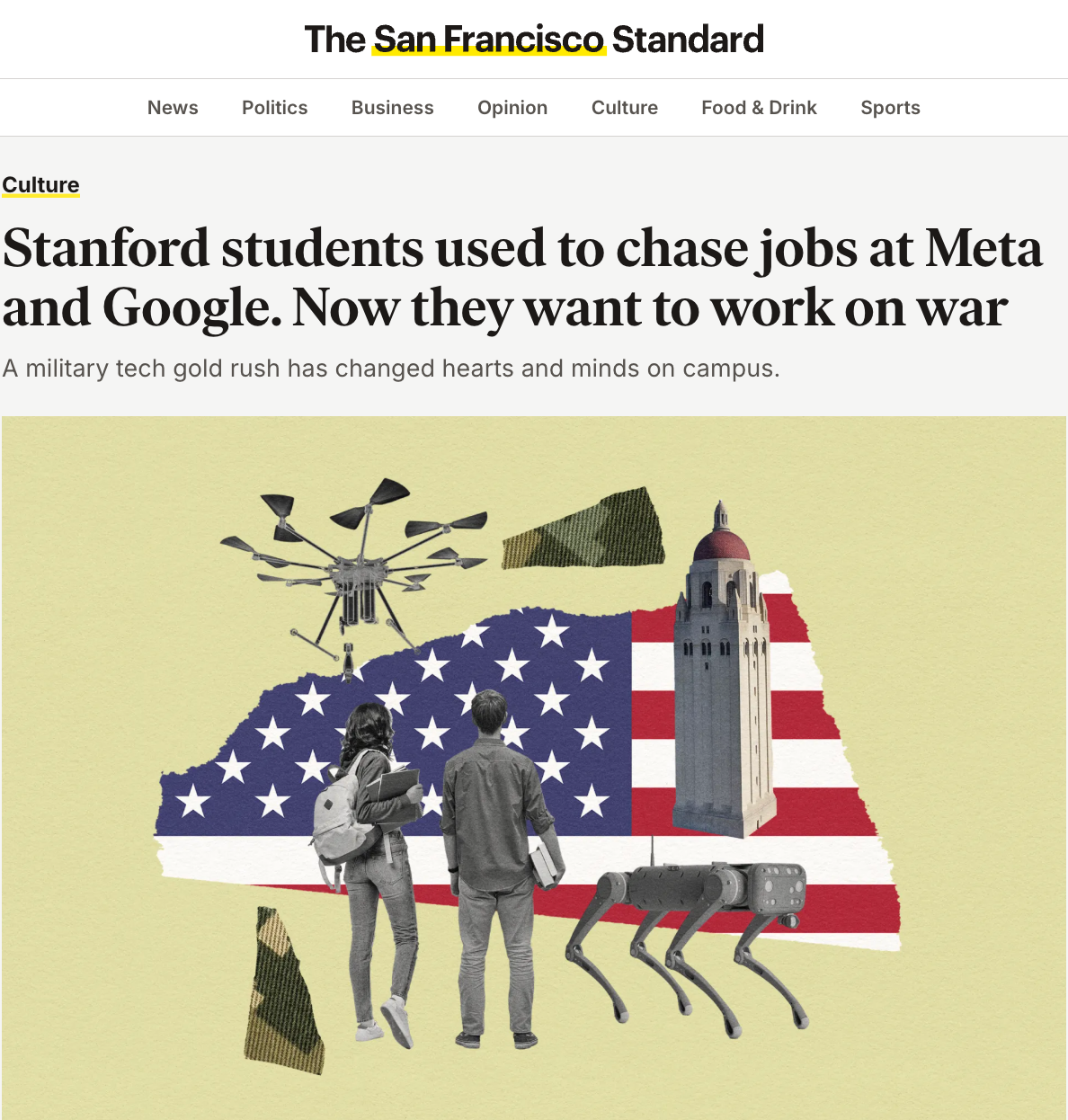
Recently, an article from the San Francisco Standard highlighted a shift in attitudes among Stanford students who are increasingly interested in pursuing careers in defense technology, specifically with companies like Palantir and Anduril. However, this perspective was met with significant backlash on the internal Stanford social media platform, Fizz. Comments ridiculing those interested in defense tech called them “evil” and referred to them as “defense tech scum.”
Historically, Stanford administrators have echoed similar concerns about defense-related careers, even blocking a defense tech startup from joining their job-listing platform and rejecting an application for a Defense Tech Club. While the university has made some progress through initiatives like the Gordian Knot Center and Hacking for Defense, the response to the article indicates lingering negative sentiments toward the defense industry among students.
Proponents of defense technology argue that dismissing it fails to recognize the critical role it plays in global stability. The necessity for advanced military capabilities has become increasingly apparent, especially as Europe re-arms in response to Russian threats and as China’s military ambitions grow more aggressive. These geopolitical issues require a commitment to technological superiority for deterrence; they cannot be resolved through idealistic thinking alone.
Critics’ vilification of defense technology raises questions about the university’s educational effectiveness. It highlights a generation at Stanford that may be ill-prepared to confront complex global issues, opting instead for an oversimplified perception that all defense work is unethical. This mindset is perceived as a dangerous form of intellectual laziness that ignores the substantial economic contributions military funding has made to Stanford and Silicon Valley’s development.
Stanford’s rise as an engineering leader was partly due to Frederick Terman’s strategic positioning during the Cold War to capture defense spending, which catalyzed technological advancements. Many foundational innovations, including ARPANET—the precursor to the internet—were government projects.
In light of foreign investments in military-connected tech industries, the argument is made that Stanford should maintain, rather than forgo, its ties to defense innovation. The article concludes that if advanced defense technologies can protect lives and deter conflict, then pursuing careers in this field is not only morally justifiable but necessary. Rejection of defense innovation, it suggests, represents a significant failure of responsibility in ensuring security and stability in a tumultuous global environment.
The content above is a summary. For more details, see the source article.









