

Key Takeaways
- Vietnam is leveraging its resource constraints to drive innovation in AI and semiconductors.
- Investment in AI and semiconductor education is crucial, with goals to train one million AI experts by 2030.
- AI is shaping the semiconductor industry, optimizing manufacturing processes and enhancing product quality.
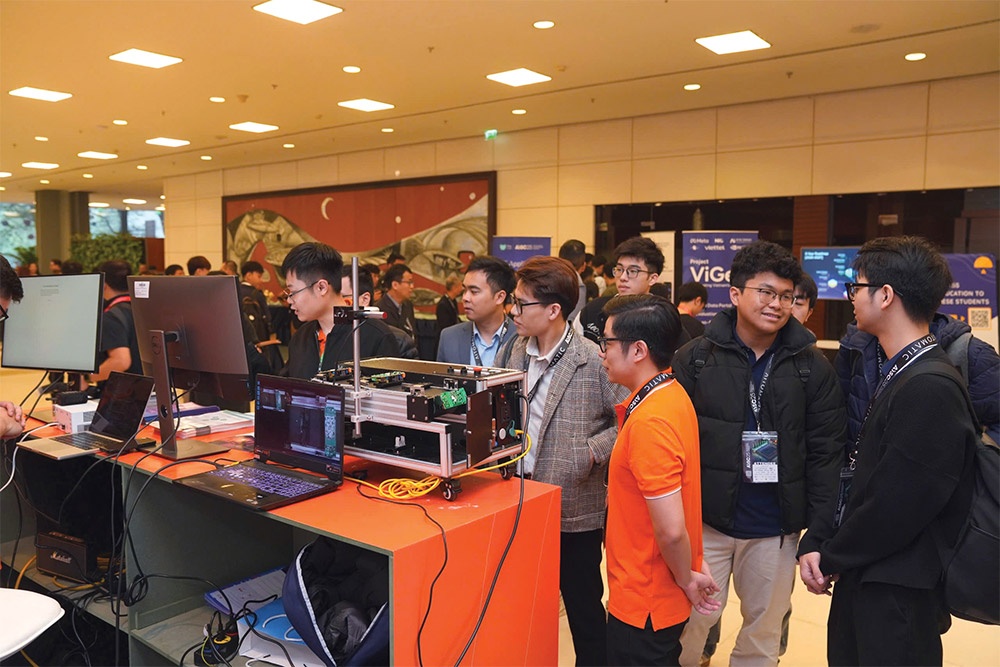
The 2025 International Conference on AI and Semiconductors held in Hanoi focused on current global trends and how Vietnam can transform its challenges into opportunities for innovation. Industry leaders emphasized the critical role of strategic partnerships in semiconductor supply chains and the importance of data for AI development. Honeywell’s CTO, Suresh Venkatarayalu, highlighted that pre-pandemic procurement methods became inadequate during COVID-19, leading the company to prioritize strategic collaborations with semiconductor firms.
Bui Hai Hung, CEO of VinAI, discussed the potential for limited resources to spark innovation, drawing lessons from China’s DeepSeek, which succeeded by optimizing existing resources rather than competing with more affluent counterparts. Hung believes that Vietnam’s youth and intelligence can turn resource scarcity into an advantage, suggesting a future where limitations drive creativity and practical solutions.
Da-Shan Shiu, CEO of MediaTek, spoke about AI’s transformative impact on semiconductor manufacturing, underscoring its role in fine-tuning production processes to enhance efficiency and reduce waste. AI’s capabilities in real-time process control can significantly improve product reliability by quickly addressing deviations in manufacturing parameters.
Christopher Nguyen, CEO of Aitomatic, underscored the rising significance of Vietnam in the AI and semiconductor sectors, driven by a young workforce and increasing investments. He advised the country to find its niche in emerging areas like edge AI instead of competing in saturated markets dominated by industry giants.
The Vietnam National Innovation Centre has launched the Vietnam Innovation Challenge, focusing on Project ViGen, which aims to develop high-quality Vietnamese datasets for training AI models, ensuring they recognize local culture and language nuances. This initiative aligns with Vietnam’s ambition to position itself as a significant player in global AI development.
Prime Minister Pham Minh Chinh stated that Vietnam’s economic development will focus on science, technology, and innovation, while aiming to simplify administrative procedures and enhance infrastructure. The government recognizes the importance of cultivating skilled human resources in AI and semiconductors, with plans to establish a vibrant startup ecosystem and improve training programs.
Vietnam currently has a robust IT workforce with plans to train 50,000 semiconductor engineers and enhance AI capacity among its population. With progressive policies and investments in talent development, Vietnam aims to solidify its role as a leader in technology innovation.
Overall, the conference affirmed Vietnam’s commitment to advancing its AI and semiconductor industries, emphasizing collaboration, education, and strategic resource utilization as key components of its growth strategy.
The content above is a summary. For more details, see the source article.