

Key Takeaways
- The NTSB found that the Maryland Transportation Authority neglected to evaluate the Francis Scott Key Bridge for collision vulnerability prior to its collapse.
- Assessments revealed the Key Bridge’s risk to be nearly 30 times higher than acceptable levels for critical infrastructure.
- The NTSB recommends vulnerability assessments for 68 bridges in 19 states, including iconic structures like the Golden Gate and Brooklyn Bridges.
Maryland Bridge Collapse Raises Concerns Over Infrastructure Safety
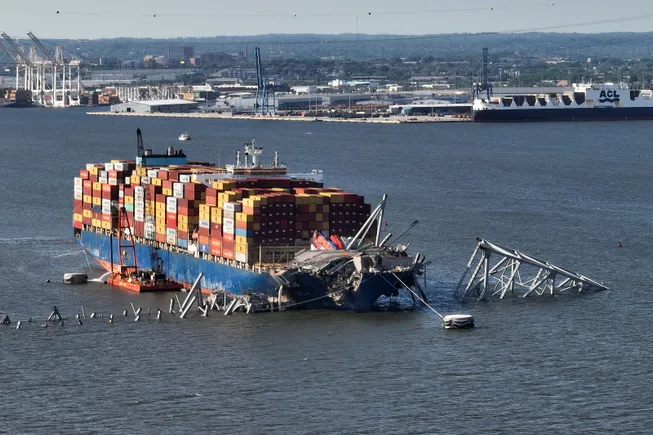
The National Transportation Safety Board (NTSB) announced that the Maryland Transportation Authority (MDTA) failed to assess the vulnerability of the Francis Scott Key Bridge, which collapsed on March 26, 2024, following a collision with the cargo ship Dali. NTSB Chair Jennifer Homendy indicated during a press conference that this oversight could have been preventable had the MDTA conducted adequate reviews of the bridge’s risks.
Referencing a 1991 analysis from the American Association of State Highway and Transportation Officials (AASHTO), Homendy explained that similar evaluations had been prompted by the 1980 Sunshine Skyway Bridge disaster in Tampa, Florida. AASHTO developed a vulnerability assessment calculator meant to gauge the risk of collapse due to vessel strikes, applicable to both new and existing bridges. Despite its completion in 1977, the Key Bridge had never undergone this crucial risk evaluation.
The NTSB’s investigation revealed a shocking statistic: the bridge’s probability of collapse was nearly 30 times greater than the acceptable threshold designated for critical infrastructure. Homendy expressed surprise at these high risk numbers, underscoring that the MDTA, as the bridge’s overseer, should have conducted this analysis. Additionally, she noted that the nearby Chesapeake Bay Bridge, built in 1948, also lacks such an assessment.
“There’s no excuse,” Homendy stated regarding the lack of proactive safety measures.
On a broader scale, the NTSB called for vulnerability assessments for a total of 68 bridges across 19 states that were built before the 1991 AASHTO guidelines. These bridges, which include the Golden Gate Bridge in San Francisco and the Brooklyn Bridge in New York City, have not received updated evaluations based on current vessel traffic data, leading to an uncertain collapse risk.
Homendy emphasized that identifying these bridges does not imply they are inherently dangerous. Rather, the intent is to ensure that all infrastructure is thoroughly evaluated, as other bridges may also harbor unseen risks. The collapse of the Key Bridge raises urgent questions about infrastructure safety nationwide, highlighting the necessity for vigilance and timely assessments.
Had the MDTA proactively evaluated the Key Bridge, protective measures such as the installation of protective dolphins or other barriers could have been implemented to redirect potential collisions from critical structural supports.
In conclusion, the NTSB’s findings serve as a stark reminder of the importance of regular safety evaluations for bridges, advocating for infrastructural assessments to mitigate risks and prevent future tragedies.
The content above is a summary. For more details, see the source article.