

Key Takeaways
- Drones equipped with radar technology are enhancing agricultural practices in West Virginia’s rugged terrain by enabling precision field mapping and monitoring.
- This technology promotes sustainable farming by minimizing fertilizer and pesticide use and supporting efficient resource management.
- Drones facilitate data collection for weather forecasting and yield predictions, integrating modern tech into traditional farming methods.
Transforming Agriculture in West Virginia
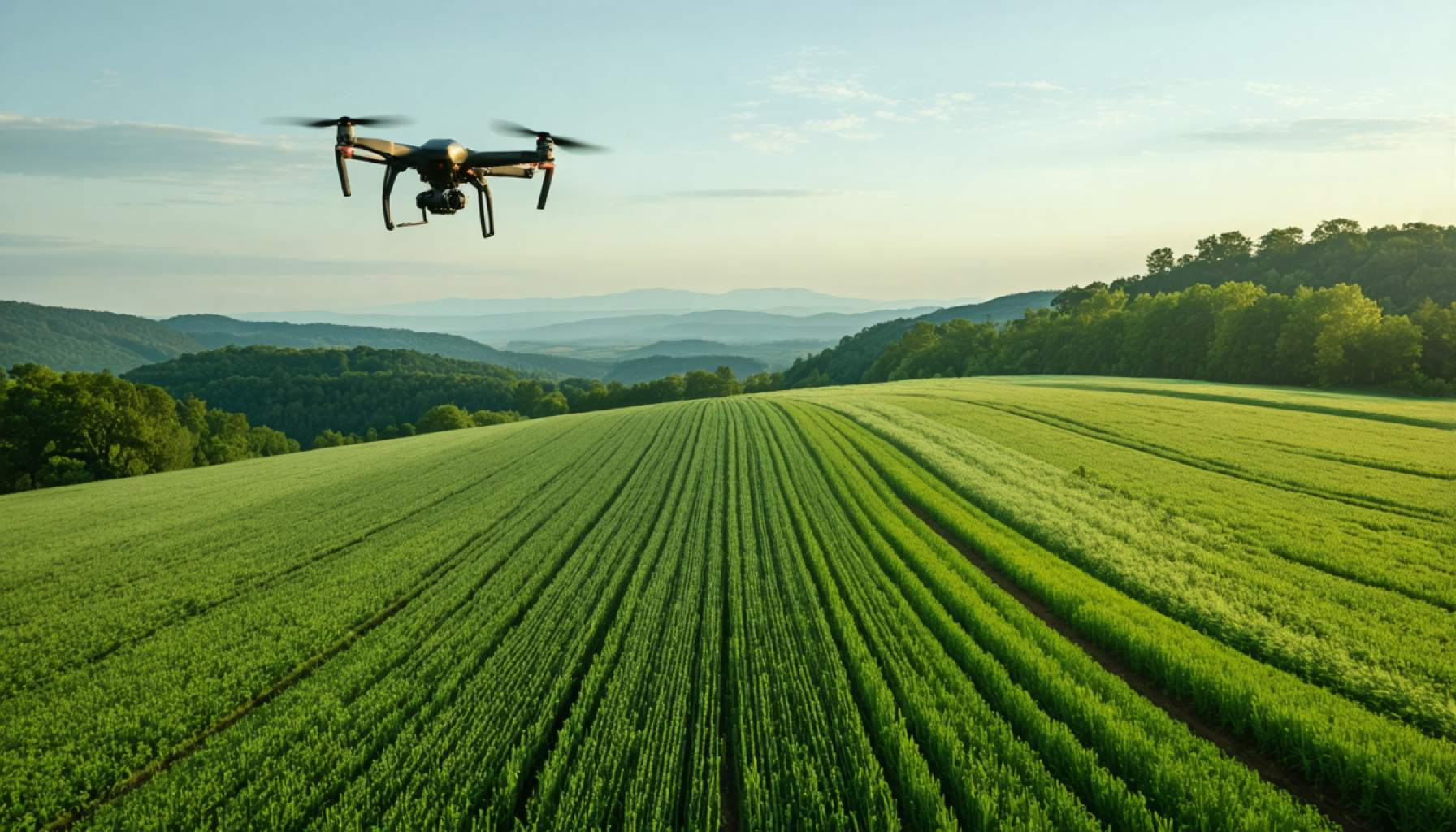
West Virginia’s challenging agricultural landscapes, characterized by rolling hills and steep valleys, are experiencing a revolution thanks to drones equipped with advanced radar technology. These drones offer a navigational edge, allowing farmers to tackle previously inaccessible terrains with precision. Unlike traditional farming equipment, drones can streamline tasks such as field mapping, crop monitoring, and even seed and pesticide dispersal.
The adoption of drone technology signifies a transformation in agricultural practices, enhancing both efficiency and sustainability. Farmers can now leverage the aerial capabilities of drones to optimize crop yields while reducing waste. These drones operate almost autonomously using sophisticated algorithms that prevent collisions with obstacles, giving farmers critical insights into their fields and allowing for strategic responses to changing conditions, such as droughts or pest infestations.
Moreover, drones promote sustainable agricultural practices by accurately applying fertilizers and pesticides, thereby limiting environmental impact. By providing high-resolution aerial imagery, these devices enable farmers to monitor crop health and growth stages with remarkable accuracy. The integration of drone technology into farming enhances productivity while aligning with eco-friendly practices.
Drones also serve a dual purpose beyond crop management; they collect valuable data for weather forecasting and yield predictions. This integration supports farmers in making informed decisions, reflecting a modern approach to agriculture where technological innovation meets traditional farming methods.
For many farmers in West Virginia, the uptake of this technology represents hope and resilience. With drones, communities can optimize their agricultural potential, transforming their rugged surroundings into beneficial assets rather than hindrances.
The agriculture drone market is projected to expand significantly, further fueled by advancements in technology and a rising demand for sustainable solutions. Current projections estimate the market could reach $5.7 billion by 2025, emphasizing the increasing importance of precision agriculture tools.
While drones enhance efficiency and reduce resource wastage, some challenges remain. Issues such as high initial investment costs and navigating regulatory frameworks for airspace can pose obstacles for widespread adoption. However, the benefits, including data-driven insights and improved outputs, strongly advocate for their integration into contemporary farming.
Ultimately, drones are not merely a novel addition to farming; they symbolize a substantial shift in agricultural practices. For farmers in West Virginia, embracing drone technology can turn geographical challenges into growth opportunities that pave the way for a sustainable and prosperous future.
The content above is a summary. For more details, see the source article.