


Key Takeaways
- BYD reported a 29% increase in annual revenue for 2024, reaching 777 billion yuan ($107 billion), surpassing Tesla.
- The company sold approximately 4.3 million vehicles globally, including hybrids, compared to Tesla’s 1.79 million EVs.
- BYD’s new Qin L model is priced significantly lower than Tesla’s Model 3, targeting price-sensitive consumers in a challenging economic environment.
BYD Surpasses Tesla in Revenue for 2024
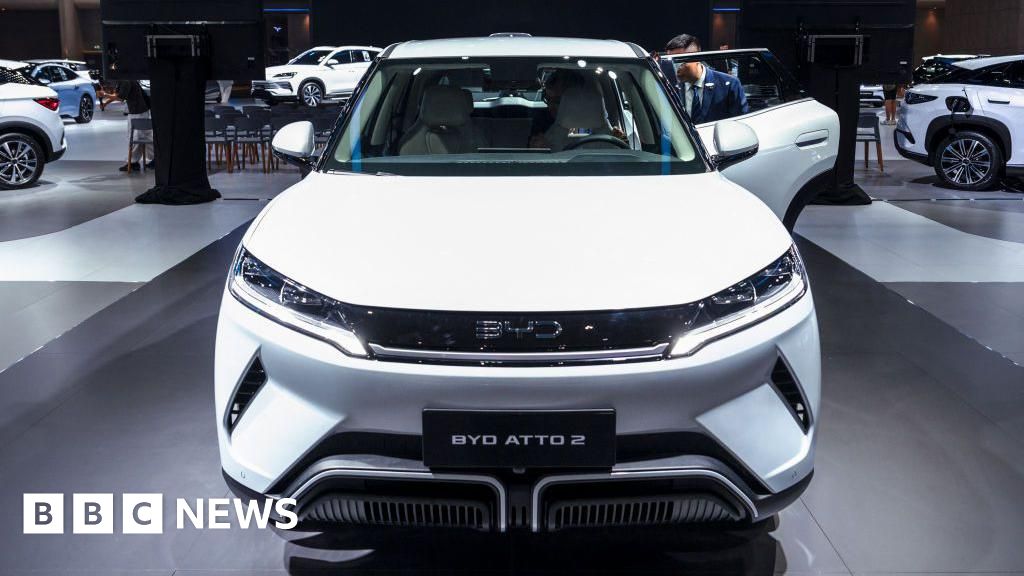
Chinese electric vehicle manufacturer BYD has announced remarkable annual revenue growth for 2024, outpacing rival Tesla. The Shenzhen-based company reported a substantial 29% increase in revenue, amounting to 777 billion yuan (approximately $107 billion), overshadowing Tesla’s reported figure of $97.7 billion.
A major factor contributing to BYD’s revenue surge is its increasing sales of hybrid vehicles. The company achieved a nearly equal number of electric vehicle (EV) sales as Tesla in the past year, delivering 1.76 million EVs compared to Tesla’s 1.79 million. However, when including hybrid vehicle sales, BYD’s output reached a record total of 4.3 million vehicles globally.
In a strategic move to capture more market share, BYD recently launched its new Qin L model, priced at 119,800 yuan. This new offering directly competes with Tesla’s Model 3, which starts at 235,500 yuan, making it an appealing option for price-conscious consumers.
The automotive industry landscape is evolving, especially as Chinese consumers face economic pressures like a property crisis and high local government debt. These economic challenges are forcing buyers to reconsider their spending habits, making BYD’s lower-priced alternatives more attractive.
In addition to its competitive pricing, BYD is innovating in technology. The company’s founder, Wang Chuanfu, introduced advanced battery technology that enables quick EV charging in just five minutes—significantly faster than Tesla’s approximately 15-minute supercharger charging time. Furthermore, BYD has committed to offering its “God’s Eye” advanced driver-assistance technology free of charge across all its models, potentially enhancing the appeal of its vehicles.
BYD’s stock has also seen a remarkable increase of more than 50% this year, buoyed by strong investor interest, including backing from US investor Warren Buffett.
While BYD experiences growth, Tesla has faced a wave of scrutiny and backlash linked to its CEO Elon Musk, particularly regarding his connections with politicians and their impacts on the company’s image. Musk’s involvement in politics, including his support for far-right political movements in Europe, has also contributed to challenges for Tesla.
Simultaneously, Chinese automotive manufacturers, including BYD, have encountered tariffs in key markets like the US and EU, which complicate their positioning abroad. Despite these challenges, BYD’s recent achievements reflect its strong capabilities and potential for future growth in the increasingly competitive EV market.
The content above is a summary. For more details, see the source article.









