


Key Takeaways
- President Trump’s tariffs of 25% on imports from Mexico and Canada could drastically raise car prices in the U.S., affecting vehicles assembled domestically.
- Most cars, including popular models like the Ford F-150, are composed of a significant percentage of parts from Canada and Mexico, making them vulnerable to tariff impacts.
- Cutbacks in production due to increased costs and uncertainty could lead to job losses and significant market disruptions for automakers and suppliers.
Tariffs on imports from Canada and Mexico are set to take effect, potentially leading to significant increases in car prices even for vehicles manufactured in the United States. The automotive industry operates as a unified market across North America, making it challenging to distinguish “American-made” cars solely based on U.S. components. President Trump announced that the tariffs would impose a 25% fee on imports, raising concerns about the effect on consumer prices and the industry as a whole.
Automotive economist Peter Nagle emphasized that essentially every vehicle on the market would be impacted by these tariffs, predicting that car prices could begin to change shortly after the tariffs are enforced. Currently, only two vehicles, the Tesla Model 3 and Honda Ridgeline, meet the government’s criteria for 75% domestic parts content, which includes Canadian-made parts.
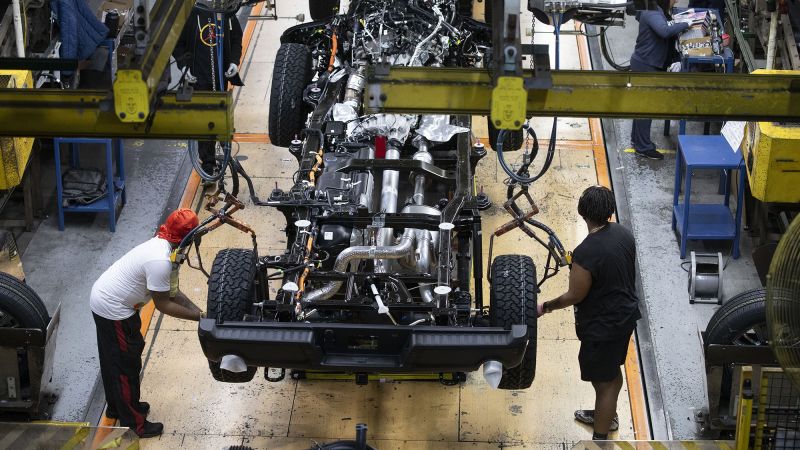
The implications of the tariffs extend to popular models like the Ford F-150, where only 45% of parts are sourced from American or Canadian factories, as many components come from Mexico. Due to this global supply chain, the additional costs from tariffs are expected to be passed on to consumers quickly, potentially driving the average car price over $50,000 in the coming months, as the buying season aligns with tax refund availability.
Automakers have been stockpiling parts and vehicles in anticipation of the tariffs, but this strategy offers only a short reprieve. The Anderson Economic Group forecasts production costs could rise by $3,500 to $12,000 per vehicle, leading manufacturers to consider stopping the production of certain models. CEO Patrick Anderson stated that the idea of moving production back to the U.S. as a quick solution is unrealistic, given the complexities of shifting manufacturing plants.
The uncertainty surrounding tariffs has already caused financial strain within the industry, with automakers like Ford and General Motors indicating that long-term tariff impositions could prompt drastic measures regarding plant operations and employment levels. Job losses are expected not only within major automakers but also among parts suppliers and other stakeholders in the automotive supply chain.
The situation poses a serious threat to affordability in the auto market, reminiscent of the price surges seen during the chip shortage in 2021. As inventory becomes scarce and tariffs loom, industry experts caution that buyers might experience significant price increases on both new and used vehicles.
The content above is a summary. For more details, see the source article.









