


Key Takeaways
- Accenture collaborates with Schaeffler AG to develop humanoid robots for industrial use, leveraging AI technologies from Nvidia and Microsoft.
- Showcased at Hannover Messe 2025, the collaboration aims to enhance automation efficiency and flexibility in manufacturing processes.
- The project includes AI-powered simulations for factory operations, improving the deployment of humanoid robots in real-world scenarios.
Collaboration Details
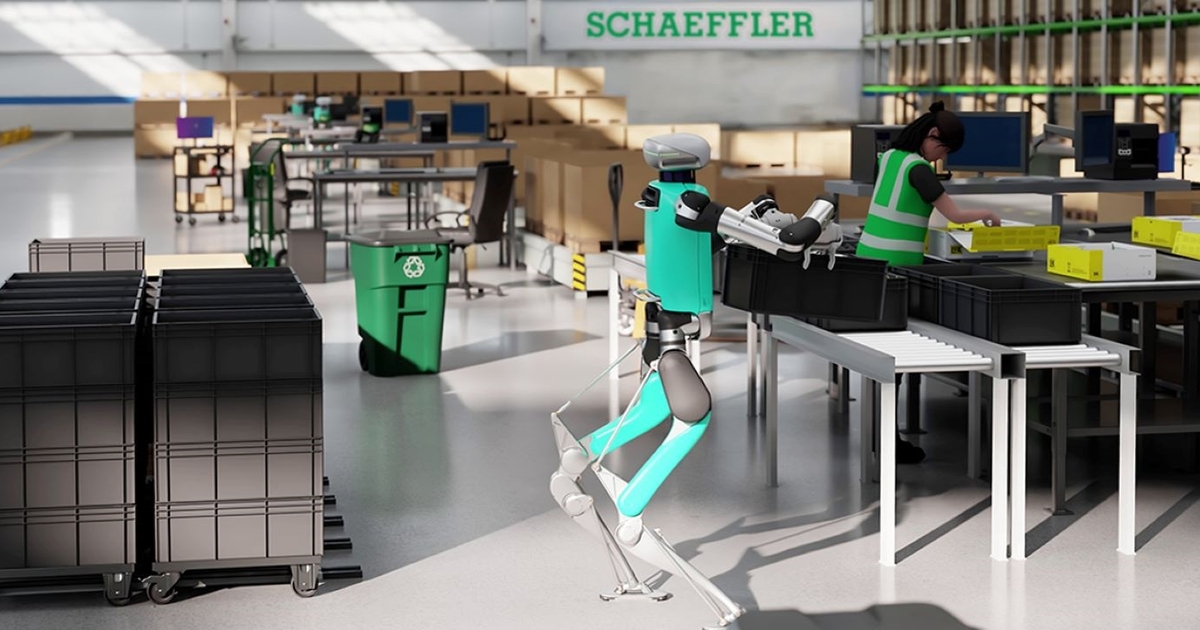
Accenture has announced a strategic partnership with Schaeffler AG to create humanoid robots tailored for industrial applications, utilizing cutting-edge AI and data technologies from Nvidia and Microsoft. This initiative was unveiled at Hannover Messe 2025, a significant exhibition taking place in Germany this week. During the event, the companies demonstrated their robotic systems in various simulated work scenarios, covering aspects like human-centric workflows, human-robot collaboration, and full automation.
The showcased technologies included autonomous mobile robots and humanoid variants such as Schaeffler’s cobot EMMA, Agility Robotics’ Digit, and Sanctuary AI’s Phoenix. According to Schaeffler’s Chief Operating Officer Andreas Schick, the collaboration aims to enhance the efficiency and adaptability of their automation technologies, setting a vision for shaping the future of manufacturing.
Patrick Vollmer, Accenture’s global industry group lead for industrials, highlighted that “physical AI is reinventing industrial automation,” providing novel methods to train and manage fleets of autonomous mobile robots (AMRs) and humanoid robots. He emphasized that the collaboration exemplifies how strategic partnerships can spur innovation, turning emerging technologies into practical solutions for manufacturers facing flexibility, productivity, and workforce challenges.
AI Innovations in Operations
In addition to the robotic developments, Accenture and Schaeffler have produced a proof-of-concept (PoC) demonstrating how AI-driven simulations can optimize operations within Schaeffler’s factories and distribution frameworks. The PoC encompasses three components: virtual factory planning, humanoid robot testing using digital twins, and the optimization of live robotics operations.
For virtual factory planning, Accenture leveraged its digital twin technology via the Nvidia Omniverse platform, allowing Schaeffler to model and assess potential factory layouts before physical construction. This process enables optimization regarding the deployment of automation equipment.
For humanoid robot testing, the partners employed Mega, an Nvidia Omniverse Blueprint, to simulate robot utilization within industrial digital environments. Through Nvidia’s Metropolis vision AI, these advanced robots are capable of mimicking human actions for enhanced learning experiences. Currently, Digit by Agility Robotics is being evaluated for material handling tasks, while Sanctuary AI’s Phoenix is learning practical, real-world functions through AI simulations.
To streamline live robotics operations, Accenture is incorporating data from the Omniverse into Microsoft Fabric, an AI-powered data analytics platform. This integration empowers site managers to monitor vital performance indicators and optimize robotic operations in real time.
The partnership addresses the increasing demand for factory managers to grasp and leverage robotic technologies for factory automation. “Tomorrow’s factories require complex collaboration between humans, automation systems, and multi-robot fleets,” said Mike Geyer, head of digital twins at Nvidia. By utilizing Mega and Nvidia Omniverse for extensive simulations, Accenture and Schaeffler are poised to redefine industrial operations using physical AI.
The content above is a summary. For more details, see the source article.









