


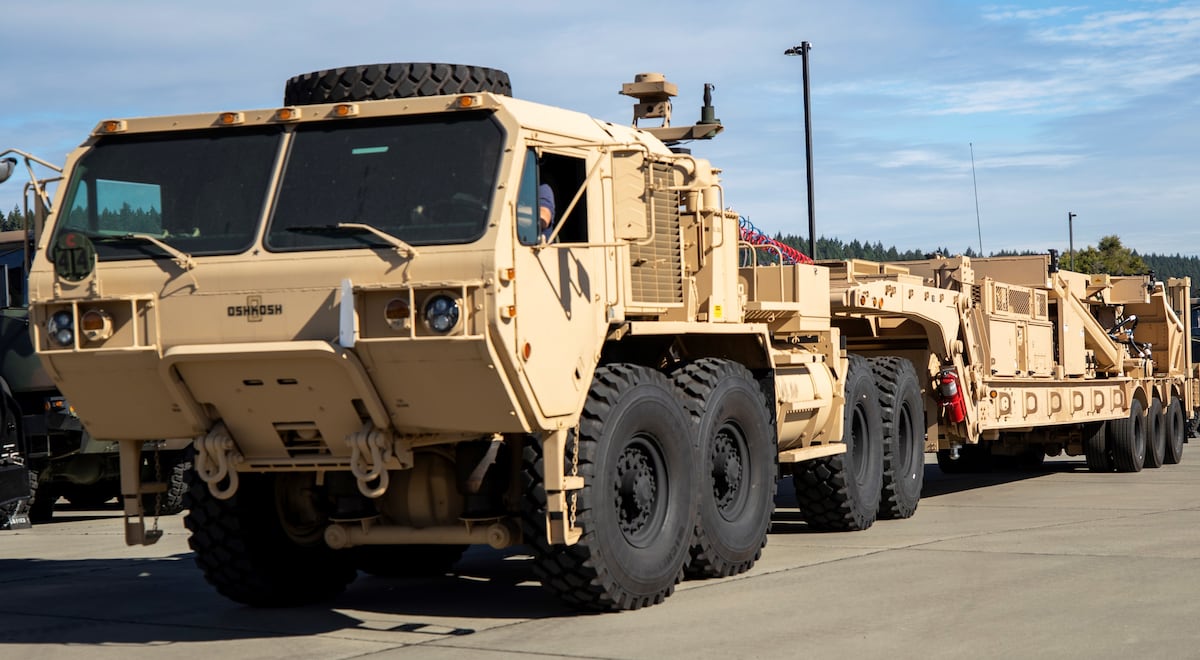
Key Takeaways
- The U.S. Army will test its Long-Range Hypersonic Weapon (LRHW) in December, with fielding expected by May 2025.
- Lockheed Martin is finalizing the first round, while ongoing tests aim to increase operational training efficiency.
- The development of hypersonic weapons is crucial amid advancements by China and Russia in similar technologies.
LRHW Test Scheduled Amid Development Delays
The U.S. Army plans to conduct a test of its Long-Range Hypersonic Weapon (LRHW) in December. This testing phase follows a series of delays stemming from challenges faced by both the Army and Navy in examining a jointly developed hypersonic glide body capability. Earlier this year, the Army confirmed that it intends to deliver its ground-launched hypersonic missiles to an operational unit by the end of fiscal 2025.
Major General Frank Lozano announced that the first unit to receive this capability will be based at Joint Base Lewis-McChord in Washington state, with deliveries expected to commence around May. The 1st Multidomain Task Force, part of the 5th Battalion, 3rd Field Artillery Regiment, received all the necessary equipment for the LRHW in 2021, except for live rounds. Initially, missile delivery was slated for fall 2023, but multiple test cancellations have led to revisions in the timeline.
The program is transitioning from the Army’s Rapid Capabilities and Critical Technologies Office (RCCTO) to the Program Executive Office Missiles & Space, with the formal transfer occurring once the first round is delivered. Lockheed Martin, as the lead integrator for the weapon’s launch system, is finishing the first round at its Alabama facility. Meanwhile, Leidos’ Dynetics is manufacturing the common hypersonic glide body for both the Army and Navy versions of the weapon.
The Army unit at JBLM will continue to receive rounds throughout the year as they become available. The Army plans to integrate a test firing with soldiers operating the system during December’s training exercises to maximize the value of the costly rounds. “We’re trying to be efficient,” stated Lozano.
The development of hypersonic weapons is increasingly important given the advancements made by global competitors, particularly China and Russia, who actively pursue and refine hypersonic missile technologies. These weapons can travel faster than Mach 5 (over 3,836 miles per hour) and boast unique maneuverability capabilities that challenge traditional missile defense systems.
In May 2024, the Army achieved a successful end-to-end flight test of its hypersonic missile at the Pacific Missile Range Facility in Hawaii, marking progress toward operational readiness. Additionally, a December test at Cape Canaveral Space Force Station, which successfully validated the Common Hypersonic Glide Body (C-HGB), further supports military confidence in the system’s effectiveness.
In highlighting the control over missile development timelines, Army representatives noted that the LRHW program, although delayed by approximately two years, remains within a typical development timeframe; missile initiatives generally span around ten years, and the LRHW has been under development for just over five years.
Jen Judson, an experienced journalist covering land warfare, emphasizes the significance of these developments amidst rising competition in global military technology.
The content above is a summary. For more details, see the source article.









