


Key Takeaways
- The Navy’s sixth-generation fighter, F/A-XX, may be the last manned fighter for the service, introducing advanced technologies like AI and machine learning.
- The F/A-XX will enhance battlespace awareness and enable closer integration of piloted and unmanned aircraft, paving the way for hybrid air wings by the 2040s.
- Details regarding the F/A-XX are anticipated soon, with Boeing and Northrop Grumman as the potential builders, promising significantly extended operational range compared to current fighters.
Future of Naval Aviation
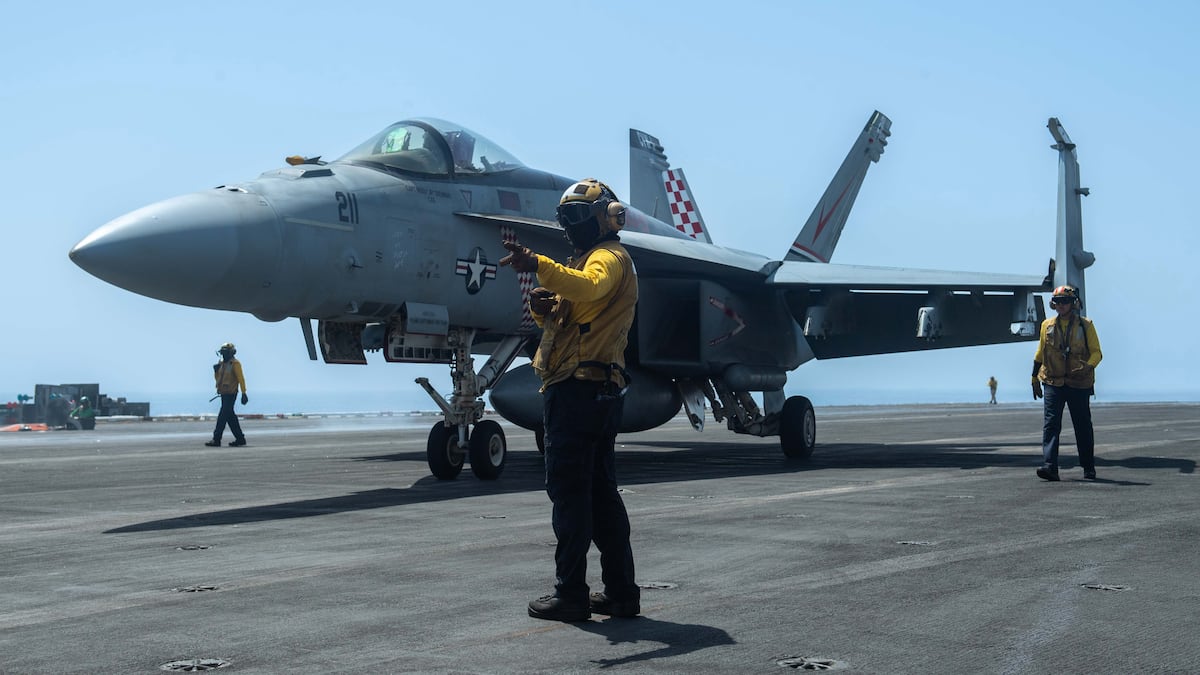
The U.S. Navy’s F/A-XX fighter, touted as the service’s upcoming sixth-generation aircraft, may mark the end of an era for manned fighters. Rear Adm. Michael Donnelly, director of the Navy’s air warfare division, indicated during the Navy League’s Sea Air Space conference that the F/A-XX will integrate groundbreaking technologies such as artificial intelligence (AI) and machine learning. These advancements aim to enhance battlespace awareness and support naval aviators in more effective decision-making.
Donnelly emphasized that the F/A-XX will facilitate a future where manned and unmanned aircraft synergize more closely. This concept includes upcoming AI-operated drone wingmen known as collaborative combat aircraft, enhancing the operational landscape within the Navy. “It could be our last tactical manned fighter that we operate out of the Navy,” he noted, suggesting a paradigm shift towards a “man-on-the-loop” approach rather than a traditional “man-in-the-loop” framework. This approach will be critical for developing a hybrid air wing that combines both crewed and uncrewed platforms by the 2040s.
The F/A-XX is designed to operate effectively in contested environments, outperforming current Navy fighters. As Donnelly pointed out, while current aircraft demonstrate capabilities at parity with adversaries, the F/A-XX aims to advance beyond this threshold. He acknowledged that the aircraft is projected to have a combat range exceeding 25% more than existing fighters, with the F/A-18 Super Hornet and the F-35C Joint Strike Fighter currently having ranges of approximately 1,275 and 1,200 nautical miles, respectively.
As the Navy enters a new phase of aerial combat, the specifics regarding the F/A-XX may be announced relatively soon. Comparatively, the Air Force’s equivalent fighter, the Boeing-made F-47 Next Generation Air Dominance fighter, was publicly introduced by former President Donald Trump in March 2021. Recent developments noted by Breaking Defense indicated that Lockheed Martin has been dropped from consideration for the F/A-XX, leaving Boeing and Northrop Grumman as main competitors.
The advancement of the F/A-XX fighter is considered a core attribute, with Donnelly stating that while the aircraft will have an extended inherent range, its capabilities will enable indefinite flight duration with ongoing refueling support. The integration of these new functionalities and capabilities symbolizes a transformative shift in naval aviation, potentially redefining how the Navy conducts air operations in the face of evolving threats.
The content above is a summary. For more details, see the source article.









