


Key Takeaways
- The U.S.-China trade war, marked by significant tariffs, impacts China’s semiconductor industry, with potential benefits for domestic segments.
- China’s semiconductor sector may strengthen as it diversifies supply chains, despite U.S. supremacy in high-end technology.
- The long-term implications of tariffs could reshape global trade dynamics, posing challenges for both nations.
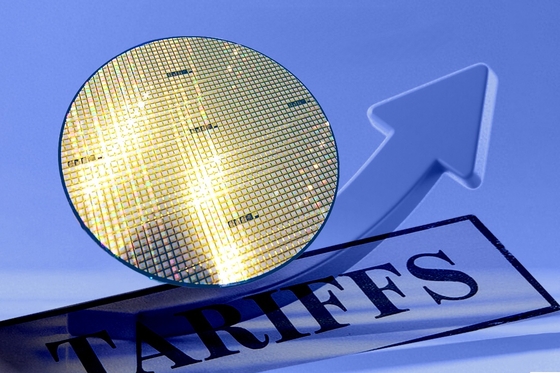
The ongoing trade war between the United States and China escalates as the U.S. imposes a 34% tariff on Chinese goods, with a threatened 50% increase by President Trump. In response, China mirrors these tariffs, significantly affecting its semiconductor industry, which relies heavily on U.S. technology. A key factor in this conflict is the classification of product origin, relevant in determining added tariffs on semiconductors, particularly regarding their substantial transformation.
As importers face the need for detailed documentation to trace product origins, specific items from the Commerce and Customs Departments may see additional tariffs. However, there is potential for China’s semiconductor sector to gain, especially in upstream segments. Non-U.S. mobile chip manufacturers like MediaTek are positioned to capture more of the domestic market, along with mature-node domestic chip producers set to fill the gap left by U.S. products. Although performance enhancements are crucial for domestic chips to compete effectively, limited direct semiconductor exports to the U.S. minimize immediate effects on China’s overall semiconductor export landscape.
This tariff conflict highlights the broader U.S.-China tech rivalry, where the U.S. seeks to bolster its domestic manufacturing sectors. The strategy aims to limit foreign competition, jeopardizing international production bases that offer cost advantages. Moreover, efforts to source materials from non-U.S. origins could spur China’s ‘de-Americanization’ initiative, making non-U.S. products more competitive in the global market.
If successful, China could develop low-tariff markets with regional partners like Japan, South Korea, and Europe, thereby diminishing U.S. dominance in semiconductor technology. However, challenges remain due to the U.S.’s stronghold in high-end chips and the brand influence of consumer electronics. A comprehensive tariff war risks exerting downward pressure on China’s semiconductor market, despite the country’s established supply chains and resilience in mitigating tariff impacts.
The future of these tariffs depends largely on their effects on U.S. inflation and subsequent political ramifications in light of upcoming elections. As the trade conflict continues to unfold, a significant reorganization of global trade dynamics appears inevitable. The prospect for a prolonged period of uncertainty looms, suggesting that both the U.S. and China will face substantial challenges before any stabilization can occur in the semiconductor sector and beyond.
The content above is a summary. For more details, see the source article.









