


Key Takeaways
- The CRSBT technique aims to enhance response rates in smart city applications by minimizing wait times through advanced learning algorithms.
- Integration with 5G communication technologies and IoT enables efficient resource utilization, ensuring reliable service broadcasts.
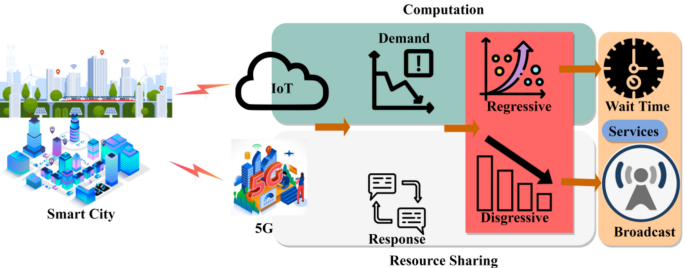
- The system employs regressive and digressive learning processes to optimize service requests, mitigate service delays, and improve overall user experience.
The CRSBT (Communication Resource Smart City Based Technology) is designed to enhance response rates for smart city applications by effectively reducing wait times in an IoT (Internet of Things) environment. By leveraging linear regressive and digressive learning techniques, the CRSBT minimizes service delays and enhances the reliability of application services.
In smart cities, the CRSBT identifies and suppresses digressive responses that may impede service delivery. This involves analyzing attributes such as wait times and service reliability through a structured learning process that includes both regressive and digressive components. The goal is to improve service broadcast sustainability and flexibility, ensuring a seamless experience for users.
Illustrated in its design, the CRSBT utilizes advanced 5G communication technologies to optimize resource utilization in smart cities. The interaction between IoT devices and the 5G network allows for real-time service requests to be processed efficiently. By analyzing user demands, the system dynamically adjusts to minimize wait times and enhance resource allocation. The reliability of service delivery is maintained as it adapts to varying user requirements.
The CRSBT core processing unit combines both regressive service broadcasts and digressive response verification to monitor user requests, ensuring the smooth flow of information. By managing user demands effectively, the system operates on a foundation of both immediate responsiveness and robust data processing capabilities.
To achieve optimal performance, the system employs a structured approach to demand and request processing in the 5G network. It analyzes user interactions and processes them according to defined time intervals, using equations that provide a comprehensive view of the service demands. The focus on minimizing wait times is paramount, as addressing demands promptly enhances user satisfaction.
Furthermore, the digressive learning component addresses the potential increase in service delays, actively managing responses to ensure that services remain accessible. The CRSBT thus not only promotes efficient resource allocation but also actively seeks to maintain high standards of service quality and user experience.
As smart cities evolve, the CRSBT’s ability to adapt to new challenges, such as data security and scalability, remains crucial. The emphasis on user-central performance metrics—such as accessibility, satisfaction, and responsiveness—ensures that the system remains relevant and effective in meeting the needs of urban environments.
Overall, the CRSBT represents a significant advancement in integrating smart city applications with 5G and IoT technology, fostering improved service delivery while simultaneously addressing the complexities of modern urban living.
The content above is a summary. For more details, see the source article.









