


Key Takeaways
- President Trump signed an executive order on April 9 to revitalize America’s shipbuilding industry, which has struggled to keep pace with global competitors.
- The U.S. Navy aims to expand its fleet to 381 ships over the next 30 years, necessitating an investment of at least $40 billion annually.
- Concerns persist regarding the Navy’s ability to enhance ship production rates amid rising costs and current production delays.
Executive Order Aims to Boost Shipbuilding
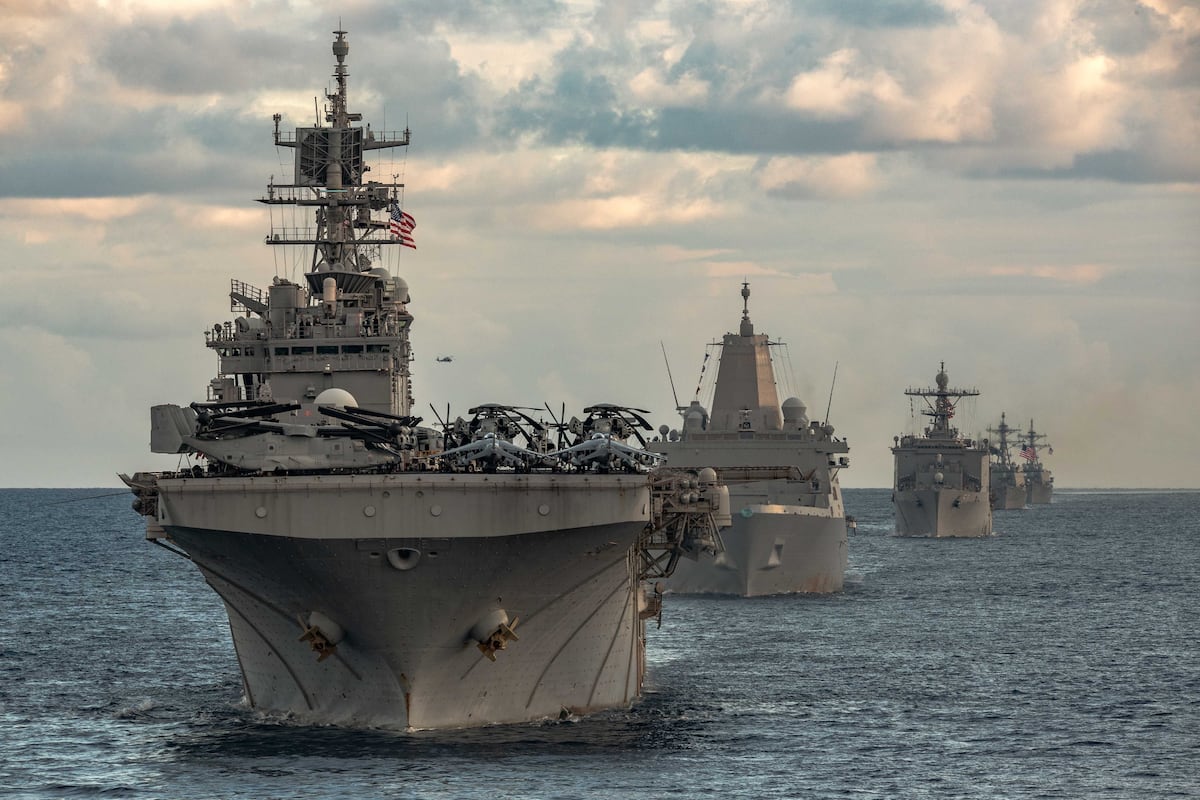
On April 9, President Donald Trump enacted an executive order intended to rejuvenate the American shipbuilding industry, which has lagged behind countries like China. The order emphasizes the importance of enhancing the country’s commercial shipbuilding capacity and maritime workforce amidst a backdrop of rising defense concerns.
During a hearing before the Senate Armed Services Subcommittee on Seapower, Navy leadership expressed apprehensions about stagnant shipbuilding rates and their implications for national security in potential large-scale conflicts. As reported in March 2024, the Navy aims to expand its fleet to 381 battle force ships over the next three decades, a plan expected to cost at least $40 billion annually. Currently, fewer than 300 ships are operational, with projections indicating a net decrease in fleet size as more ships face retirement than are expected to be commissioned through 2027.
Matthew Sermon, a program manager for the Navy’s maritime industrial base, highlighted a significant workforce challenge, estimating that around 250,000 skilled workers will need to be recruited in the next ten years to meet shipbuilding and maintenance targets. This aligns with a policy statement from the Navy League, which called on Congress to bolster funding for public shipyards and Coast Guard icebreakers.
Rising costs and project delays have severely hindered progress within the Navy’s shipbuilding efforts. Dr. Brett Seidle, the acting assistant secretary of the Navy, stated that ships are being delivered later than planned and often at a higher cost than budgeted. The Government Accountability Office (GAO) corroborated these concerns in a recent report, which criticized the Navy’s inability to grow its fleet over the past twenty years and pointed out delays in the frigate program.
In light of these issues, President Trump characterized the shipbuilding industry as one enduring “decades of government neglect” and emphasized the need for a revitalized industrial base to uphold U.S. national security. According to the executive order, the Assistant to the President for National Security Affairs, Mike Waltz, must develop an action plan addressing these challenges within 210 days. Additionally, Defense Secretary Pete Hegseth has been tasked with exploring investment opportunities to enhance shipbuilding capabilities and workforce development.
Global military dynamics further complicate the U.S. shipbuilding landscape. The Navy is particularly focused on increasing its output of submarines to respond to threats in regions like the Indo-Pacific and the Arctic. As part of the AUKUS security agreement with Australia and the UK, there is rising demand for Virginia-class submarines, necessitating an annual production goal of 2.33 boats.
Production delays of key vessels, including the Columbia-class submarines, have raised alarms among Navy officials. These submarines represent a pivotal component of the U.S. nuclear triad, and any setbacks affect the nation’s long-term strategic capabilities. The Navy has recently commissioned the Virginia-class attack submarine Iowa, with two more submarines expected to be delivered within the year, yet challenges persist.
In addition, the Coast Guard has reinforced its capabilities by adding its first polar icebreaker in 25 years, highlighting the increasing importance of the Arctic region amid intensified military activities by both the U.S. and its adversaries. The Pentagon’s 2024 Arctic Strategy underscores the need for the U.S. to remain competitive in this pivotal area, particularly in light of China and Russia strengthening their military presence there.
The evolving geopolitical landscape necessitates urgent actions to address the systemic issues in U.S. shipbuilding and maritime readiness, as Navy leaders recognize the imperative to boost production rates and ensure operational superiority against potential adversaries.
The content above is a summary. For more details, see the source article.









