


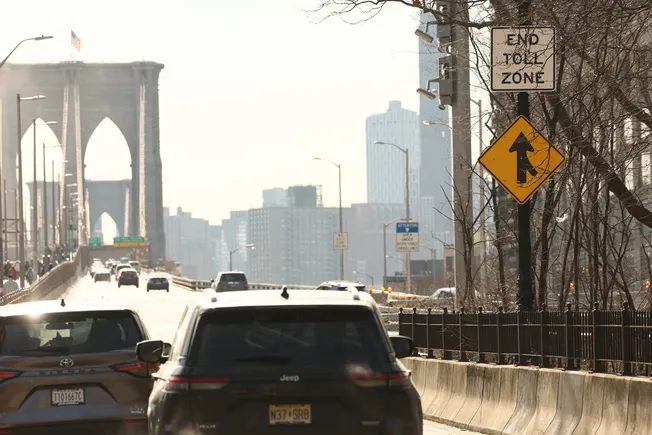
Key Takeaways
- Transportation Secretary Sean Duffy threatens to pull federal funding for Manhattan projects if New York’s congestion pricing is not halted by May 21.
- New York state officials defend the congestion pricing program, citing reductions in traffic and increased public transit use.
- The congestion pricing initiative has shown early success, boosting economic benefits for commuters while legal battles with federal authorities continue.
Transportation Funding Dispute Over Congestion Pricing
U.S. Transportation Secretary Sean Duffy has issued a stern warning to New York Governor Kathy Hochul regarding the state’s congestion pricing initiative. In a letter dated April 21, Duffy stated that if New York does not terminate the congestion pricing program by May 21, the Federal Highway Administration (FHWA) will withdraw funding and approvals for highway projects in Manhattan. He indicated that environmental approvals and construction authorizations would be paused for initiatives in the borough, with the exception of safety-related projects.
New York’s response has been firm. Hochul’s spokesperson declared, “Traffic is down, business is up and the cameras are staying on,” signifying the state’s commitment to maintaining the congestion pricing scheme despite the federal ultimatum.
The congestion pricing program, which charges tolls to vehicles entering Manhattan below 60th Street, has already begun to produce positive results. Early data shows an 11% decrease in traffic in Manhattan’s central business area compared to last year, alongside increased public transit use in January and February. The Regional Plan Association estimated that the added efficiency for commuters from this program could yield financial benefits ranging from $500 million to $1.3 billion.
The Congestion Pricing Now Coalition supported these findings, asserting that the program is meeting its goals of promoting faster commutes, cleaner air, and vital investment in the transit infrastructure. This coalition comprises transit riders, civic groups, and business advocates, reflecting widespread support within various sectors.
The dispute over congestion pricing, enacted as state law in 2019, was endorsed by the FHWA under President Biden’s administration; however, it faced previous opposition from the Trump administration, which attempted to cancel the program in February of this year. In response to Duffy’s recent actions, the New York Metropolitan Transportation Authority (MTA) has filed a lawsuit against the federal government, seeking to uphold the funding and implementation of the program.
MTA Chair and CEO Janno Lieber expressed determination in their response to Duffy’s letter, stating the agency is considering legal options since similar issues are already being addressed in court. Despite the federal threats, Lieber affirmed, “In the meantime, cameras are staying on.”
The New York State Department of Transportation, New York City Department of Transportation, the Sierra Club, and the Riders Alliance have also joined the lawsuit against Secretary Duffy. Riders Alliance’s policy director, Danny Pearlstein, pushed back against Duffy’s allegations, asserting the legality and public benefit of the congestion pricing initiative. Pearlstein emphasized that “New York keeps saving bus riders time and raising essential funds to upgrade our aging subway,” reinforcing the notion that the program is well-founded and vital for the state’s transit future.
As legal proceedings and federal funding negotiations unfold, the outcome of this conflict could set significant precedents for urban traffic management and public transportation financing across the U.S.
The content above is a summary. For more details, see the source article.









