


Key Takeaways
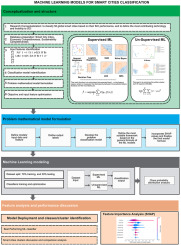
- Research ranks the top 50 global smart cities using advanced machine learning models.
- High-performing cities demonstrate integrated governance and sustainability, providing actionable insights for urban planners.
- Implementing balanced urban management strategies is crucial for improving smart city effectiveness and equity.
Research Overview
Smart cities are increasingly recognized as a vital solution to urbanization challenges, leveraging technology to enhance infrastructure, services, and sustainability. A recent study focuses on classifying the top 50 smart cities worldwide by analyzing key livability and technology indices. This research utilizes advanced machine learning (ML) techniques to evaluate city performance thoroughly.
The aim of this study is to identify patterns and best practices among high-performing cities, delivering actionable insights for urban planners and policymakers striving to advance smart city initiatives. By concentrating on leading cities, the research ensures the use of robust data while avoiding inconsistencies linked to poorer-performing cities.
Data is sourced from the Smart Cities Index (SCI) and various economic and sustainability competitiveness metrics. Different ML algorithms are employed to categorize cities into performance classes, ranging from high-achieving Class 1 cities to emerging Class 3 cities. The methodology includes careful data preparation, involving processes such as imputation and normalization, followed by training nine supervised ML models.
The findings reveal that Support Vector Machine (SVM), K-Nearest Neighbors (KNN), and Decision Tree algorithms serve as the most effective classifiers for this data. Moreover, cities that excel in integrating governance, infrastructure, and sustainability consistently achieve higher rankings. Conversely, cities in the lower classifications encounter significant difficulties in these critical areas.
The research implications suggest that cities aiming to bolster their smart city ranking should emphasize comprehensive urban management strategies. This entails balancing technological advancements with sustainability initiatives and enhancing public service access. Such strategies are essential for fostering equitable and resilient urban growth, ultimately improving the quality of life for residents in smart cities worldwide.
The content above is a summary. For more details, see the source article.









