


Key Takeaways
- Huawei introduced its “City Intelligent Twins Architecture” at GITEX Global 2024 to enhance smart city development.
- The new architecture integrates cloud technologies and AI to improve urban management efficiency across over 200 cities worldwide.
- Huawei launched the National One-Stop Public Services Solution and National Smart City Solution in collaboration with several partners.
Innovative Solutions for Smart Cities
During GITEX Global 2024, Huawei hosted a roundtable focused on accelerating digital transformation in cities, bringing together government experts and partners from multiple regions. The event highlighted the urgency for modern infrastructure as the complexity of urban governance increases.
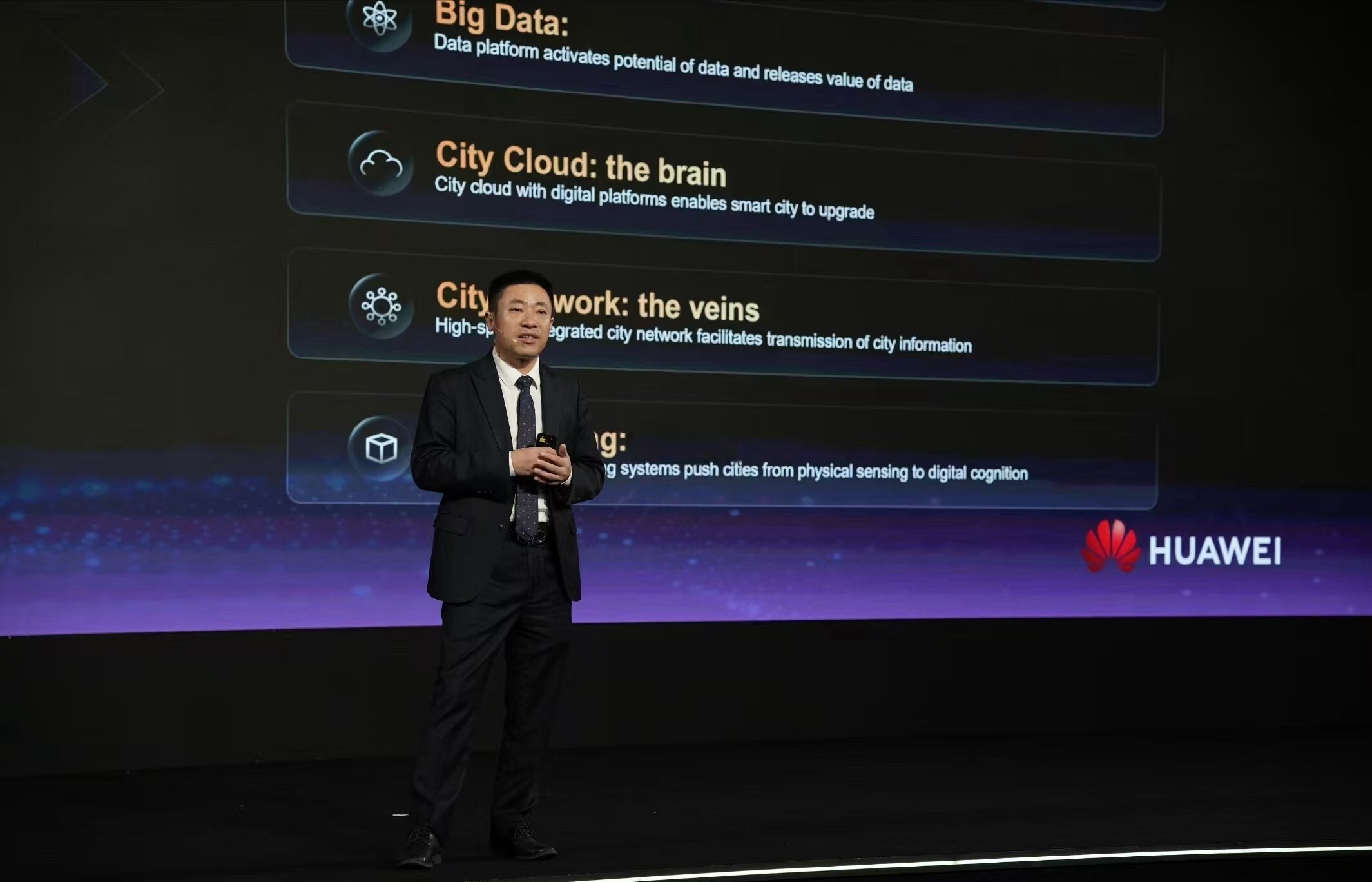
Hank Chen, the R&D President of Huawei’s Government Public Services Digitalization BU, unveiled the “City Intelligent Twins Architecture.” This innovative framework integrates the physical and digital aspects of cities, likening digital city networks to the body’s meridians and the cloud to its brain. By utilizing cloud-native technologies and AI algorithms, Huawei aims to facilitate cloud migration and smart service transformation. This architecture has been successfully implemented in over 200 cities across more than 40 countries, enabling enhanced governance and digital transformation.
Wang Bin, also from Huawei, presented insights on the evolution of smart cities in China, which has progressed from basic informatization to advanced intelligence. The experiences and practices gained from this journey provide valuable models for urban management globally.
In addition to these innovations, Huawei launched the National One-Stop Public Services Solution with collaborations from Audaque, Linewell, and Bamboocloud, alongside the National Smart City Solution developed together with Freedo Technology, Isoftstone Smart Technology, and RayChange Technology. These solutions are designed to streamline public service delivery and enhance smart city capabilities.
The content above is a summary. For more details, see the source article.









