


Key Takeaways
- Researchers developed an energy-efficient strategy to manage data flow in smart cities.
- The approach reduces delays during peak usage, enhancing emergency response capabilities.
- New algorithms improve energy savings while maintaining stability in data networks.
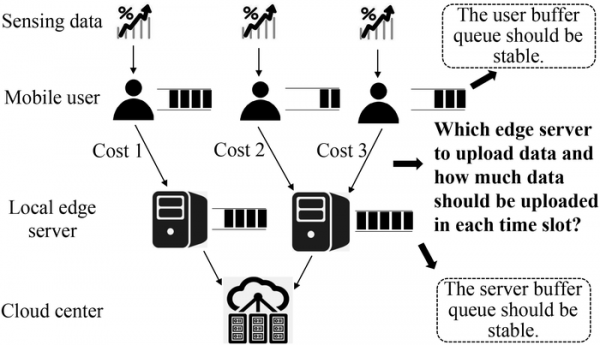
The increasing use of smartphones and wearables generates massive real-time data that supports smart-city services. However, during critical events such as natural disasters, simultaneous data transmission can overload networks, causing slowdowns that may hinder urgent alerts and logistical coordination. To address these challenges, researchers from Jilin University and the University of North Carolina have devised an energy-efficient method to optimize data processing, ensuring that city services remain effective even during peak demand.
The innovative strategy involves a two-step smart control system aimed at preventing digital traffic congestion. The first step involves assessing the workload of each mobile device and nearby servers to regulate data transmission, comparable to traffic lights adjusting for optimal vehicle flow. This monitoring uses Lyapunov optimization to dynamically decide how much data each device should send and when.
In the second step, the system categorizes various data types—such as videos, images, and text—and directs them to the most appropriate servers. This sorting technique is based on the Kuhn-Munkres algorithm, which efficiently manages data similar to how a logistics center allocates packages to delivery trucks. Together, these strategies effectively reduce energy usage, minimize processing delays, and ensure that essential smart-city applications like navigation and environmental alerts function smoothly during busy periods.
Performance evaluations of this new method showed impressive results, outperforming traditional strategies that, while slightly more energy-efficient, often lead to increased server queues and potential slowdowns. The proposed approach successfully maintained manageable queue lengths and reliable service even under heavy data loads.
As urban environments become increasingly reliant on interconnected devices for real-time data, maintaining stability and responsiveness is crucial. The research presents a viable solution featuring intelligent data-routing techniques that balance energy consumption with system performance. By prioritizing reliability during peak demand, this work provides a foundation for more sustainable and resilient urban data networks, paving the way for smarter cities.
The full study can be accessed via DOI: 10.1007/s11704-024-40620-6.
The content above is a summary. For more details, see the source article.









