


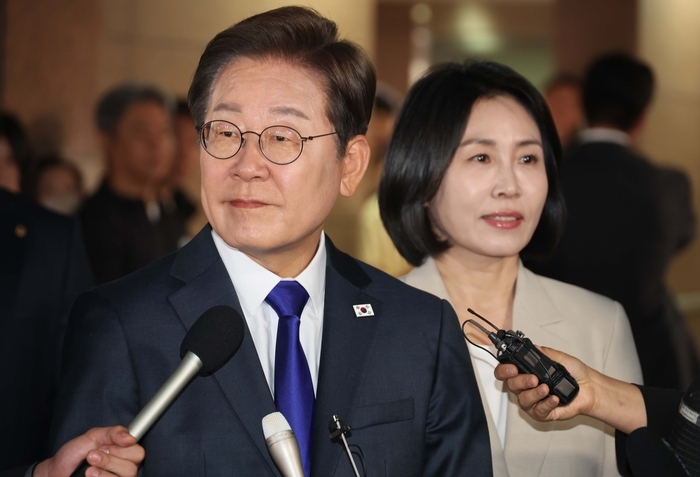
Key Takeaways
- President-elect Lee Jae-myung plans to focus on enhancing South Korea’s semiconductor and battery industries as part of his economic strategy.
- He aims to enact a special semiconductor law with financial incentives for companies like Samsung to bolster competitiveness.
- Expectations for economic stimulus could positively impact South Korea’s stock market, with projections for the KOSPI index rising significantly.
Policies for Strategic Industries
The inauguration of President-elect Lee Jae-myung marks a pivotal moment for South Korea’s industrial landscape, particularly amid ongoing political and economic uncertainties. Lee has pledged to prioritize the growth of high-tech sectors, specifically semiconductors and batteries, while also aiming to enhance shipbuilding and defense industries.
A key element of Lee’s platform is a commitment to strengthen the semiconductor industry, which he identified as critical for the nation’s economic future. In an emphasis on the significance of semiconductors, he stated, “Global economic hegemony depends on who controls semiconductors. Protecting semiconductors is protecting our future.” His strategy includes the development of a special semiconductor law that would provide subsidies and tax breaks to major industry players like Samsung Electronics.
In a demonstration of his commitment, Lee visited SK Hynix post-election, highlighting the urgent need for government-led initiatives to bolster economic growth through semiconductor advancements. The new legislation proposed under his administration is expected to address recent market uncertainties arising from U.S. tariff policies and heightened global competition.
Additionally, he announced a vision to establish a “battery triangle belt” across Chungcheong, Yeongnam, and Honam, intending to position this region as a hub for next-generation battery manufacturing. Lee emphasized the importance of battery technology, suggesting it is vital for driving the K-economy. Efforts to support innovations such as all-solid-state batteries will also be prioritized to enhance the industry’s global standing, especially as domestic companies like LG Energy Solution, SK On, and Samsung SDI face increasing competitive pressure.
Lee’s agenda also includes measures to uplift the shipbuilding and defense sectors. He has promised substantial support for shipbuilders and plans to position South Korea as a prominent player in the global defense market. This includes regular defense strategy meetings and potential tax reductions for defense research and development.
Investor sentiment towards these initiatives appears positive, with market experts anticipating that Lee’s economic stimulus policies may lead to a stronger stock market performance. Analyst Lee Kyung-min from Daishin Securities remarked on the likelihood of increased foreign investments and pressures on the South Korean won, predicting a significant rise in the KOSPI index, projecting a surge into the 3000 range.
As the new administration takes shape, industry stakeholders are keenly awaiting details on the implementation of these policies, which aim to reclaim South Korea’s competitive edge in key strategic sectors.
The content above is a summary. For more details, see the source article.









