


Key Takeaways
- Researchers at University of Tsukuba have identified mechanisms that enhance the open-circuit voltage of environmentally friendly tin-based perovskite solar cells.
- Utilizing indene-C60 diadduct (ICBA) in the electron transport layer improves performance by reducing charge recombination.
- This breakthrough addresses the efficiency gap between tin-based and lead-based perovskite solar cells.
Advancements in Tin-Based Perovskite Solar Cells
Perovskite solar cells are emerging as a promising technology due to their high efficiency, flexibility, and potential for easy manufacturing. Traditional lead-based perovskite materials have achieved notable efficiencies but raise concerns about lead toxicity, leading scientists to explore the use of tin-based alternatives which are considered more environmentally friendly.
A notable barrier to the widespread adoption of tin-based perovskite solar cells is their relatively lower energy conversion efficiency compared to lead-based options. One promising method to enhance performance in these solar cells involves the incorporation of indene-C60 diadduct (ICBA), a compound made from two indene molecules linked to fullerene (C60). While ICBA has shown potential in improving the electron transport layer, the mechanisms behind its effectiveness remain unclear.
Recent research conducted by a team from the University of Tsukuba aims to clarify these mechanisms. Their findings, featured in the journal npj Flexible Electronics, focus on optimizing the electron transport layer through the application of electron spin resonance. This research is pivotal for advancing the efficiency of tin-based perovskite solar cells.
The structure of a typical perovskite solar cell consists of a perovskite crystal positioned between a hole transport layer and an electron transport layer. In the study, researchers examined electron diffusion at the interface between the tin-based perovskite and the electron transport layer, specifically analyzing the effects of band bending at this interface.
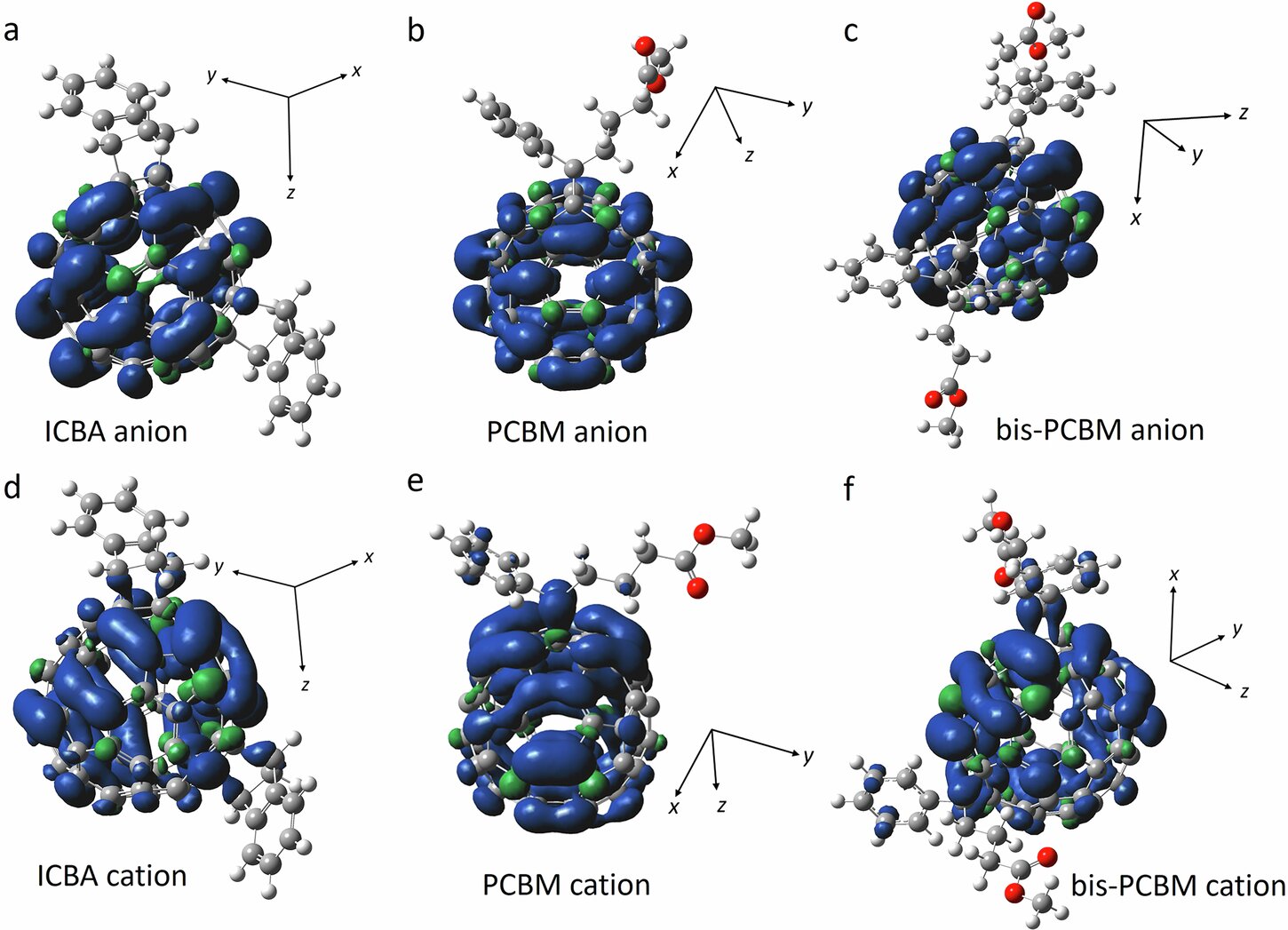
The team’s investigation discovered that using conventional PCBM (a fullerene derivative) in the electron transport layer results in band bending that promotes charge recombination at the junction with tin-based perovskite. This recombination diminishes the open-circuit voltage, which is the maximum voltage available for extraction in solar cells. Conversely, when ICBA is employed as the electron transport layer, it induces band bending that suppresses charge recombination, ultimately leading to a higher open-circuit voltage.
This research highlights the critical role of electron transport layers in solar cell efficiency, demonstrating how specific molecular designs, such as ICBA, can directly affect voltage output and overall performance. The insights derived from this study are promising for enhancing the viability of tin-based perovskite cells, positioning them as a sustainable alternative within the solar energy landscape.
The findings pave the way for further refinement of tin-based perovskite technologies, moving closer to achieving their full potential while addressing environmental concerns. The research represents an important step toward reliable and efficient solar energy solutions that align with global sustainability goals.
The content above is a summary. For more details, see the source article.









