Key Takeaways
- A Japanese private lunar lander, Resilience, crashed on the moon after losing contact during its final descent.
- The crash is attributed to a malfunction of a laser tool used for distance measurement, preventing a safe landing.
- If successful, the mission would have marked the second private lunar landing of 2023 and the first for a non-US company.
Mission Overview
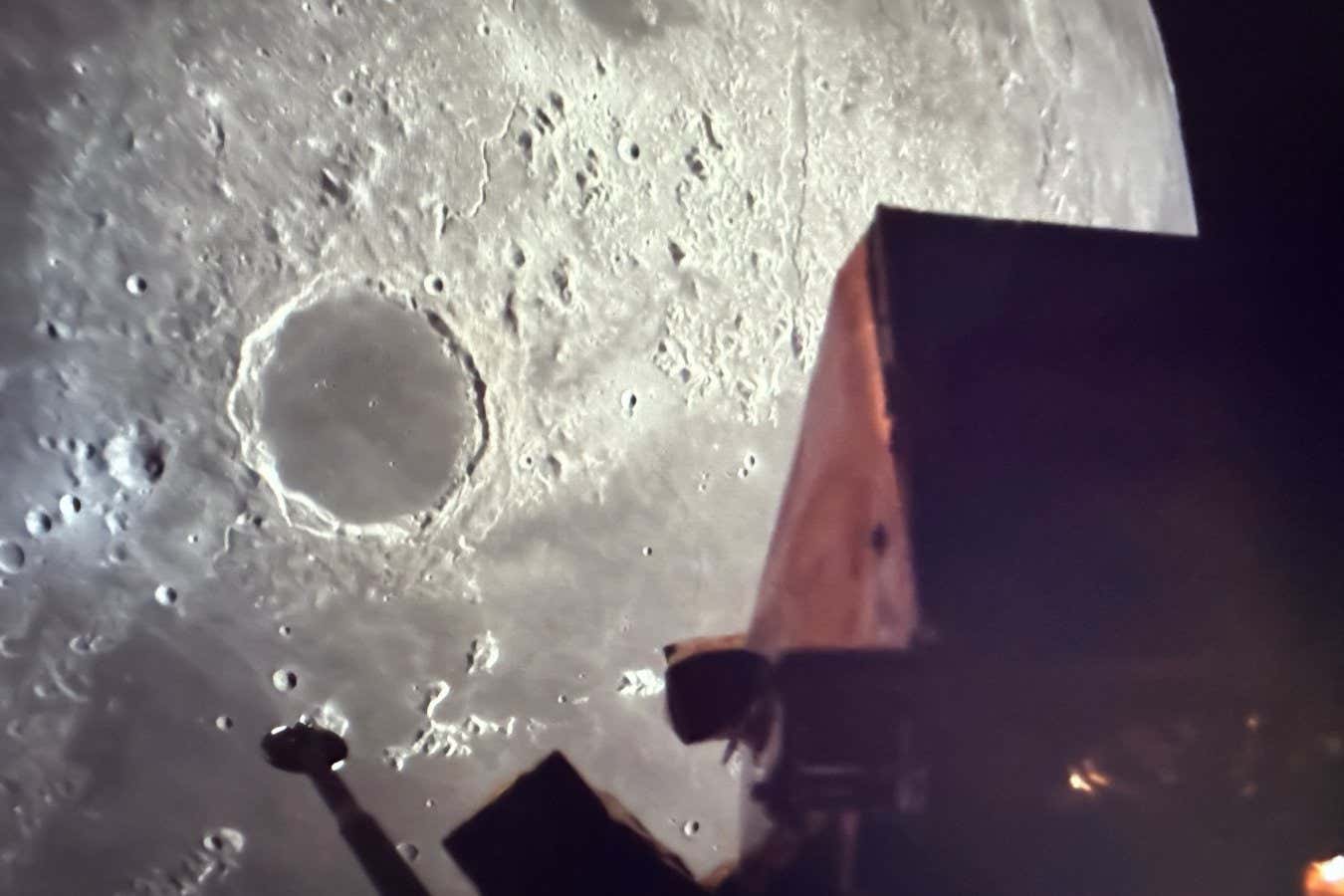
The ispace lunar lander Resilience aimed to be the third privately-funded craft to land on the moon but suffered a failure on 5 June 2023. After successfully descending to approximately 20 kilometers above the lunar surface, communication was lost during its final descent. In a statement, ispace indicated that a malfunctioning laser tool, integral for measuring the distance to the moon’s surface, likely caused an inadequate slow down, resulting in the crash.
CEO Takeshi Hakamada expressed disappointment but emphasized the importance of quickly analyzing the available telemetry data to determine the mission’s critical issues. Resilience had the potential to make history by becoming the second private lunar landing of the year and the first by a non-US entity, following the unsuccessful Hakuto-R mission in 2023.
Launched on 15 January 2023 aboard a SpaceX rocket alongside Firefly Aerospace’s Blue Ghost lander, Resilience opted for a complex trajectory to access the challenging lunar region known as Mare Frigoris. This area had previously seen no exploration, making its study significant for future lunar missions.
During its journey, Resilience was equipped with six experiments aimed at advancing lunar exploration. These included technology for splitting water into hydrogen and oxygen, a module for growing food from algae, and a radiation monitor designed for deep-space conditions. Notably, the lander carried a 5-kilogram rover named Tenacious, which was intended to explore and photograph the moon’s surface over its planned two-week operational period.
Despite the crash, the mission’s data and results from the experiments may still provide valuable insights for future lunar endeavors, reinforcing the ongoing quest for exploration and understanding of our celestial neighbor.
The content above is a summary. For more details, see the source article.