


Key Takeaways
- The Smart City Expo Miami gathered experts from 11 countries to discuss advancements in urban technology and sustainability.
- AI was a significant focus, highlighting its role in urban planning, public safety, and community engagement.
- Innovative startups presented solutions for environmental and urban challenges, emphasizing the need for sustainable city practices.
Innovation and Community at Smart City Expo Miami
The fifth annual Smart City Expo Miami took place at Miami Dade College’s Wolfson Campus, hosting experts and participants from 11 countries to explore innovative technologies for improving urban living. The event’s curator, Bernardo Scheinkman, highlighted the importance of collaboration, noting 250 attendees and over 7,000 online viewers registered from 282 cities across 89 countries. Sessions will be accessible online for a wider audience.
AI emerged as a central theme during the Expo, with significant discussions on its ability to revolutionize city management and planning. AI expert Jonathan Reichental emphasized that 75% of employees now use generative AI, suggesting that its integration into daily operations will only increase. He pointed out that AI could enhance traffic management and environmental monitoring. Sarbeswar Praharaj from the University of Miami echoed this sentiment, arguing that AI can help cities analyze extensive data sets, like historical temperature records, to better tackle future urban challenges.
Raimundo Rodulfo, Chief Innovation Officer of Coral Gables, showcased his city’s integration of AI in public safety and infrastructure. By utilizing AI for predictive analytics and monitoring, Coral Gables has crafted a more data-driven approach to city management, improving responsiveness to citizen needs.
The Expo also highlighted innovative startups addressing urban issues. Sargassum Eco Lumber, founded by Raquel De Antonio, won accolades for turning invasive seaweed into sustainable building materials. Her efforts not only combat the environmental challenges presented by sargassum blooms but also reduce plastic waste.
Another noteworthy startup, SyncData.ai, led by Alice McLaughlin, provides AI solutions to simplify regulatory processes for governments, aiding urban planning efforts. The dynamic pitches from these companies showcased the potential of small-scale innovators in tackling critical urban challenges.
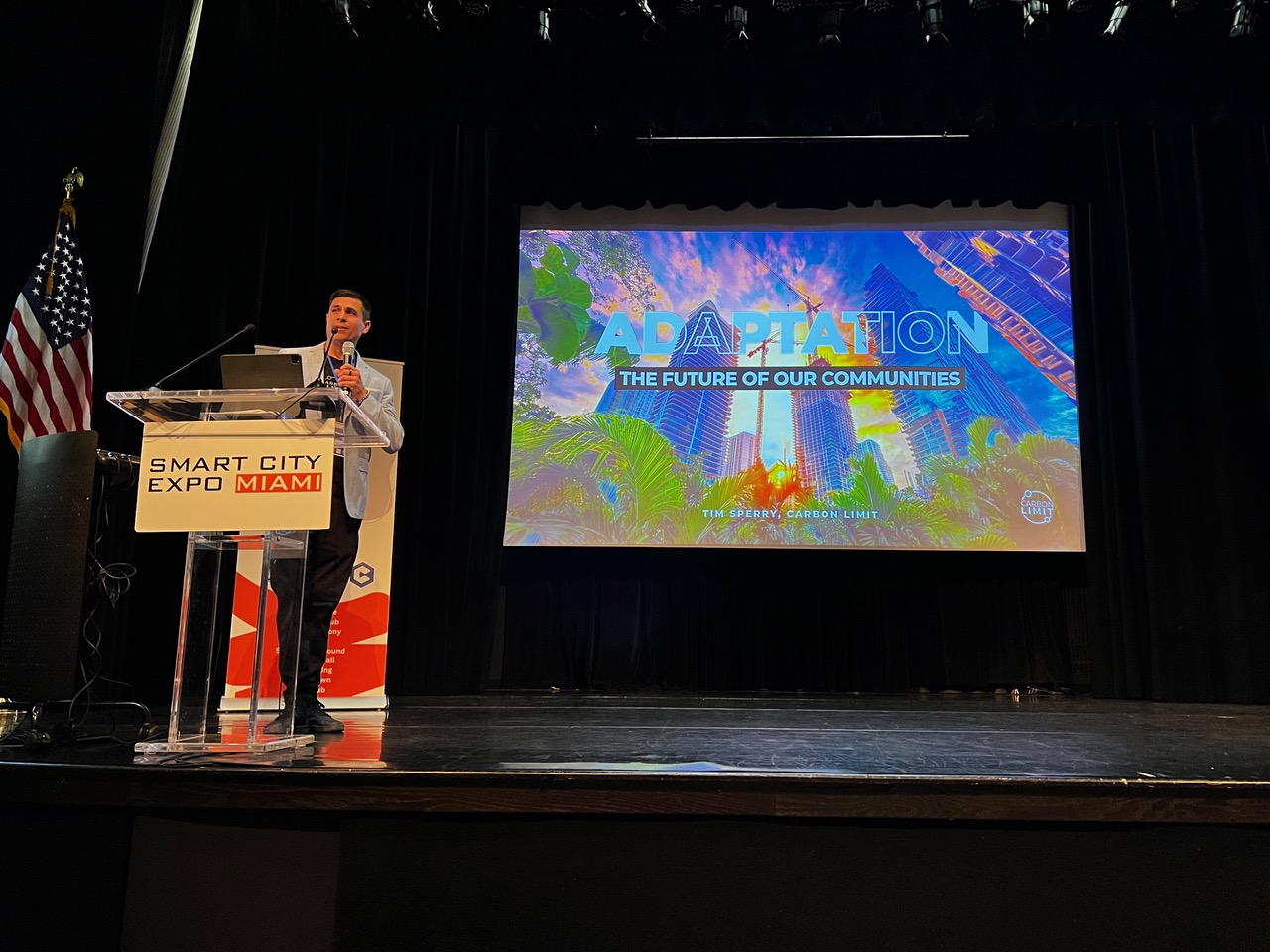
Climate resilience was another major focus, with experts stressing Miami’s vulnerabilities to climate change. Tim Sperry of CarbonLimit warned of the urgency for adaptive strategies, calling Miami “ground zero for climate risk.” His company proposed innovative materials like CoolCrete to mitigate urban heat, demonstrating the need for integrating climate solutions into city planning.
Speakers underscored the importance of human-centered design in urban spaces, advocating for designs that promote health and social connection. The Expo concluded with a unified call for a holistic approach to urban planning that leverages technology, sustainability, and community engagement, setting Miami on a path to becoming a “Future Ready” city.
The content above is a summary. For more details, see the source article.









