


Key Takeaways
- A hydraulic system failure caused a B-2 Spirit stealth bomber’s landing gear to collapse, resulting in the aircraft’s retirement.
- The incident was compounded by a design flaw in the B-2’s landing gear and a delayed use of fire suppressant foam by firefighting crews.
- The crash incurred approximately $300 million in damages to the bomber and $27,500 to the runway.
Incident Overview
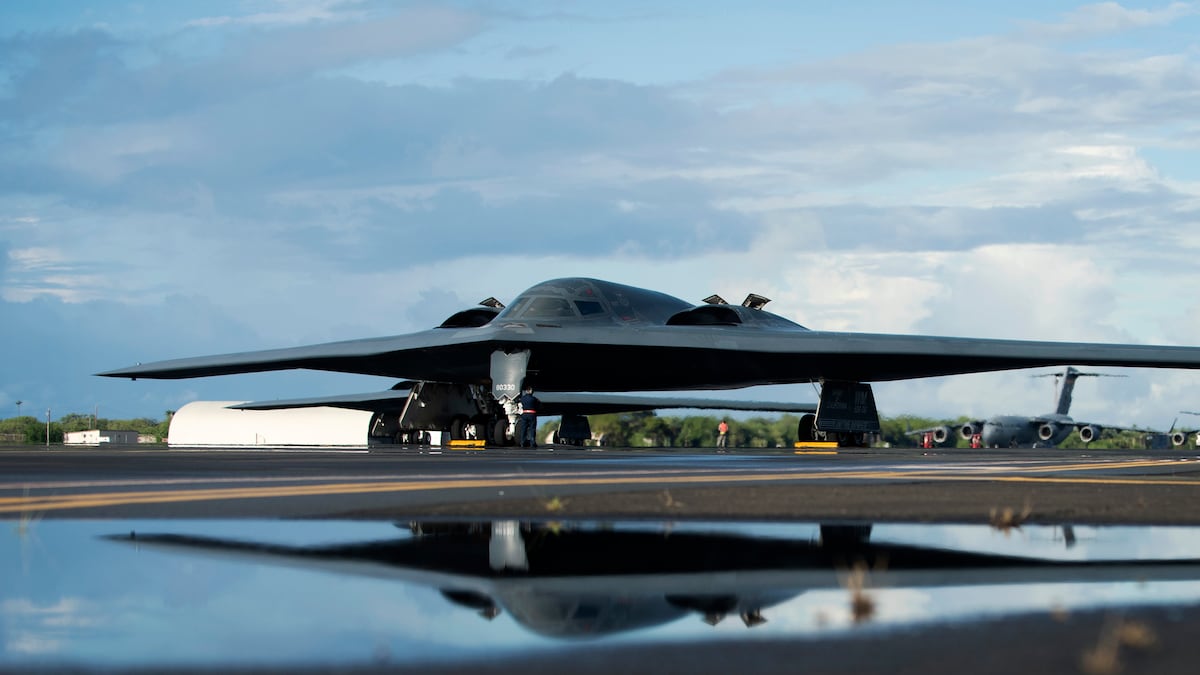
On December 10, 2022, a B-2 Spirit stealth bomber, known as the “Spirit of Hawaii,” from the 509th Bomb Wing at Whiteman Air Force Base, Missouri, experienced a critical failure shortly before landing. An investigation report released by the Air Force identified a hydraulic system failure as the primary cause behind the landing gear collapse, leading to a significant fire that ultimately resulted in the aircraft’s retirement.
As the bomber approached the runway, the pilot initiated the landing gear lowering process. Despite normal operation of the landing gear doors, a hydraulic valve coupling within the right landing gear system failed, causing a rapid loss of fluid and pressure. The bomber’s cockpit lights indicated a malfunction, and the onboard computer switched to a backup system to attempt to repressurize hydraulic lines necessary for lowering the landing gear. However, the backup system also started losing pressure, forcing the pilot into an emergency landing gear extension maneuver, which was eventually successful.
Upon landing, the left landing gear failed, collapsing under the weight of the aircraft. As the left wing dragged along the runway, the concrete surface damaged it severely, rupturing a fuel tank and igniting a fire. Both pilots escaped without injury, vacating the aircraft safely.
Fire response to the situation was further complicated by the incident commander’s initial decision to use only water to combat the fire, mistakenly believing that fire suppression foam was only for last-resort use. After about three and a half minutes, foam was authorized, significantly improving fire control. However, a fuel tank explosion about 30 minutes after landing exposed an internal fire, leading to a larger explosion that scattered debris at the crash site.
The investigation concluded that the hydraulic failure and a design flaw in the B-2’s landing gear contributed critically to the accident. The delayed deployment of foam allowed flames to spread, increasing the damage. Ultimately, the incident resulted in over $300 million in damages to the aircraft and roughly $27,500 to the runway.
Considering the extensive damage incurred, the Air Force decided against repairs, retiring the B-2, which initially cost around $1.2 billion when introduced in the 1990s. Currently, 19 B-2s remain operational, with an expected retirement in the early 2030s.
The content above is a summary. For more details, see the source article.









