


Key Takeaways
- The U.S. dispatched two warships to the South China Sea following a collision between Chinese vessels and a Philippine ship at Scarborough Shoal.
- The incident has raised international concerns regarding maritime safety and the ongoing tensions in the disputed waters.
- The Philippines maintains a longstanding alliance with the U.S., which is obligated to defend it against armed attacks.
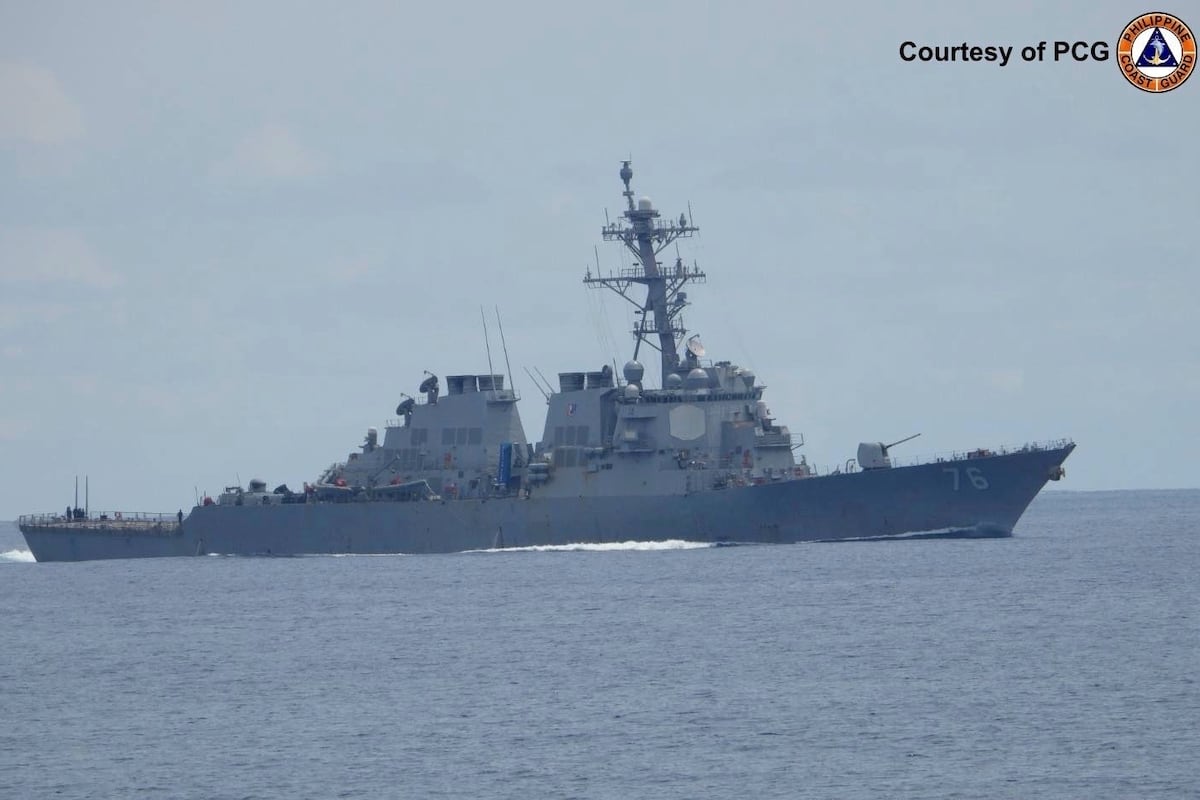
In response to escalating tensions at Scarborough Shoal, the U.S. deployed two warships, the Higgins and the Cincinnati, to the region on Wednesday. This follows a collision earlier in the week between a Chinese navy destroyer and a Chinese coast guard ship, which occurred while they attempted to block a smaller Philippine vessel, the BRP Suluan. The incident has attracted international attention, raising alarm over maritime safety in the contested waters of the South China Sea.
Both China and the Philippines assert claims over the Scarborough Shoal, an area also claimed by Vietnam, Malaysia, Brunei, and Taiwan. The U.S. Navy has been conducting freedom-of-navigation operations in the area for years, challenging China’s expansive claims and restrictions. These operations have often provoked confrontations between Chinese forces and U.S. military vessels and aircraft.
On Tuesday, U.S. Ambassador to Manila MaryKay Carlson criticized what she described as “the latest reckless action by China” against a Philippine vessel. The Scarborough Shoal has increasingly been the stage for confrontations involving Chinese and Philippine coast guard ships and fishermen.
Following the collision involving the Chinese vessels, video footage captured moments before the incident showed the Chinese coast guard ship using a water cannon to block the Philippine vessel. Remarkably, after the crash, the bow of the Chinese coast guard ship appeared heavily damaged, contrasting with the earlier scene where Chinese personnel were seen on deck.
Japan, Australia, and New Zealand have expressed concerns over the dangerous maneuvers that led to the collision. The Japanese Ambassador to Manila, Endo Kazuya, emphasized the importance of upholding international laws and reducing tensions in the South China Sea. Similarly, the Australian Embassy issued a statement condemning the “dangerous and unprofessional conduct” by Chinese vessels and calling for de-escalation and respect for international law.
Philippine coast guard Commodore Jay Tarriela remarked that this incident serves as a “learning experience” for China, urging them to cease risky maneuvers that could lead to further collisions. In a related incident, a Chinese fighter jet reportedly flew dangerously close to a Philippine surveillance plane, escalating the situation further.
This recent series of confrontations highlights the ongoing complexities of maritime disputes in the South China Sea and the implications they carry for regional and international security. As the U.S. remains committed to its defense obligations to the Philippines, the situation in the Scarborough Shoal continues to be a focal point of geopolitical tension.
The content above is a summary. For more details, see the source article.









