


Key Takeaways
- The hydroponic system at Ain Shams University uses treated greywater and solar energy, promoting sustainable agricultural practices.
- Significant observations included the impact of local climate conditions on the system’s performance concerning water and energy management.
- This innovative approach serves as a model for similar semi-arid regions globally, showcasing the role of educational institutions in sustainability efforts.
Location and Weather Conditions
The hydroponic system is located on the rooftop of the Agricultural Engineering Department at Ain Shams University in Qalyoubia Governorate, Egypt. This semi-arid region provides an ideal environment for testing sustainable irrigation technologies. The project not only transforms idle urban space but also raises awareness about renewable energy and sustainable practices among students.
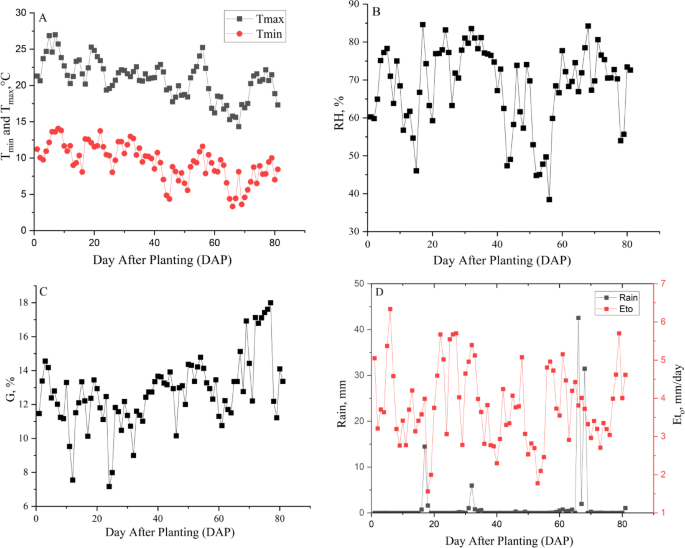
The weather data collected during the study revealed crucial factors influencing system performance. The average air temperature reached 15.1°C, with limited rainfall of 107.4 mm over the study period. Daily reference evapotranspiration peaked at 6.3 mm/day, highlighting the importance of efficient water management. Solar radiation averaged 12.7 MJ/m2/day, generating sufficient energy for the solar-powered irrigation system.
Hydroponic Farming Setup
The hydroponic system comprises four main components: a greywater treatment unit, nutrient film technique (NFT) units, a solar energy unit, and a water scheduling control unit. The setup allows for water recycling through treated greywater, thus reducing reliance on freshwater resources.
Both NFT systems, one grid-powered and the other solar-powered, foster controlled lettuce cultivation. The components, including pumps powered either by grid electricity or solar energy, were carefully monitored using various sensors and a microcontroller system. This integration ensures sustainability and operational efficiency by learning from real-time data.
Water and Energy Management
The water treatment unit processes greywater sourced from the university’s kitchen, employing sand filtration and sediment filters before reusing the water for irrigation. The study detailed water consumption, energy use efficiency, and key performance indicators of the hydroponic system, calculating the amount of energy consumed and water used for optimal plant growth.
The results indicated effective energy management through a dedicated solar power setup, with capability for monitoring environmental conditions. The automated pump operation further enhanced water efficiency, supporting a sustainable model for modern agriculture.
Crops and Yield Assessment
Hydroponic units evaluated lettuce growth, revealing the efficiencies in nutrient delivery and water use. The outcomes displayed notable crop yield with lower resource consumption compared to traditional farming.
This research emphasizes the feasibility of sustainable practices in resource-limited settings and the potential global application of these findings in similar climatic conditions, thereby contributing valuable insights to advancing sustainable agriculture.
The content above is a summary. For more details, see the source article.









