


Key Takeaways
- Oklahoma City’s MAPS initiative, especially MAPS 4, is revolutionizing urban development with a one-cent sales tax.
- Mayor David Holt emphasizes financial independence and community engagement in shaping the future of the city.
- MAPS 4 aims to generate $1.1 billion for public projects, enhancing quality of life and fostering economic growth.
Transformative Developments in Oklahoma City
Oklahoma City has undergone significant changes, evolving from a city known for stockyards and oil fields to a bustling metropolitan area with over 700,000 residents. Central to this transformation is the MAPS (Metropolitan Area Projects) initiative, particularly MAPS 4, which focuses on public improvements funded by a one-cent sales tax introduced in 1993. This tax has supported various projects that have paved the way for growth and innovation in the city.
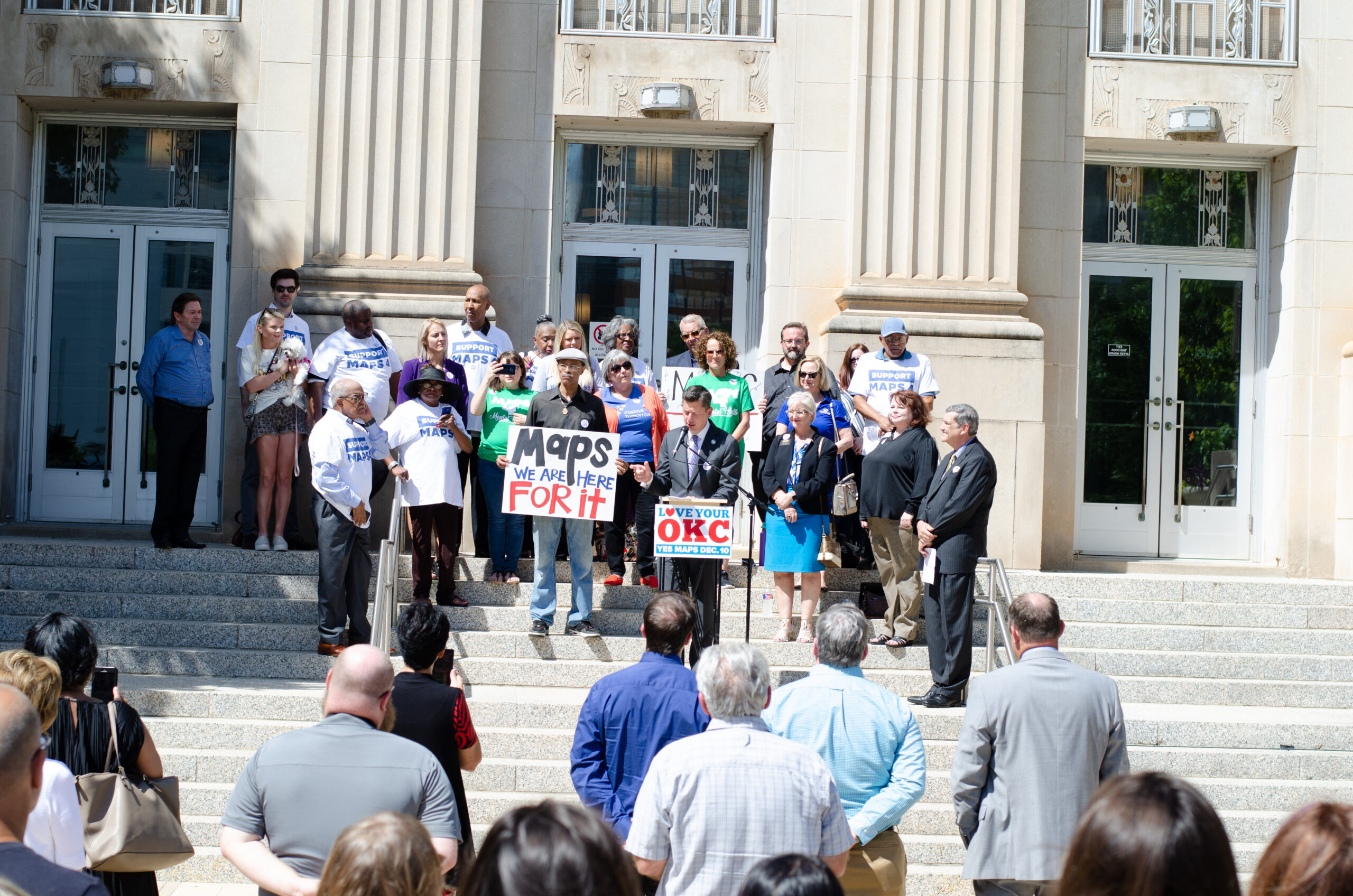
Since taking office in 2018, Mayor David Holt has worked with local businesses and citizens to continue this legacy of progress. He initiated the planning for MAPS 4 in 2019, which is expected to raise $1.1 billion over eight years. The funds will support an array of community improvements, including parks, youth and senior centers, sidewalks, bike lanes, and improved public transit options. These enhancements aim to elevate residents’ quality of life while stimulating economic advancement.
The article in Smart Cities Dive, published January 2, highlights the national attention Oklahoma City has garnered for its urban development initiatives, placing it at the forefront of innovative practices. The Greater Oklahoma City Chamber has been instrumental in driving these initiatives forward and ensuring alignment with the city’s growth agenda.
In an interview with Smart Cities Dive Senior Reporter Dan Zukowski, Mayor Holt shared insights into MAPS 4’s strategy. The initiative prioritizes key areas such as human services, transportation, and public engagement. Reflecting on the program’s 30-year history, he noted, “The program is really the engine of our renaissance here in Oklahoma City.”
Financial stability is a crucial aspect of MAPS 4; Mayor Holt emphasized the city’s commitment to self-funding projects. He stated, “We would not include a project that would depend on success in federal grants or borrowing. We would always have enough money to do it ourselves if we had to. We don’t have debt hanging over our head.”
Community involvement is a key driver of MAPS 4’s direction. Holt pointed out the high level of civic engagement and support that shapes Oklahoma City’s vision for the future, stating that residents are well-informed about ongoing projects and the city’s developmental goals.
Smart Cities Dive serves as a digital platform, reaching over 138,500 leaders in local government, urban planning, and business. The publication covers various topics, including transportation, infrastructure, and governance, providing comprehensive insights into the evolving landscape of urban development.
For further reading on MAPS’ pivotal role in Oklahoma City’s future, visit Smart Cities Dive.
The content above is a summary. For more details, see the source article.









