


Key Takeaways
- Over 2,000 sanitation workers engaged in a significant strike across multiple states, primarily against Republic Services, over contract disputes and wage concerns.
- Workers express frustration over stagnant wages despite rising costs and excessive executive compensation, prompting calls for improved labor conditions.
- While some contracts have been negotiated, tensions remain high, especially in Massachusetts, as unions seek fair wages amid increasing public support for organized labor.
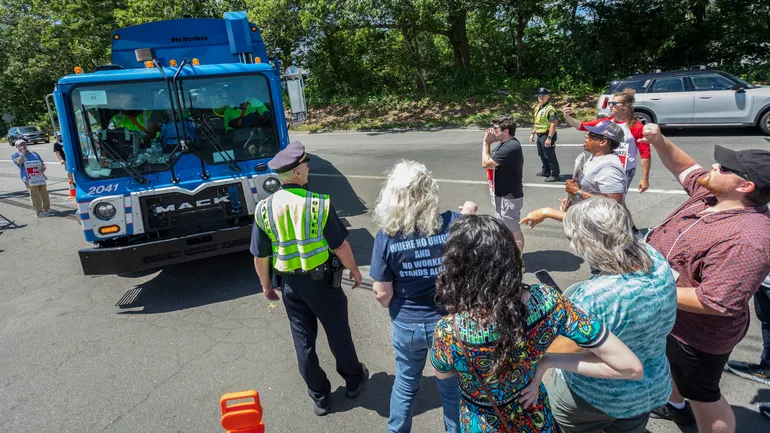
The ongoing strike by sanitation workers represented by the International Brotherhood of Teamsters marks a significant labor dispute affecting Republic Services, one of the nation’s largest waste management companies. Initially starting in Boston in July 2025, the strike swiftly spread to other regions, with over 2,000 workers participating, although approximately 450 continue to picket actively.
Striking workers have expressed frustration with the gap between their perceived status as “essential workers” during the pandemic and their current compensation. According to their representatives, these workers have seen little wage growth amidst rising inflation, while top executives at Republic have received substantial compensation packages. “After things got back to normal, it was just back to business,” said Chuck Stiles, leader of the Teamsters’ waste and recycling division.
Local officials and state representatives have voiced support for the strikers, blaming Republic for the mounting garbage issue across municipalities, with Massachusetts Governor Maura Healey describing ongoing negotiations as “beyond untenable.” The company insists it can meet customer needs and argues that their offers—such as a 43% wage increase over five years—are competitive, though the union disputes this claim.
The strike, which is the largest in sanitation history over the last two decades, has led to considerable disruptions in waste collection, with communities now witnessing the effects of delayed services. Notably, officials from several Boston-area municipalities have even pursued legal action against Republic for alleged breaches of contract.
Tensions escalated further in Massachusetts, where accusations emerged from Republic about picketers using aggressive tactics to hinder operations. Concurrently, the Teamsters argue that their picketing has successfully curtailed Republic’s ability to maintain its usual service levels, necessitating a reliance on contracted workers. Republic has cited increased security expenses due to the disruptive activities surrounding the strike.
Despite the challenges, the union sees an advantageous position bolstered by extensive public support for labor movements. The strike has resonated with residents who have also expressed frustration toward Republic, prompting many to stand in solidarity with the workers.
As negotiations continue, both parties acknowledge the complexities involved. The Teamsters seek fair compensation structures while Republic faces mounting financial pressures, estimating losses of up to $50 million due to the labor actions, which represents a minor fraction of its overall earnings. However, industry analysts caution that major corporations can often weather protracted strikes, indicating a potential impasse.
Negotiation dynamics have shifted since previous disputes, with the number of workers represented by the Teamsters increasing thanks to consolidation in the industry. New initiatives from the Teamsters, aimed at securing the financial stability of striking workers, have also emerged, such as dedicated funds for health benefits during disputes.
The broader context indicates a growing demand for fair wages in often dangerous occupations within the waste management sector, balancing the need for adequate worker compensation against the backdrop of corporate profitability. Public sentiment appears to be shifting toward greater support for unions and acknowledgment of the challenging nature of these jobs.
With various strikes and negotiations occurring nationwide, both sides are now in a waiting game as they seek to maneuver toward a resolution that satisfies the necessary wage structures while ensuring that Republic can remain competitive within the huge waste management market.
In summary, the strike reflects deeper issues within labor-management relations, the struggle for fair wages, and the ongoing evolution of worker rights and corporate responsibility in a transforming economic landscape.
The content above is a summary. For more details, see the source article.









