


Key Takeaways
- India’s solar manufacturing capacity has more than doubled, aiming to compete with Chinese dominance.
- Domestic demand for solar power will likely mitigate the effects of U.S. tariffs on Indian exports.
- Government policies are driving growth in the solar sector while reducing dependence on Chinese imports.
India’s Solar Industry Surge
Located on the outskirts of Jaipur, India has been ramping up its solar component manufacturing to compete with China, the global leader in this sector. As the world’s most populous nation, India aims to satisfy its growing electricity demands while also promoting domestic solar production.
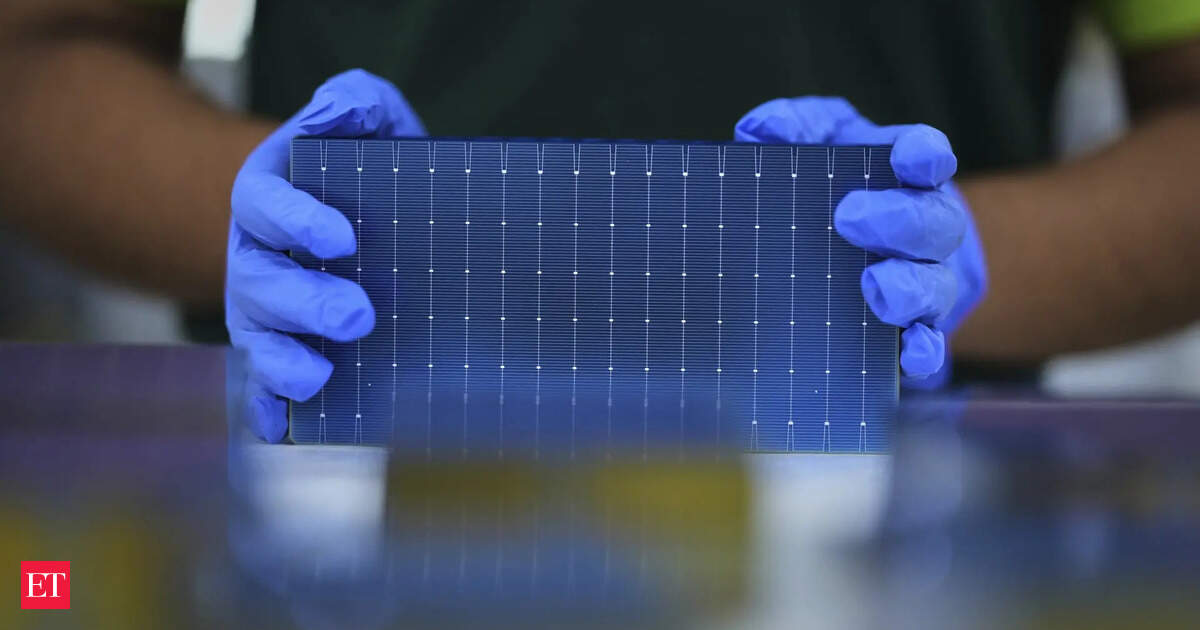
A key player in this drive is ReNew, a manufacturer with a factory capable of generating 4 gigawatts of power annually—enough to supply 2.5 million homes. This facility not only symbolizes progress in the solar industry but also provides jobs for nearly 1,000 individuals. As an engineer at ReNew noted, the job has empowered workers and contributed to the clean energy transition.
Despite India’s advancements, challenges persist. To date, China manufactures over 80% of all solar components globally, and Indian manufacturers still rely heavily on Chinese materials. Furthermore, the solar industry faces increased pressure from the U.S., particularly after the implementation of 50% tariffs on Indian goods by the Trump administration. These tariffs pose a significant challenge for Indian solar exporters, as the U.S. market accounts for about a third of their sales.
Nonetheless, Indian solar manufacturers are adapting. Analysts predict that domestic demand for solar power will help cushion the blow from U.S. tariffs. Government policies aimed at fostering domestic production and encouraging local purchases are further bolstering the industry. For instance, after the COVID-19 pandemic, companies like Hyderabad-based Vega Solar have shifted their focus from exports to satisfying local needs, reversing their previous customer base.
India is making substantial strides in harnessing solar energy, as the cost of solar power has drastically fallen—now half that of coal plants. The country has witnessed a 30-fold increase in installed solar capacity over the past decade. Current government forecasts indicate that demand for solar modules may soon outstrip domestic supply as manufacturers continue to export.
Experts are cautious about the immediate impact of U.S. tariffs, suggesting that any significant effect may take time to materialize due to the advance nature of solar component ordering. This uncertainty is compounded by the ongoing legal disputes surrounding the tariffs.
India’s renewable energy sector is robust, with nearly 170 gigawatts of solar projects in the pipeline and ambitious targets of 500 gigawatts by 2030. Strong government policies that promote local manufacturing and restrict imports of solar materials have provided the needed impetus for the solar sector’s growth. According to industry leaders, policy support will be vital in sustaining this momentum.
While India remains dependent on imports for certain raw materials and finished solar components, it is making strides in manufacturing. Recent data shows a significant reduction—more than one-third—in imports of solar cells and modules from China. Predictions suggest that by 2030, India could primarily rely on domestic production for most components, needing only to import specific raw materials like polysilicon.
In summary, though challenges remain for India’s solar industry, government initiatives and a burgeoning domestic market are fostering growth and reducing dependency on external sources, providing a promising outlook for the sector’s future.
The content above is a summary. For more details, see the source article.









