


Key Takeaways
- The drone industry is rapidly evolving, driven by modern warfare and increasing technological advancements.
- Israeli companies like Aeronautics and Elbit are leading in developing advanced UAV systems, focusing on modularity and adaptability.
- Future advancements are expected to prioritize autonomy and AI integration in UAV operations.
Rapid Evolution of the Drone Industry
Amit Katz, Director at Aeronautics, emphasizes the competitive landscape of the drone market, particularly against lower-cost options from China. The drone industry has gained significant attention due to recent conflicts, such as the Russia-Ukraine war and the ongoing conflict involving Israel and Hamas. This dynamic environment has spurred advancements in drone technology, making it a critical component of modern defense.
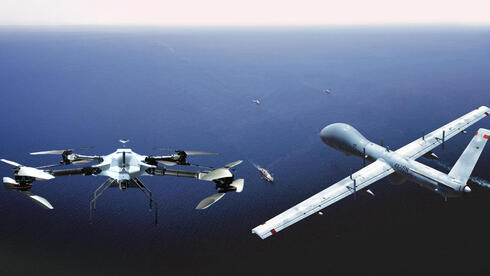
In Israel, while innovative startups are emerging, established companies like Aeronautics and Elbit Systems remain significant players. Aeronautics, acquired by Rafael in 2019, is recognized for its Orbiter UAVs and multi-rotor platforms. Elbit, Israel’s largest private defense firm, has over 30 years of experience in UAV technology, offering a wide range of aerial solutions.
Katz highlights that the true value of a drone lies not in the device itself but in how it supports mission objectives. Effective UAV operations hinge on adaptability, allowing for modifications based on battlefield needs. He observes that both Ukraine and Russia have adopted new technologies rapidly, validating the role of drones.
Elbit Systems’ VP, Vered Haimovich, states that operational experiences in intensive conflicts have led to prompt improvements in their UAV technologies. “We gather a lot of requirements from our users and implement them on a regular basis,” she explained, accentuating their focus on continuously enhancing their systems based on real-time feedback.
Adaptability in mission planning and execution has become essential. Halfway through a conflict can mean necessitating rapid shifts in capabilities. Katz notes the importance of successful integration of payloads and the safe return of UAVs after missions. “When the customer buys a system, he needs to complete his mission,” he says, emphasizing the operational stakes involved.
Reliability and innovation stand as benchmarks for companies like Aeronautics and Elbit. However, Haimovich stresses that the next frontier for the UAV sector lies in autonomy and artificial intelligence. The goal is to enhance not just flight autonomy but also the autonomy of mission planning. By leveraging AI, UAVs can execute missions more efficiently.
Katz agrees, noting that numerous startups are already working to increase UAV capabilities, thus paving the way for greater independence in their operations. As the technology continues to improve, the future of UAVs looks increasingly autonomous, pointing toward a transformative shift in how drones operate within defense sectors.
The content above is a summary. For more details, see the source article.









