


Key Takeaways
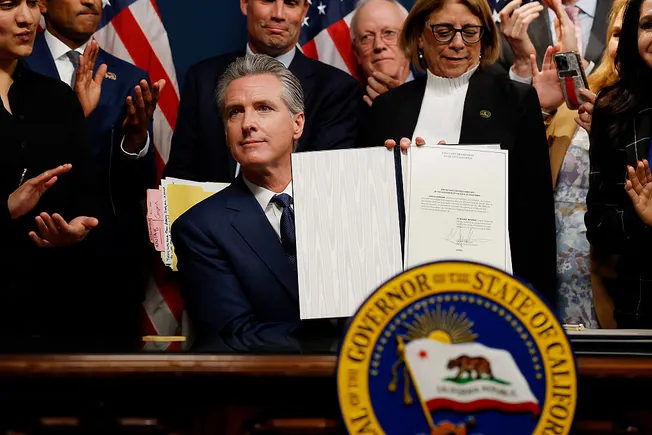
- California’s Gov. Gavin Newsom signed an executive order to enhance the state’s response to climate-driven disasters and improve economic protections, especially in the insurance market.
- The order follows new bipartisan legislation aimed at reducing electricity costs and stabilizing the gas market while promoting clean energy initiatives.
- California has seen a significant increase in climate-related disasters, with economic losses exceeding $1 billion per event for many occurrences over the past four decades.
New Executive Order Addresses Climate Disasters
California Governor Gavin Newsom has signed an executive order aimed at enhancing the state’s response to climate-related disasters and reducing their economic toll, particularly on the insurance and energy sectors. The order requires various state agencies to collaborate on research and develop strategies to mitigate risks associated with natural disasters. This comes as California faces a surge in deadly wildfires, with damages from incidents earlier this year alone surpassing $250 billion and resulting in at least 29 fatalities.
In light of increasing climate threats, Newsom’s directive focuses on establishing fair cost-sharing mechanisms for recovery efforts, improving insurance availability, and ensuring financial support for wildlife survivors. This executive order follows a recent package of bipartisan bills that aim to lower electricity costs for residents while promoting a transition to clean energy.
Among the key components of the recent legislative package, Senate Bill 254 seeks to create a new version of the California Wildfire Fund. This initiative aims to assist wildfire survivors and limit liability costs that fall on utility customers. The bill mandates a report on innovative responses to climate disasters by April 2026, further expanding the state’s disaster preparedness framework.
The executive order builds on SB 254, instructing state agencies to collaborate with the wildfire fund administrator to gather essential information for the upcoming report. In this process, input will be sought from experts across various related departments, including the California Public Utilities Commission and the Office of Emergency Services.
Over the past 40 years, California has seen a marked increase in extreme weather events, with the National Oceanic and Atmospheric Administration identifying at least 46 disaster events costing over $1 billion each from 1980 to 2024. This includes numerous wildfires, droughts, floods, and storms, underscoring the urgency for effective climate response measures.
Newsom commented on the importance of taking a unified governmental approach to tackle the climate crisis, stating, “There’s no Republican or Democrat thermometer — red and blue states alike, and countries around the world, are facing this climate-fueled insurance crisis.” He emphasized the need to protect Californians from wildfires while expanding coverage options and decreasing costs.
This executive order mirrors previous legislative efforts, including SB 219, which updated California’s climate risk disclosure laws, mandating large companies to disclose climate risks and emissions. As the state continues to confront the challenges posed by climate change, these steps highlight the commitment to improving resilience and safeguarding its residents’ livelihoods.
The content above is a summary. For more details, see the source article.









