


Key Takeaways
- OCP Green Energy has launched the first phase of its solar project, providing a total capacity of 202 MWp across three sites in Morocco.
- These solar farms will significantly reduce carbon emissions and contribute to the production of customized fertilizers.
- The initiative aligns with OCP Group’s goal to achieve 100% renewable energy for industrial needs by 2027 and carbon neutrality by 2040.
New Solar Initiative by OCP Green Energy
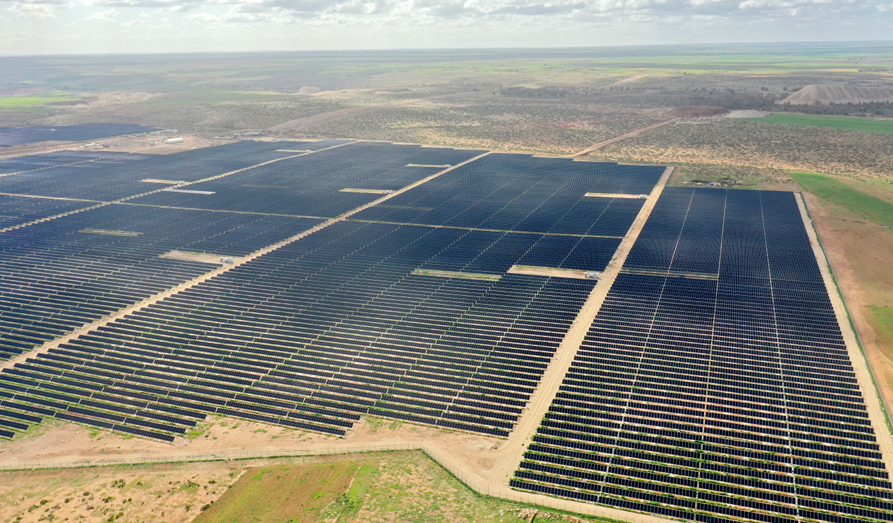
OCP Green Energy, a subsidiary of OCP Group, has completed the first phase of its renewable energy investment, achieving a solar capacity of 202 MWp across three operational sites: Benguerir (67 MWp), Foum Tizi (30 MWp), and Oulad Farès (105 MWp). The latter is now Morocco’s largest photovoltaic power plant, playing a crucial role in the group’s energy transition.
These solar projects cover a substantial portion of OCP Group’s energy needs, bolstering security, resilience, and sustainability. The sites produce low-cost electricity at approximately 368 MAD/MWh, essential for manufacturing tailored fertilizers. Developed following guidelines from Morocco’s Ministry of Energy Transition and Sustainable Development, these projects adhere to self-production law and national regulations governing energy transmission.
The implementation relied on agreements with ONEE, facilitating effective electricity transmission between production and consumption sites. This framework allows OCP Green Energy to efficiently utilize renewable energy, powering desalination stations and various strategic facilities.
The construction of these plants prioritized the engagement of local Moroccan industries, ensuring adherence to international standards, on-time completion, and budget management. The investment totaled nearly MAD 1.8 billion (US$195 million), overseen by OCP Green Energy and executed using a multi-lot EPCM model led by JESA, a joint venture between OCP and Worley. JESA emphasizes its commitment to local industrial participation, enhancing Morocco’s technological capabilities.
Internationally, the projects have garnered recognition, receiving €100 million from the International Finance Corporation (IFC) for development support. Partnerships have expanded with organizations like KfW (German Development Bank), focusing on the integral Water–Energy nexus. Additional funding comes from the Clean Technology Fund, driven by the African Development Bank.
The successful integration of solar plants within active mining operations posed challenges; however, they were met through collaboration and adherence to operational excellence. OCP Green Energy is also advancing its capabilities with the launch of the Battery Energy Storage System (BESS) Phase I project in Benguerir, featuring a capacity of 25 MW / 125 MWh, set to be operational by 2026. This system will facilitate energy storage and distribution during peak demand, contributing to grid stability.
With this initial phase completed, OCP Green Energy is on track to expand its capacity to 1.2 GW by 2027 and over 2 GW beyond that, including at least 2 GWh of storage. This development reaffirms OCP Group’s energy transition strategy to generate power locally, cater to all its industrial energy needs with renewable sources by 2027, and achieve carbon neutrality by 2040, thereby enhancing its competitive edge in international markets.
The content above is a summary. For more details, see the source article.









