


Key Takeaways
- A U.S. House committee has advanced the Energy Choice Act, which prohibits states from banning gas appliances.
- The bill challenges New York’s All Electric Buildings Act, which mandates electric systems in new constructions.
- Supporters argue the legislation protects local economies, while opponents see it as a setback for environmental initiatives.
House Committee Advances Energy Choice Act
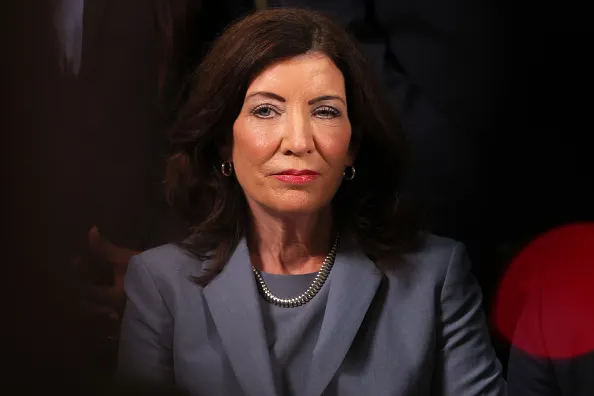
A U.S. House committee has approved the Energy Choice Act, which aims to prevent states and localities from banning gas appliances and mechanical systems. This legislation serves as a counter to actions taken by New York Governor Kathy Hochul, who has advocated for a law requiring new buildings to utilize only electric systems, known as the All Electric Buildings Act.
U.S. Representative Nick Langworthy of New York, who sponsors the bill, criticized the New York initiative as “illogical” and an infringement on personal rights. The proposed legislation would make it illegal for states and municipalities to restrict energy services based on the type of energy supplied, covering aspects like connection, modification, installation, or expansion.
The House Energy & Commerce Committee cleared the bill, putting it on track for a vote in the full House. If passed, it could effectively halt existing gas bans in states like California and Washington, as well as in areas such as Washington, D.C., and Montgomery County, Maryland.
Louis Bertolotti from the National Federation of Independent Businesses expressed that the bill aims to safeguard small businesses from what he termed “one-size-fits-all mandates” that could strain local economies amid rising electricity demands.
Governor Hochul’s All Electric Buildings Act, signed into law in late 2023, was scheduled to begin implementation in early 2026. However, the law has been temporarily paused pending the outcome of a federal appellate court ruling. The decision follows lawsuits from various construction and trade organizations, which argue it conflicts with the federal Energy Policy and Conservation Act (ECPA). They contend that ECPA mandates nationwide energy security requirements, which override state laws regarding energy use in appliances.
The trade groups that filed the lawsuit include the National Association of Plumbing-Heating-Cooling Contractors and the National Propane Gas Association, among others. In a letter to U.S. Attorney General Pam Bondi, they stated that state or local laws cannot regulate energy use or efficiency concerning common household and commercial appliances.
In response to the legislative move, environmental advocates, including Earth Justice, have criticized the pushback against all-electric initiatives, labeling it a favor to “wealthy corporate polluters.” This positions the conflict as a significant point of contention between economic interests and environmental policies.
The timeline for a floor vote on Langworthy’s bill remains uncertain. Garnering support from around 140 sponsors, primarily Republicans, the legislation is also mirrored in the Senate by a companion bill introduced by Senator Jim Justice of West Virginia in June.
The content above is a summary. For more details, see the source article.









