


Key Takeaways
- Zhao Bo leads a “family farm + doctor farm” initiative, pairing researchers with local farmers to enhance agricultural practices in Pinggu district.
- In 2024, his farm produced 112,000 virus-free seedlings and 55 metric tons of sweet potatoes, shifting focus from commercial production to research innovations.
- Pinggu is positioning itself as a hub for technology-driven agriculture, with plans for significant infrastructure developments and research facilities by 2028.
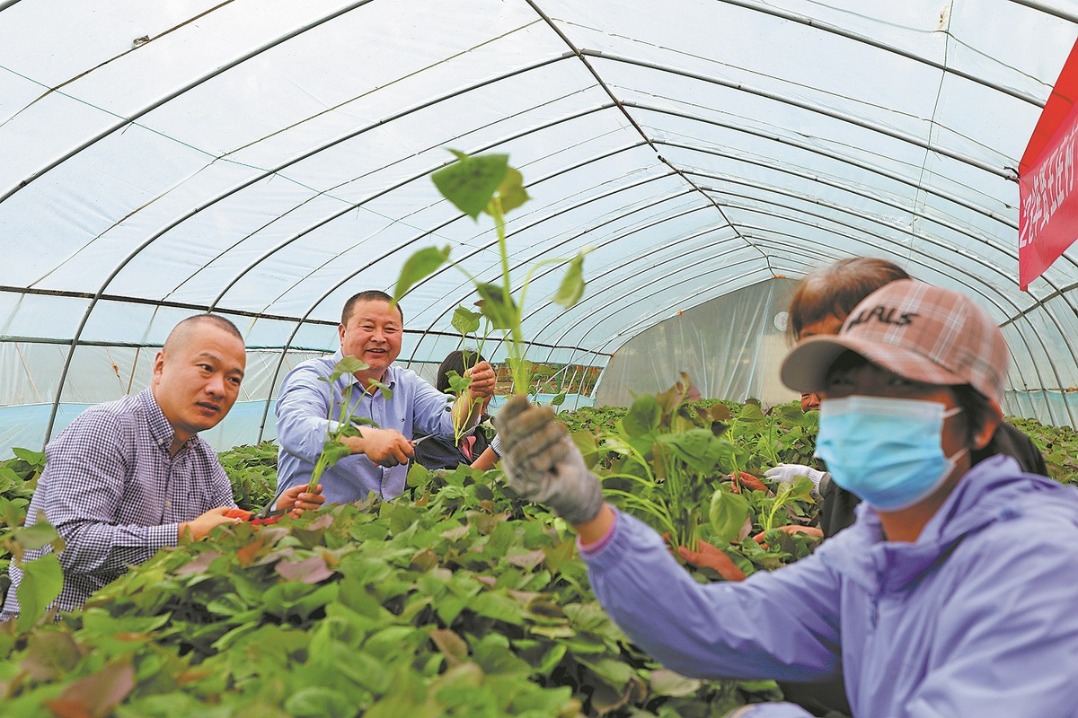
Zhao Bo, a 56-year-old associate professor from the Beijing University of Agriculture, has transformed his role from a traditional academic to an active participant in farming within the Pinggu district. He is one of the founders of 117 “doctor-led farms” initiated in 2022 to integrate scientific knowledge into rural agriculture. In 2024, Zhao introduced a “family farm + doctor farm” model, successfully pairing over 400 doctoral researchers with local farming households to improve agricultural practices, resulting in increased harvests.
Working primarily in Xianwangzhuang village, known for its long history of sweet potato cultivation, Zhao’s hands-on approach significantly benefits local farmers. His farm produced 112,000 virus-free test-tube seedlings and 55 metric tons of virus-free sweet potatoes in 2024, marking a shift from commercial seedling production to innovative research and seed-source development. Zhao emphasizes that the key to agricultural progress lies in applying research findings directly to the soil.
The “doctor-led agriculture” initiative coincides with recent directives from the Communist Party of China, which prioritize agricultural modernization. This initiative aims to keep agriculture and rural development at the forefront of national priorities, with a focus on enhancing productivity and ensuring effective governmental policies for farmer enrichment. Pinggu district officials envision establishing their area as a technological agricultural hub, akin to Beijing’s Zhongguancun high-tech zone.
Significant infrastructure projects are underway, including a 3.1-million-square-meter logistics storage complex, scheduled for completion by year-end, to serve as a major agricultural product hub. Additionally, construction of an international research institute for agricultural microorganisms is anticipated shortly. Pinggu will host the World Conference on Farm Animal Welfare, led by the Food and Agriculture Organization of the United Nations, next year. Plans for an international agricultural exchange center are also slated to commence in March, along with an agricultural-technology innovation center set to break ground in 2027.
By 2028, Pinggu expects to complete 11 major projects, including 13 national-level laboratories and four innovation bases dedicated to agricultural science. These initiatives aim to establish Pinggu as a pioneering center for agri-tech and facilitate the development of an “Agri-Tech town along the banks of the Ruhe River.” As Zhao and numerous other scholars continue their earnest work in agriculture, Pinggu begins to serve as a tangible model of the modernization efforts called for in recent government directives, demonstrating how academic expertise can transform China’s rural economy.
The content above is a summary. For more details, see the source article.









