


Key Takeaways
- Various battery chemistries are used in electric vehicles (EVs), each with unique advantages and disadvantages.
- Leading chemistries include lithium-ion variants like NMC and LFP, while emerging technologies like sodium-ion and solid-state batteries show promise for the future.
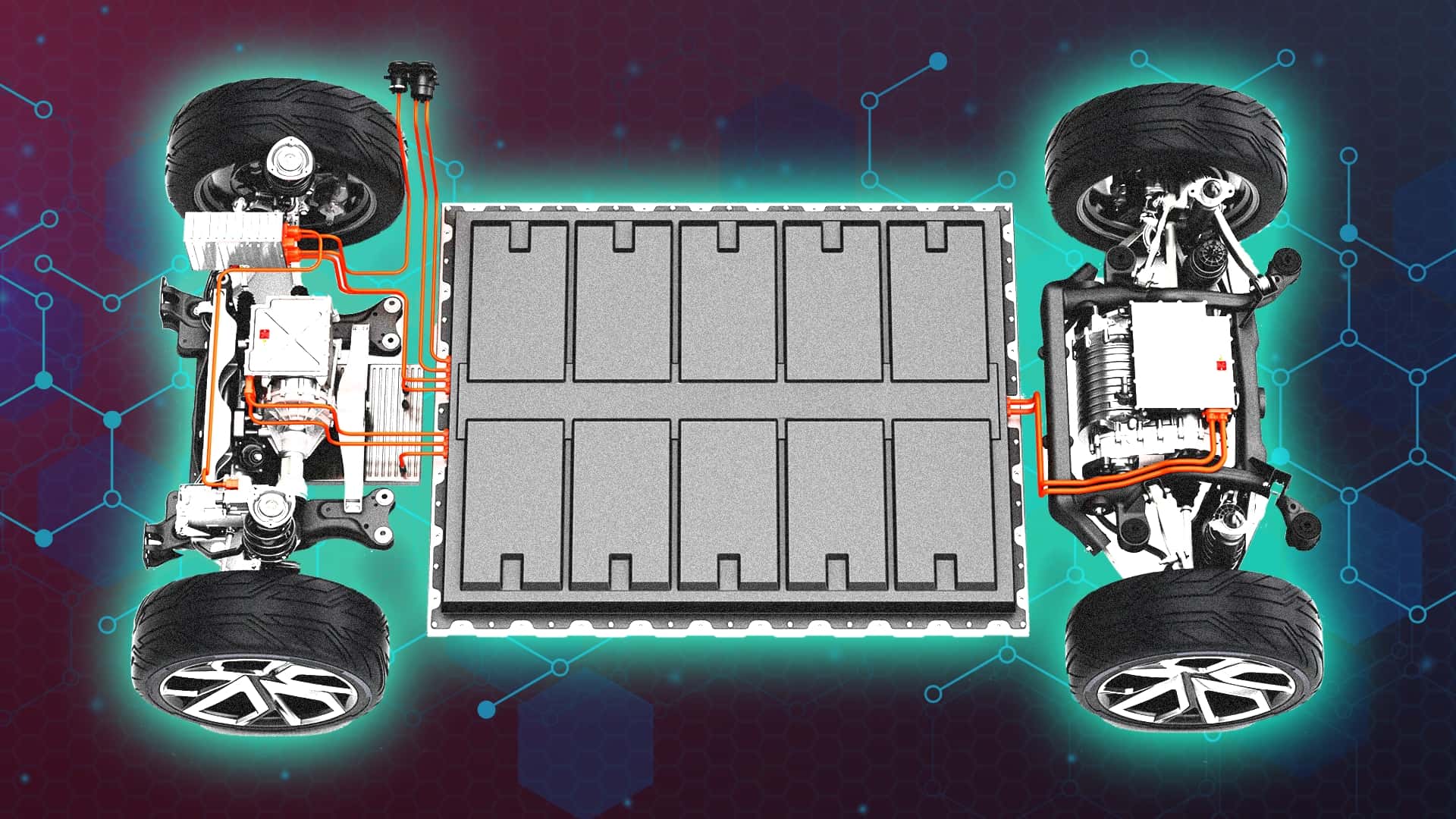
- Battery packaging and integration also significantly influence EV performance and efficiency.
Understanding EV Battery Chemistries
Battery technology plays a crucial role in the performance and efficiency of electric vehicles (EVs). Different chemistries are used by automakers based on factors such as cost, range, and performance. Here’s a breakdown of the most common battery types in use and those in development.
Lead Acid
These are the oldest rechargeable batteries, primarily used today in gas car starters and basic electrical functions. They are inexpensive and widely recyclable but heavy and energy-inefficient for modern EV designs.
Nickel Metal Hydride (NiMH)
Used mainly in hybrid vehicles, NiMH batteries offer durability and perform well in various conditions. However, they share the same weight and energy issues as lead-acid batteries. Automakers like Toyota still employ them, although lithium-ion batteries are gradually replacing them.
Lithium Manganese Oxide (LMO)
LMO batteries have a cheaper, thermally stable manganese cathode, providing fast charging capabilities. They were utilized in earlier EVs like the Nissan Leaf but are no longer favored for long-range applications due to their quicker degradation.
Nickel Manganese Cobalt (NMC)
NMC batteries dominate the market outside of China, known for their high energy density and established supply chains. Many U.S. EVs utilize NMC cells. However, they come with a higher cost and reduced performance in colder temperatures.
Nickel Cobalt Aluminum (NCA)
These batteries feature aluminum, improving stability and reducing degradation. Widely used in Tesla vehicles, they offer high energy density but demand advanced cooling systems to operate effectively.
Lithium Iron Phosphate (LFP)
Offering a more affordable and safer alternative, LFP batteries trade off some energy density for lower production costs. They are gaining traction in the U.S. and Europe, particularly in budget models.
Lithium Manganese Iron Phosphate (LMFP)
An advancement over LFP, LMFP batteries incorporate manganese for improved performance. Chinese manufacturer Gotion claims its LMFP batteries can achieve significant cycle life and extended range.
Lithium Manganese Rich (LMR)
Emerging in the West, LMR batteries reduce the reliance on expensive nickel and cobalt, aiming to enhance driving range while lowering costs. Companies like General Motors are developing these technologies for future applications.
Silicon Anode/Synthetic Graphite
This technology aims to replace traditional graphite anodes with more efficient materials, potentially allowing for smaller, more energy-dense batteries. While promising, mass production remains a key hurdle.
Lithium Metal
Lithium metal batteries utilize lithium itself as the anode, offering high energy density but facing challenges related to dendrite formation, which can compromise battery integrity.
Sodium-Ion
Emerging as a cost-effective alternative for budget EVs, sodium-ion batteries are more abundant than lithium, though less energy-efficient. They are gaining interest, particularly in China.
Solid-State Batteries
Replacing liquid electrolytes with solid materials could enhance range and charging speeds, but challenges in mass production and cost-effectiveness persist. Semi-solid batteries may reach the market first.
Ultimately, the effectiveness of a battery chemistry in EVs is further influenced by packaging and integration techniques. Understanding these elements is vital for predicting the future landscape of electric mobility.
The content above is a summary. For more details, see the source article.









