


Key Takeaways
- Ag robotics investment is diversifying beyond traditional applications, with funding reaching areas like orchid automation and oyster farming.
- 2025 funding for farm robotics is on track to match the 2024 total of $744 million, with ongoing investment activity.
- The Reservoir aims to bridge the gap between prototype development and real-world agricultural applications, focusing on measurable impact in 2026.
Emerging Trends in Ag Robotics Investment
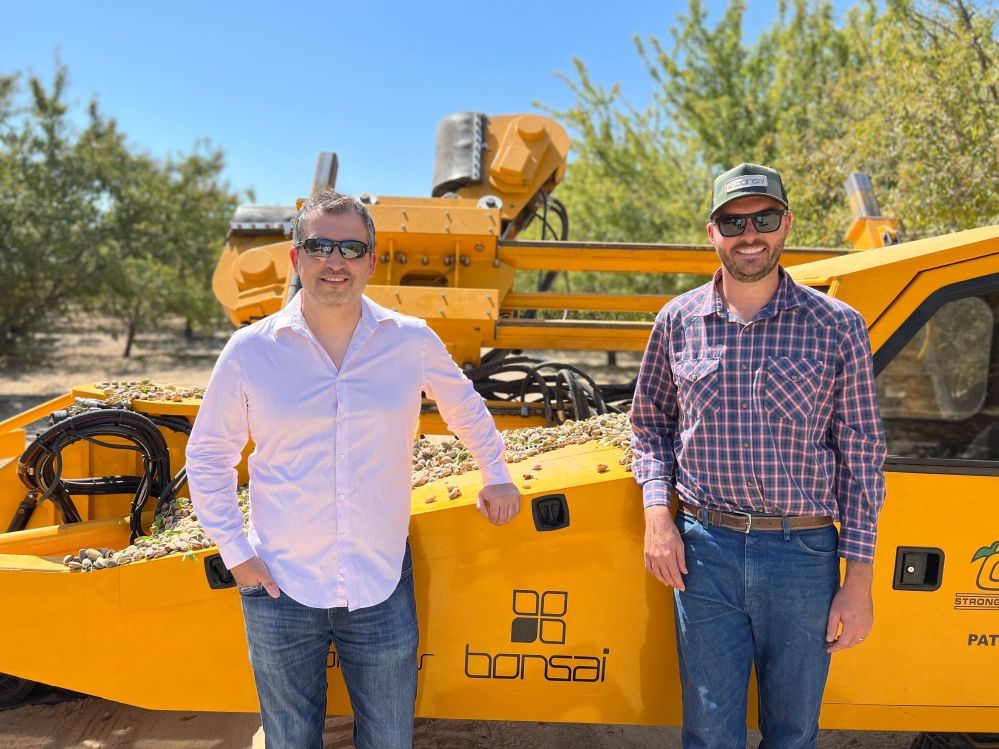
The landscape of ag robotics is shifting, moving beyond conventional tasks such as weeding and precision application. Recent data suggests that investors are increasingly drawn to a broader array of applications, as evidenced by the top 20 investment rounds in 2025. Notable investments include Bonsai Robotics for orchard automation and 4AG for harvesting, along with ventures in sectors beyond traditional agriculture, like Seascape’s oyster farming.
The evolution of ag robotics is evident, as companies transition from single-function machines to multifunctional platforms capable of performing various tasks across different environments, including fields, greenhouses, and marine settings. So far, farm robotics funding in 2025 is approaching the previous year’s total of $744 million, with more deals expected as the year progresses. The AgFunder team plans to release comprehensive investment figures for 2025 in their upcoming Global AgriFoodTech Investment report, highlighting total funding and key players in the sector.
Insights from Danny Bernstein of The Reservoir
Danny Bernstein, CEO of The Reservoir, a newly established venture in California, emphasizes the need to accelerate the path from R&D to commercialization for ag robotics. The Reservoir combines actual farming operations with research and development environments to assist robotics startups in validating and scaling their products in real-world conditions.
With a focus on specialty crops, Bernstein aims to transition the sector in 2026 from a phase of experimentation to one of impactful technology deployment. In doing so, he highlights essential areas such as harvest labor optimization and automation that can significantly impact growers’ economics.
Looking ahead, Bernstein expresses enthusiasm for a new wave of ag robotics characterized by software-driven, resilient machines. These systems are designed to adapt and improve based on real-world data, enabling quicker deployment without the need for constant redesign.
Bernstein also notes that the sector is entering a time of greater capital efficiency. Innovations such as open-source infrastructure and edge vision technology are allowing teams to iterate their designs in production settings instead of being confined to labs, paving the way for advancements in 2026.
This optimistic outlook reflects an evolving ag tech landscape that promises to enhance agricultural productivity and resilience through innovative robotic solutions.
The content above is a summary. For more details, see the source article.









