


Key Takeaways
- AI agents are democratizing computational chemistry, making it accessible to a broader audience.
- Platforms like El Agente, Aitomia, ChemGraph, and Dreams simplify complex computational tasks using natural language processing.
- Challenges remain in precision, cost management, and energy consumption associated with AI frameworks in chemistry.
A New Era in Computational Chemistry
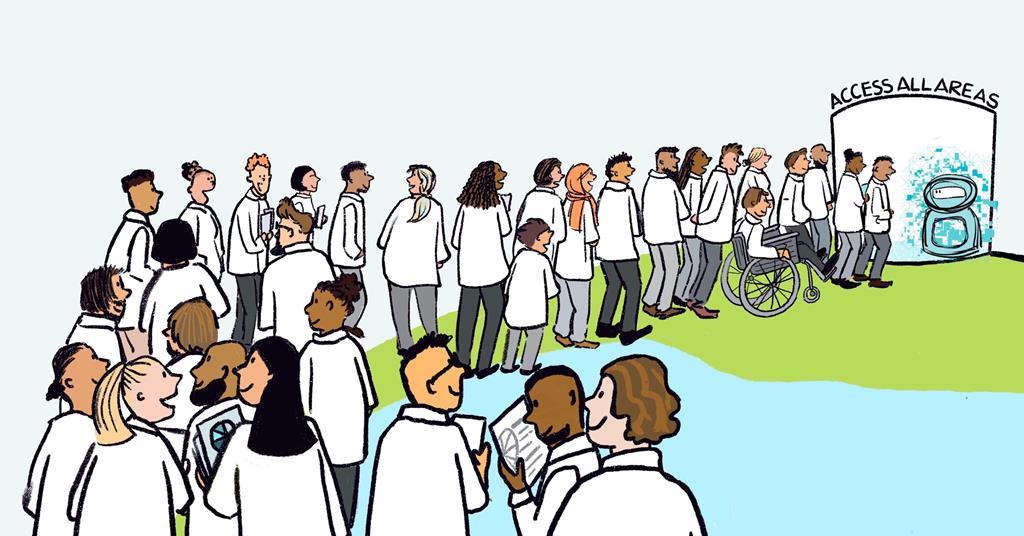
The emergence of large language models (LLMs) is revolutionizing the field of computational and quantum chemistry, shifting it from a specialized domain to a more accessible space. Key platforms have launched, including AI agents that assist researchers in various tasks by processing natural language queries, significantly reducing the barrier to entry for newcomers.
Renowned chemist Alán Aspuru-Guzik from the University of Toronto emphasizes the importance of democratizing computational chemistry, stating, “Why should we restrict computational chemistry to a trained few?” This sentiment resonates with many researchers who have faced significant barriers in accessing resources and training.
Aitomia, led by Pavlo O Dral at Xiamen University, offers an AI platform that supports researchers from calculation setup to result analysis. It facilitates calculations in atomistic and quantum chemistry, leveraging machine learning models for efficient and accurate results. Similarly, El Agente utilizes a hierarchical network of LLM-based agents designed to assist researchers not just in computation but also in producing reliable data.
Despite the advancements, researchers acknowledge ongoing challenges. For instance, Varinia Bernales noted that early career hurdles, including language barriers, limited resources, and complicated software navigation, can hinder progression in the field. The gap between well-funded research groups and those with fewer resources remains pronounced, potentially stifling innovation, particularly in drug discovery and materials science.
ChemGraph, developed by a team at Argonne National Laboratory, aims to make computational chemistry tools accessible to users at all skill levels through a user-friendly interface. Its functionalities extend to tasks like geometry optimization and vibrational analysis, fostering a more inclusive environment for both experienced researchers and newcomers.
The advent of LLMs has played a crucial role in this transformation, with their natural language capabilities enabling more intuitive user interactions. Researchers involved in projects like Dreams at the University of Michigan have emphasized the significance of AI reasoning models in planning complex tasks, facilitating higher efficiency in research workflows.
However, there are concerns about accuracy linked to AI models, with researchers pointing out that even a small percentage of errors can be detrimental in scientific contexts. They are striving for improvements in reliability and precision, with a particular focus on the carbon footprint of these computational tasks, as high-performance computing demands can lead to significant energy costs.
As the field progresses, the four platforms’ creators envision a future where computational chemistry is as easy as conversing in one’s native language. The goal is a collaborative network of agents, enabling a comprehensive and integrated approach to chemistry research. The ongoing development signals significant changes, making computational chemistry accessible to a diverse array of users and potentially increasing participation in the field.
The content above is a summary. For more details, see the source article.









