


Key Takeaways
- Nvidia CEO Jensen Huang highlights a historic infrastructure buildout for artificial intelligence, with hundreds of billions already invested.
- Huang envisions AI as a multi-layered system, prioritizing energy, chips, cloud infrastructure, and AI applications.
- He advocates for countries to develop their own AI systems reflecting local languages and cultures, aiming to alleviate workforce fears over automation.
Infrastructure Buildout for AI
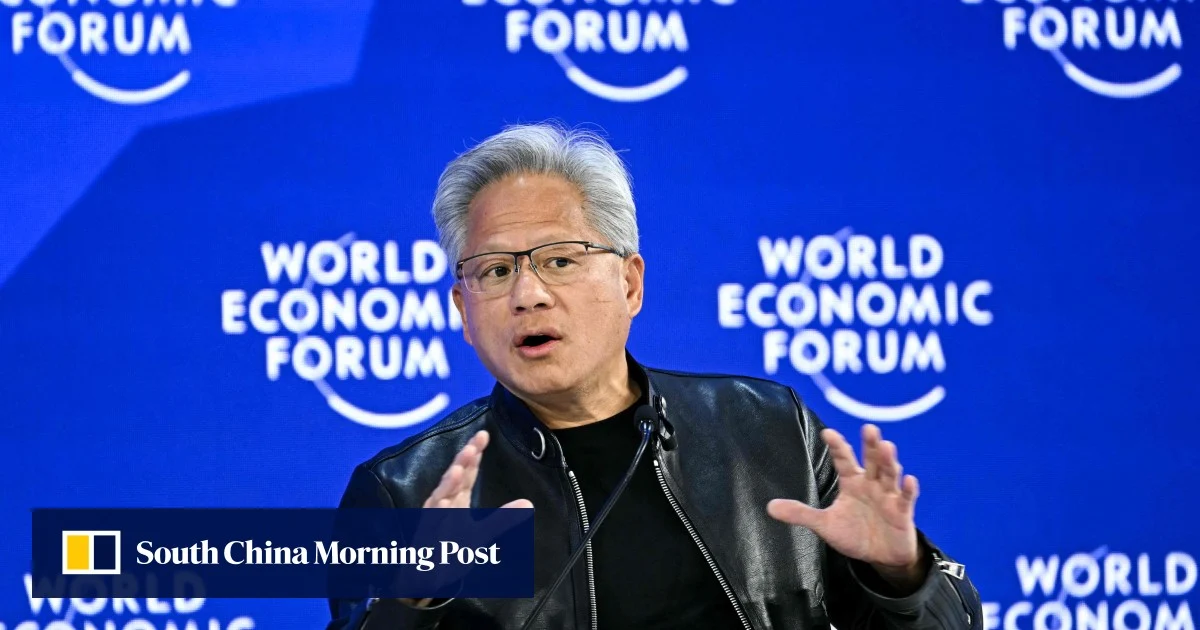
The world is undergoing an unprecedented infrastructure development aimed at establishing a robust artificial intelligence (AI) framework, as discussed by Nvidia CEO Jensen Huang during a recent appearance at the World Economic Forum (WEF) in Davos. Huang stated that hundreds of billions have already been invested, with trillions more required to complete the necessary infrastructure.
Describing the evolving AI landscape, Huang likened it to a “five-layered cake.” At the foundation is energy, which is essential for powering AI systems. This is followed by chips, which serve as the computational backbone, and cloud infrastructure, necessary for data storage and processing. The uppermost layers consist of AI models and applications, which leverage the groundwork laid by the previous layers.
Huang emphasized the importance of individual countries developing their own AI systems. He argued that local adaptation is critical, as these systems should reflect the unique languages and cultures of their respective nations. This approach not only personalizes AI technology but also fosters a sense of ownership and relevance among users.
Amid growing concerns about AI’s potential impact on employment, Huang attempted to reassure stakeholders about the future of work in the face of automation. He acknowledged the fears surrounding massive job displacement but suggested that the evolution of AI could create new opportunities rather than merely eliminating existing jobs. He encourages a balanced perspective on the integration of AI into various sectors, advocating for proactive approaches to workforce development.
The significance of energy in AI infrastructure is becoming increasingly recognized globally, as governments assess the requirements to maintain competitiveness in the AI sector. This recognition marks a critical turning point in how energy and technology intersect in the quest for AI supremacy.
Overall, concerns about AI’s implications for job security contrast sharply with the optimistic vision for its potential. Huang’s remarks pave the way for discussions on responsible AI development, emphasizing the need for a collaborative approach between technology and society. As nations forge their own paths in AI advancements, the dialogue on its implications will continue to evolve.
The content above is a summary. For more details, see the source article.









