


Key Takeaways
- A federal judge ruled that the U.S. DOT unlawfully froze the $5 billion National Electric Vehicle Infrastructure initiative.
- The NEVI program, part of the bipartisan infrastructure law, aims to build charging infrastructure across the U.S.
- The ruling enables states to access funding for EV charging projects without federal interference.
Judge Rules in Favor of NEVI Funding
A recent ruling from U.S. District Judge Tana Lin determined that the U.S. Department of Transportation (DOT) and the Federal Highway Administration acted unlawfully by abruptly freezing the National Electric Vehicle Infrastructure (NEVI) initiative, which is funded at $5 billion. The judge stated that the federal government cannot withhold NEVI funds for reasons not outlined in the Infrastructure Investment and Jobs Act of 2021.
The judge criticized the actions of the DOT, noting, “Such capriciousness runs counter to the Administrative Procedure Act,” emphasizing that the program cannot be stopped suddenly without proper justifications. The lawsuit prompting the ruling was filed by 20 states, the District of Columbia, and environmental groups such as the Sierra Club and the Southern Alliance for Clean Energy.
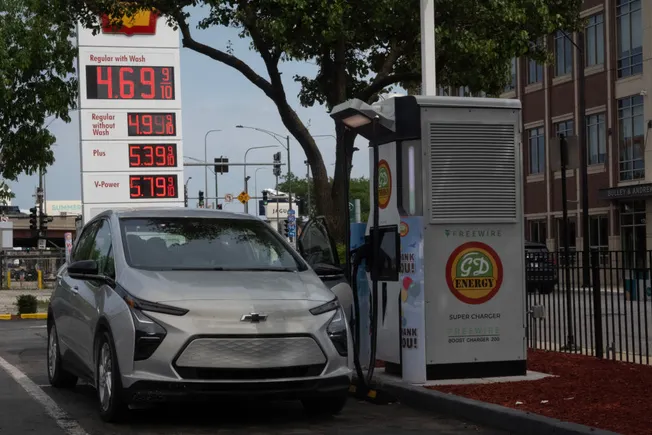
The NEVI program, a key component of the bipartisan infrastructure law signed by President Biden, is designed to establish publicly accessible EV charging stations, particularly along alternative fuel corridors. This program can cover up to 80% of the costs of eligible projects, which must include certain standards—charging stations should have at least four ports capable of delivering 150 kW, among other requirements.
As per a February 2024 report from the National Association of Regulatory Utility Commissioners, NEVI funds are applicable for various state project costs, including the maintenance and upgrading of existing charging stations, small grid enhancements, and installation of on-site energy resource equipment related to vehicle charging.
The regulatory landscape for charging stations has been inconsistent, according to NARUC, which noted that NEVI’s federal standards provide much-needed uniformity. States needed to submit charging infrastructure plans to access the NEVI funding, but many current charging stations are located at private businesses, such as gas stations and convenience stores.
In February 2023, the Trump administration paused the NEVI program to reassess its guidance for efficiency, eventually issuing streamlined guidance in August following a court ruling that lifted the previous funding freeze. Secretary of Transportation Sean Duffy indicated that the DOT aimed to respect congressional intentions while ensuring efficient use of federal resources.
However, the Trump administration’s requirements for resubmitting plans caused delays, with states like Delaware facing funding shortfalls. The recent court ruling is seen as a significant win for the Southern Alliance for Clean Energy, which stated, “The Court’s order clears the way for states to implement the NEVI plans they have worked for years to develop.”
In response to the ruling, the Department of Transportation mentioned that their updated August guidance aligned with the Trump administration’s focus on safety and efficiency. They stated that 49 states have had their revised plans approved and can now access funds, with claims that 39% more NEVI funds were obligated compared to the Biden administration’s record over three years, although details on the disbursement of these funds remain unclear.
The content above is a summary. For more details, see the source article.









