


Key Takeaways
- European nations, including the UK and Germany, committed to producing 100 GW of offshore wind energy through collaborative projects.
- This initiative aims to enhance energy security amid rising concerns about dependency on Russian gas following the Ukraine conflict.
- Germany will also introduce measures to revive its offshore wind market, including stabilizing revenue for investors.
European Nations Unite for Clean Energy Pact
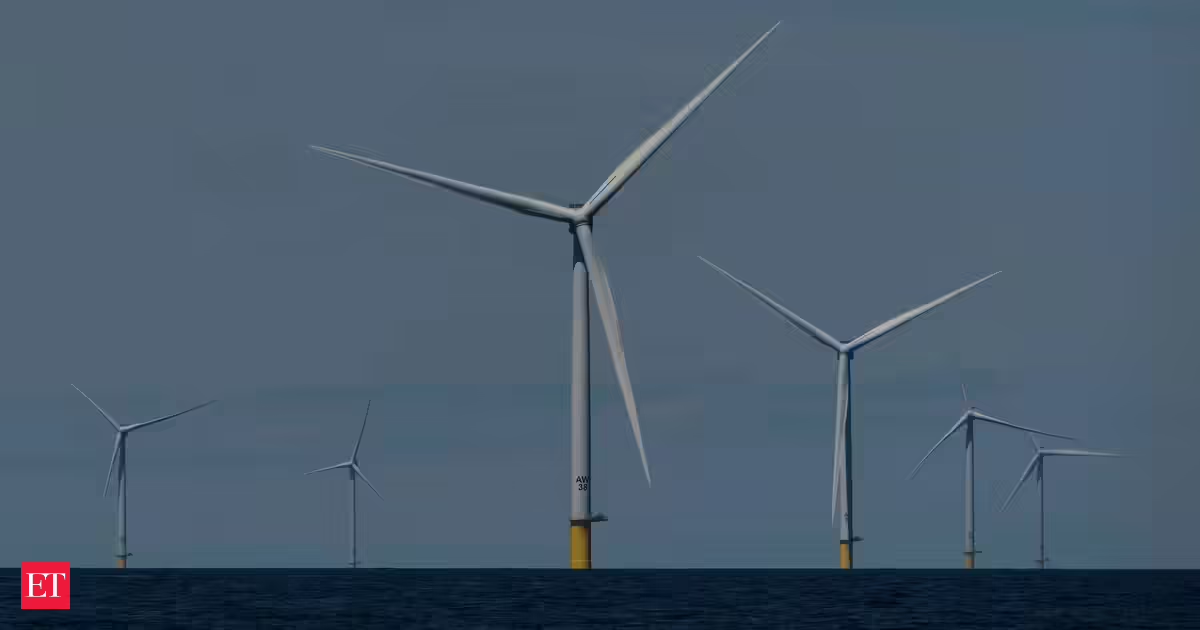
In a significant move towards sustainable energy, Britain, Germany, Denmark, and other European nations signed a clean energy agreement at the North Sea Summit in Hamburg. The pact aims to generate 100 gigawatts (GW) of offshore wind power capacity through cooperative projects. This commitment stands in stark contrast to U.S. President Donald Trump’s criticism of renewable energy initiatives, which he suggests undermine economic viability.
British Energy Minister Ed Miliband emphasized the importance of this agreement, stating it empowers the UK to transition away from fossil fuels, enhancing energy sovereignty and creating a more robust energy landscape. This collaboration aligns with a broader goal set by North Sea countries to achieve 300 GW of offshore wind capacity by 2050, a target intensified by concerns surrounding Europe’s reliance on Russian gas amid geopolitical tensions following Russia’s invasion of Ukraine.
Industry association WindEurope noted that the agreement could facilitate significant economic impacts, predicting a generation of 1 trillion euros in economic activity and the creation of 91,000 jobs. The addition of 100 GW of offshore capacity is expected to radically transform Europe’s energy market, as current data shows that existing offshore and onshore wind sources provide 19% of the region’s electricity from a total capacity of 258 GW.
The summit witnessed participation from several countries including Belgium, France, Iceland, Ireland, Luxembourg, the Netherlands, and Norway, all united under this ambitious clean energy initiative. German Economy Minister Katherina Reiche highlighted the collaborative effort to enhance energy affordability and regional strategic independence through synchronized planning of expansion, industrial growth, and energy distribution.
In a separate development, Reiche announced new efforts to revive Germany’s struggling offshore wind industry, which has faced challenges following unsuccessful bids in recent tenders. A new package will include Contracts for Difference, a mechanism intended to provide revenue stability for investors while enabling cost-effective energy generation. This approach aims to attract more bids by ensuring reliable income for stakeholders involved in wind energy projects.
The UK is also looking to sign agreements with smaller nations to streamline the development of cross-border wind farms. Recently, the UK celebrated a record achievement in its offshore wind auction, securing contracts for projects totaling 8.4 GW of capacity.
This commitment marks a proactive approach by Western and Northern European governments to prioritize renewable energy efforts, affirming their dedication to transitioning toward a low-carbon economy while enhancing energy security and economic resilience.
The content above is a summary. For more details, see the source article.









