


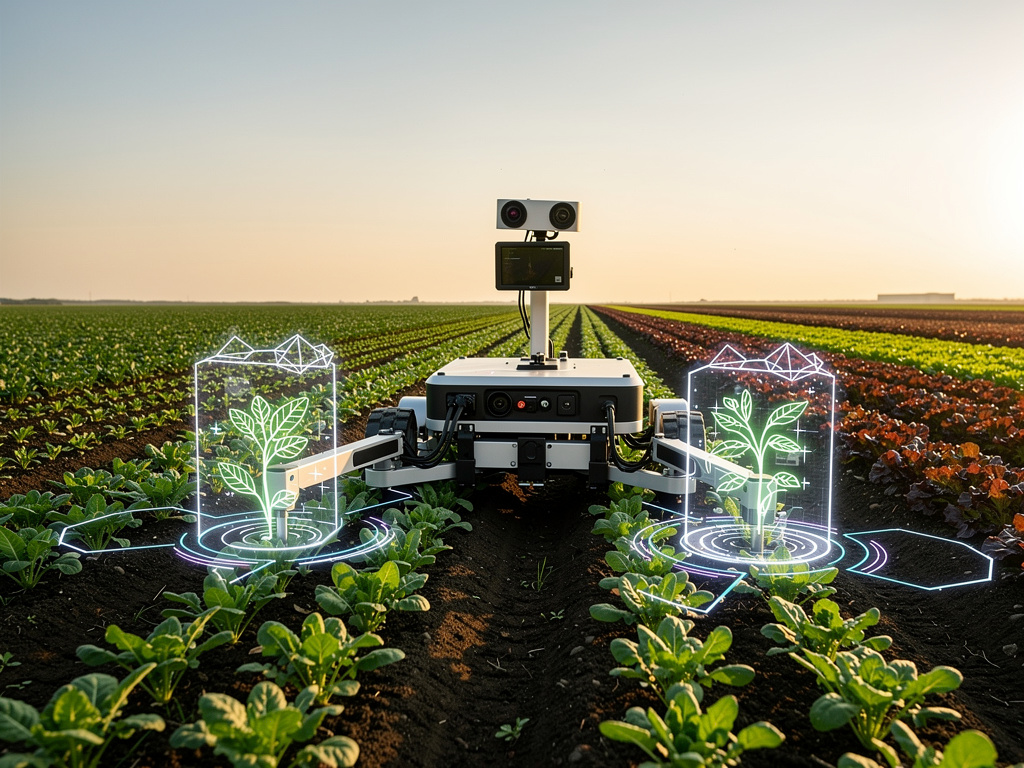
Key Takeaways
- Carbon Robotics has launched an advanced AI model that accurately identifies individual plants, revolutionizing precision farming.
- The technology allows farmers to make data-driven decisions for irrigation, fertilization, and pest management, enhancing crop health and yield.
- Challenges remain for widespread adoption due to varying farm scales, financial constraints, and data ownership concerns.
Revolutionizing Plant Identification in Farming
Carbon Robotics, based in Seattle, has introduced a groundbreaking artificial intelligence model that detects and identifies individual plants with remarkable precision, a game-changer for precision agriculture. This technology enhances the company’s existing fleet of autonomous weeding machines, which have already transformed weed management across thousands of acres.
The AI model was developed through years of training on millions of images captured in real-world farm conditions, overcoming limitations associated with generic computer vision frameworks. It can discern crop types, assess plant health, identify diseases, and predict yield capacities—enabling farmers to optimize irrigation, fertilization, and pest management like never before.
The training approach differentiates Carbon Robotics from typical AI development. Their dataset reflects diverse agricultural conditions, accounting for variances in weather, soil types, and plant growth stages. This comprehensive training results in an AI model capable of robust performance across the wide array of scenarios present in modern farming.
Though known initially for its laser weeding technology, Carbon Robotics’ new model is set to impact various aspects of agriculture, including crop breeding, disease monitoring, and harvest timing. For instance, plant breeders could use the technology to evaluate different genetic variants efficiently, while disease surveillance could initiate early interventions against pathogens. Additionally, harvests can be timed precisely, ensuring maximum quality.
AI-powered plant identification promises significant economic advantages as it shifts from a one-size-fits-all approach to a targeted resource allocation process. This means applying water, fertilizers, and pesticides where they are truly needed, reducing expenses while enhancing yields. Such precision also yields environmental benefits, minimizing runoff and chemical usage, which are critical as drought and resource competition intensify.
However, integrating this technology into agricultural practices poses challenges. The diverse scale of farming operations and varying financial capacities mean that a solution that benefits large specialty crop growers may not suit smaller farmers. Additionally, the capital required for these robotic systems may deter farmers operating on thin margins.
Compounding these challenges is the issue of data ownership. The detailed plant-level data gathered raises questions about who owns the information and how it can be used. Establishing trust through transparent data policies is vital as farmers navigate the complexities of AI adoption.
Moving forward, Carbon Robotics’ technology is poised to become a cornerstone of agricultural infrastructure, essential in an era marked by climate change and rising resource costs. Early adopters of AI will likely gain significant advantages, emphasizing the need for support systems in agricultural education, financing, and regulation to facilitate this transition seamlessly. The integration of AI into farming practices could either enhance productivity and sustainability or exacerbate existing inequalities within the agricultural sector, making these developments critical to monitor.
The content above is a summary. For more details, see the source article.









