


Key Takeaways
- The U.S. Army plans to implement autonomous drones and robots for cleaning chemical and biological weapons.
- The Autonomous Decontamination System (ADS) aims to enhance troop safety and efficiency in contamination mitigation.
- The Army is also upgrading the Stryker armored vehicle with technologies for improved CBRN reconnaissance and decontamination.
Autonomous Systems for Decontamination
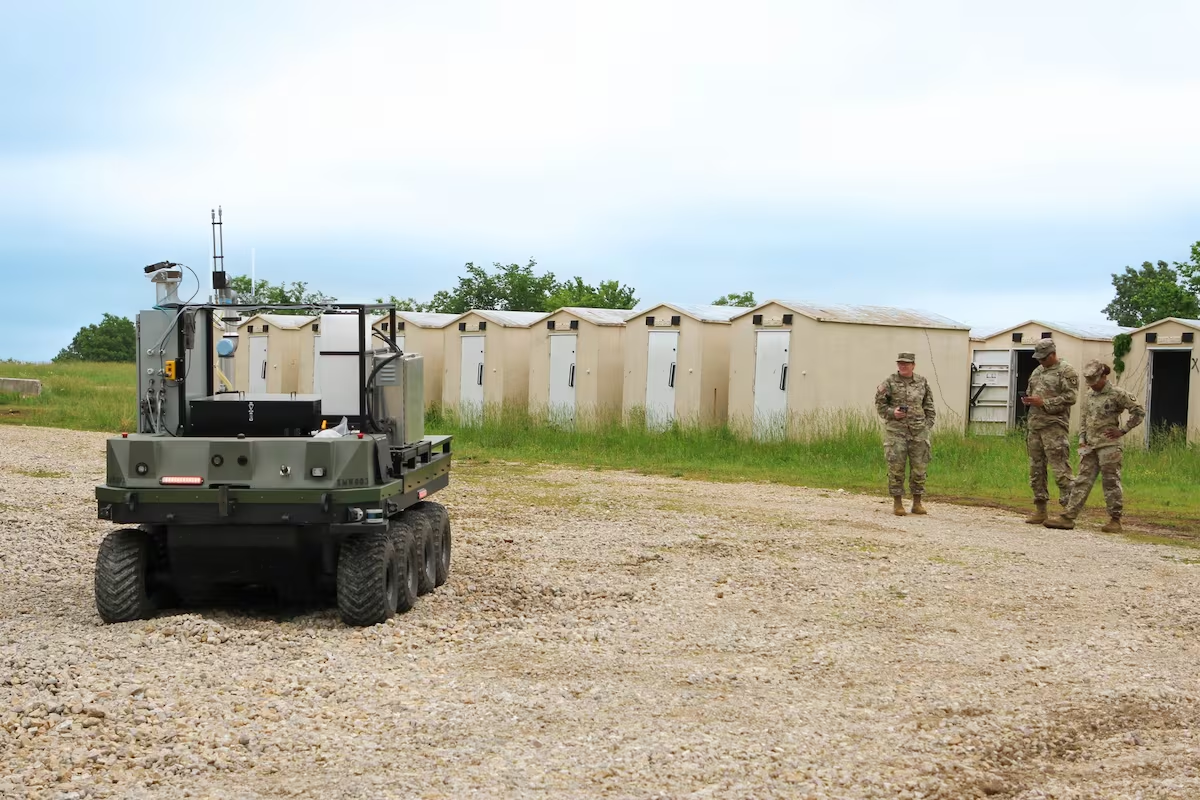
The U.S. Army is developing the Autonomous Decontamination System (ADS) to deploy airborne drones and ground robots tasked with cleaning up chemical and biological weapons. This initiative aims to preserve troop safety while relieving the demand on specialized chemical warfare units that may not always be available.
The ADS is designed to allow small unit formations to deliver a larger-scale decontamination response for critical mission equipment. As outlined in a recent Request for Information (RFI) due by February 20, the goal is to streamline decontamination processes, which are traditionally resource-intensive in terms of time, logistics, and personnel. The system is expected to use robotic technology to minimize the risk of exposure for warfighters.
The Joint Project Manager for Chemical, Biological, Radiological, and Nuclear Protection (JPM CBRN Protection) is focusing on creating mobile, both tethered and untethered, robotic systems suitable for light and medium tactical vehicles. The required functions for these decontamination bots include:
– Pre-washing contaminated vehicles with water.
– Mapping contamination footprints accurately.
– Applying decontamination agents precisely based on the contamination data.
– Conducting a post-wash assessment with water and existing detection technology.
Contractors are being requested to detail the technical capabilities of their systems, such as navigational aids and levels of autonomy, which could range from fully autonomous to manual remote control. The decontamination robots will need to be compatible with various decontaminants in solid, liquid, and foam forms.
The need for such advancements arises from the increasing threats posed by weapons of mass destruction, including those from rogue nations and terrorist groups employing advanced technologies like artificial intelligence to develop biological weapons. In response, the Army is looking to bolster its Chemical, Biological, Radiological, and Nuclear (CBRN) defense capabilities.
In addition to the ADS initiative, the Army is modernizing the CBRN variant of the Stryker armored vehicle. The Nuclear, Biological and Chemical Reconnaissance Vehicle Sensor Suite Upgrade (NBCRV SSU) aims to outfit the Stryker with onboard drones that can scout for contaminants without endangering the crew. Enhancements include improved maintainability and reliability, as well as the implementation of unmanned aerial vehicles and modular mission payload systems that allow for equipment customization.
Interestingly, despite these high-tech upgrades, the Army has made CBRN training optional for its units. An update to Army Regulation 350-1 now permits commanders to decide whether to include CBRN training in their unit readiness, suggesting a potential gap in preparedness for biological and chemical threats.
The content above is a summary. For more details, see the source article.









