


Key Takeaways
- Manufacturers and logistics companies are adopting the SGP.32 standard for managing global SIM profiles, enabling remote switching without physical swaps.
- Low-power wide-area networks (LPWAN), particularly LoRaWAN, are becoming vital for utility sectors, offering significant ROI through leak detection and regulatory compliance.
- Industries are focusing on integrating IoT technology into existing workflows while addressing the complexities of data management and real-time automation.
Enhanced Connectivity Solutions
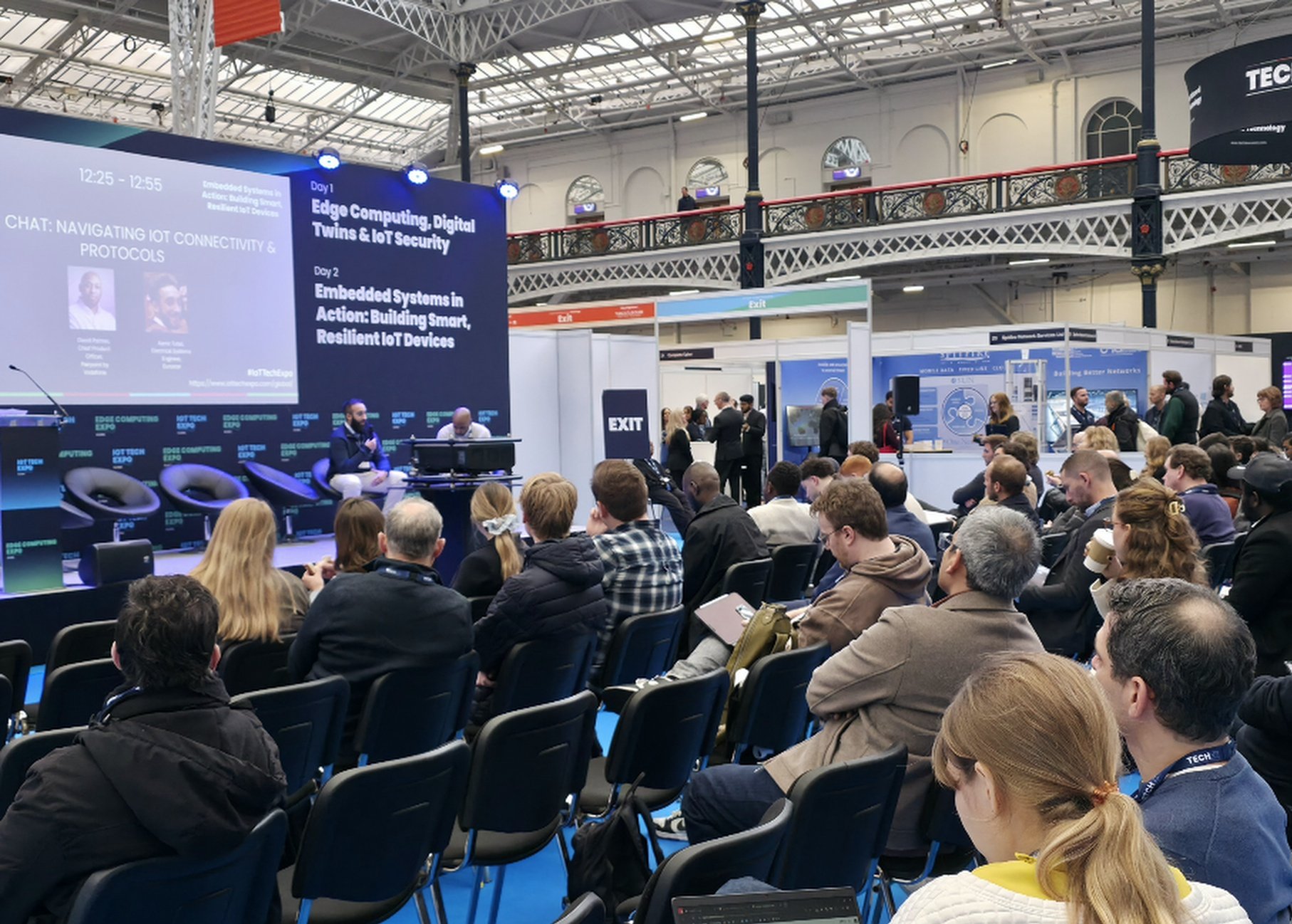
The second day of the IoT Tech Expo Global and Edge Computing Expo shifted focus to the engineering realities of IoT networks. Instead of broad digital transformation topics, discussions centered on specific protocols, hardware constraints, and the logistics of managing extensive device fleets.
One primary friction point for logistics directors is managing global SIM profiles. Julian Skeels from Expereo highlighted how the SGP.32 standard allows for factory-provisioned connectivity. This advancement lets manufacturers and logistics companies remotely switch operator profiles, significantly reducing the need for physical SIM swaps.
Real-world applications of this connectivity were exemplified by Eric Bobek from Just Eat, who showcased a case study on scaling IoT messaging for one million devices, revealing the gap between laboratory and real-world performance. Challenges such as latency and packet loss often undermine vendor throughput claims in operational settings.
A panel featuring industry leaders examined the future infrastructural requirements for connectivity, noting the importance of integrating 5G, Wi-Fi 6, and satellite technologies. Hybrid approaches are emerging as standard practices to maintain network uptime, given that no single technology can manage all operational demands.
Embedded Systems and Automation Progress
As connectivity solidifies, processing logic is increasingly moving closer to physical assets. Szymon Kulec from RavenDB remarked on advancements in chipsets that allow machine learning operations to occur directly on edge devices, thereby reducing latency in decision-making processes.
Yulia Samoylova from Datadog discussed the evolution of software-defined automation, which provides greater flexibility by separating control logic from hardware. This flexibility allows facility managers to update automation routines efficiently, minimizing downtime costs.
However, the growing complexity of edge devices presents maintenance challenges. Nikita Koselev from Mastercard proposed advanced telemetry and remote diagnostics for debugging at scale, emphasizing the inadequacies of traditional methods in large fleets. Isaac Bakare from BGC Group supported this by discussing how to build fault-tolerant systems, emphasizing the importance of engineering for adverse network conditions.
Paul Airey from Anthony Nolan also contributed, discussing connectivity in high-value assets like aviation, particularly the specific challenges faced by helicopter operations.
Low-Power Networks in Utilities
Despite the spotlight on high-bandwidth solutions, low-power wide-area networks (LPWAN) continue to dominate utility applications. Dr Gurpinder Dhillon from Senzing shared practical examples of LoRaWAN deployments, which excel in delivering long-range communication with minimal energy requirements.
Ha Cole from Microsoft detailed how LoRaWAN is applied in smart water infrastructures, emphasizing that early leak detection enhances capital efficiency and compliance. The architecture necessary for these networks was explored by Parinita Kothari from Lloyds Banking Group, who noted a growing interest in using data from these networks for risk assessment and insurance modeling.
Commercial viability models for monetizing LoRaWAN solutions were highlighted by Jane Smith from ThoughtSpot, indicating a shift toward service-based data solutions.
Integrating IoT in Industrial Operations
The integration of industrial operations with urban planning was a key focus, with a panel discussing the challenges of merging legacy utility systems with modern sensor networks. Aswin Peter from British Gas illustrated how edge computing contributes to operational optimization by reducing unplanned outages through continuous monitoring.
Governance and Standards in IoT
Critical to the success of these initiatives is standardization in communication protocols like MQTT, CoAP, and LwM2M, as discussed by Bogdan Vrusias from The Economist. Understanding these standards is vital for long-term system design.
Environmental, Social, and Governance (ESG) considerations are also propelling IoT adoption, with discussions led by Madhusudhan Konda on sustainability monitoring and early warning systems for disasters.
The expo demonstrated the readiness of mass-scale IoT technologies but also emphasized the challenges enterprise leaders face in integrating these innovations into their legacy operations and managing resultant data effectively.
The content above is a summary. For more details, see the source article.









