


Key Takeaways
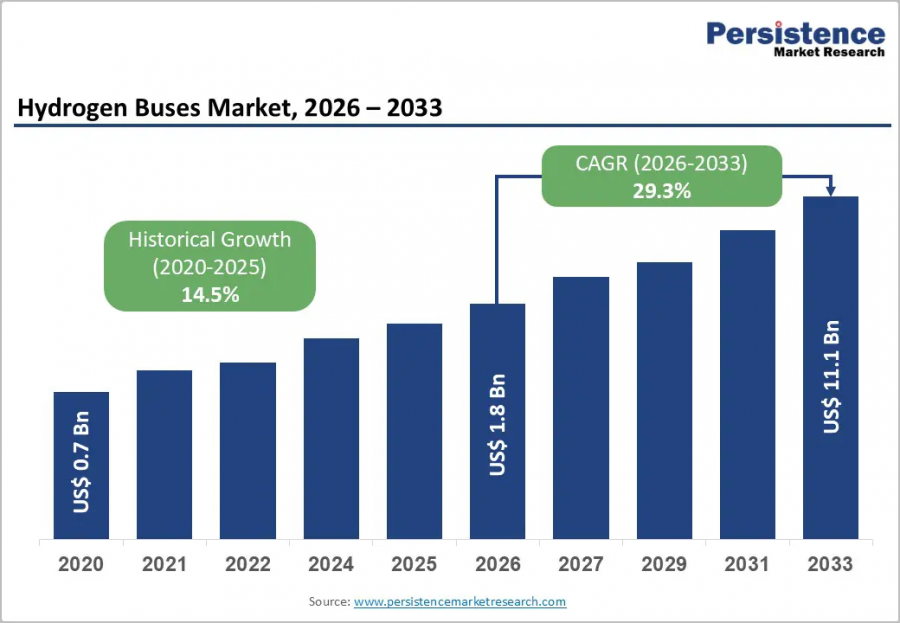
- The hydrogen buses market is projected to expand from US$ 1.8 billion in 2026 to US$ 11.1 billion by 2033, with a CAGR of 29.3%.
- Increased environmental concerns and government initiatives are driving the adoption of hydrogen fuel technologies.
- Major automotive players are investing in hydrogen infrastructure and vehicle development to meet future demand.
Market Growth Projections
The hydrogen buses market is set to experience substantial growth, projected to increase from US$ 1.8 billion in 2026 to US$ 11.1 billion by 2033. This expansion reflects an impressive Compound Annual Growth Rate (CAGR) of 29.3%. The rise in market value will be predominantly driven by the growing focus on sustainable transportation solutions and the need for reduced emissions in urban areas.
Environmental Influence
Heightened environmental issues have prompted both governments and the automotive industry to seek alternative fuel methodologies. Hydrogen-powered buses offer a promising solution that produces only water vapor during operation, thus significantly lowering pollutants in urban settings. As cities around the world struggle with air quality, the shift towards hydrogen technology becomes increasingly appealing.
Automotive Industry Initiatives
Key automotive manufacturers are making substantial investments in the development of hydrogen fuel infrastructure. Companies are focusing on building refueling stations and enhancing the technology behind hydrogen fuel cells. This effort aims to create a comprehensive ecosystem that supports the viability and accessibility of hydrogen buses. The collaboration between private entities and government bodies is expected to accelerate the implementation of these technologies on a larger scale.
With the ongoing emphasis on eco-friendly transportation, the hydrogen bus market stands at the forefront of innovation, poised to change the landscape of public transport. As more cities take steps to electrify their public transport fleets and reduce their carbon footprints, hydrogen buses are likely to become increasingly integral in achieving these objectives.
The content above is a summary. For more details, see the source article.









