


Key Takeaways
- La Trobe University has reduced its carbon emissions by 80%, equivalent to 45,000 tons of CO2, in collaboration with Schneider Electric.
- The university is on a $75 million, 10-year journey to achieve Net Zero by 2029, with Shepparton as its first fully electric campus.
- Key initiatives include the La Trobe Solar Farm, incorporating 4,300 solar panels and a battery energy storage system for enhanced energy reliability.
La Trobe’s Ambitious Decarbonization Project
La Trobe University has announced a significant reduction in operational carbon emissions by 80%, amounting to a reduction of 45,000 tons of CO2. This achievement is part of a collaboration with Schneider Electric, aimed at modernizing the university’s infrastructure, enhancing operational efficiency, and integrating renewable energy.
As one of the global top 250 universities, La Trobe is undertaking an ambitious decarbonization effort with a commitment of $75 million over the next decade to reach Net Zero by 2029. The initiative includes campuses in Melbourne, regional Victoria, and Sydney, with Shepparton now recognized as the university’s first fully electric campus.
A cornerstone of this transformation is the La Trobe Solar Farm, which is the largest urban solar project in Victoria. Supported by Schneider Electric technology, this 3.5-hectare solar farm consists of 4,300 solar panels that produce 2.9 MW of renewable energy. The facility is augmented by a 2.5 MW/4.5 MWh battery energy storage system (BESS), which stores excess solar energy while bolstering energy reliability and grid stability.
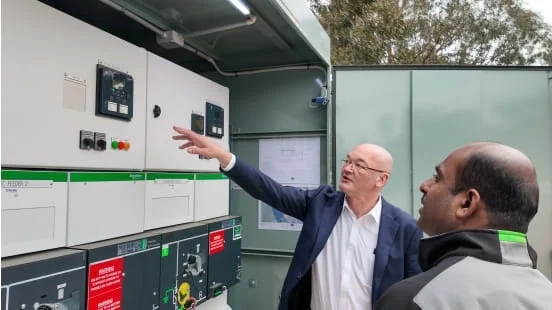
Through Schneider Electric’s expertise in sustainable energy systems, the integration of the solar farm and the battery storage system with La Trobe’s existing infrastructure has led to operational improvements and emission reductions. Medium-voltage upgrades have been made via SF-free SM AirSeT switchgear and digital energy management technologies, ensuring a reliable power supply while supporting Scope 1 decarbonization goals. The design promotes a circular economy by extending asset lifecycles from 30 to 40 years.
Utilizing Schneider Electric’s EcoStruxure™ Power Monitoring Expert, La Trobe has gained real-time insights into energy consumption patterns and optimization possibilities across its campuses. This digital infrastructure supports electrification, renewable load balancing, and long-term decarbonization strategies.
The transformation extends beyond energy systems to include 76 electric vehicle charging stations, electrification upgrades, solar generation on rooftops and carports, and a campus-wide biodiversity plan. Each of these elements contributes to La Trobe’s ambitious goal of achieving net zero emissions by 2029.
Andrew Jennings, Executive Director of Net Zero, Facilities, Assets and Services at La Trobe University, expressed pride in the partnership with Schneider Electric, stating, “This project is a true reflection of our continuing commitment to a more sustainable future for generations to come.” He highlighted the complexity of modernizing infrastructure while integrating new renewable systems as a significant challenge that has been met without compromising the student and staff experience.
Achieving an 80 percent reduction in emissions is a critical milestone, laying a strong foundation for further developments in the pursuit of their Net Zero 2029 goal. Future electricity distribution upgrades are planned over the next five years, continuing to advance La Trobe’s sustainability efforts across its campuses.
The content above is a summary. For more details, see the source article.









