


Key Takeaways
- House Agriculture Committee approved a $18 billion farm bill, securing significant bipartisan support despite partisan tensions.
- Major disputes focused on cuts to the Supplemental Nutrition Assistance Program and the ongoing challenges of ethanol policy.
- Legislation’s viability in full House or Senate remains uncertain, as previous bipartisan coalitions face strain.
Legislation Moves Forward Amid Controversy
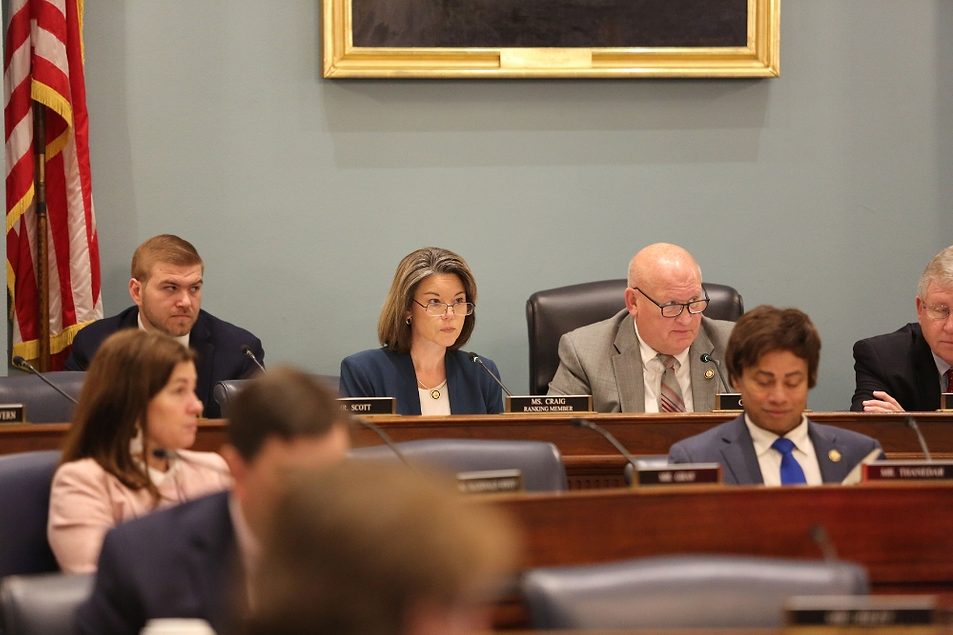
Republicans successfully moved a farm bill through the House Agriculture Committee early Thursday, with a vote of 34-17 garnering notable bipartisan support, including backing from seven Democrats. This comes against a backdrop of partisan disputes surrounding issues like food assistance cuts and ethanol policies. Notably, the bill was designed to authorize critical programs absent from the GOP’s larger legislative agenda, the One Big Beautiful Bill Act (OBBBA), which has not included a comprehensive farm bill since 2018.
House Agriculture Committee Chairman Glenn “GT” Thompson hailed the legislation as exceptionally bipartisan. However, the committee’s top Democrat, Angie Craig, characterized it as a “shell of a farm bill” likely to struggle for support on the House floor if it even reaches that stage. Democrats proposed several amendments aimed at restoring cuts to the Supplemental Nutrition Assistance Program (SNAP), citing increased grocery prices and heightened demand for food aid. Thompson acknowledged a desire to strengthen SNAP but cited budgetary constraints as a barrier to achieving this.
The conversation turned to the ethanol industry as discussions emerged about enshrining year-round E15 availability into law. Despite Thompson’s resistance to its inclusion in the farm bill, the topic highlighted an urgent need for certainty for farmers and consumers amid global volatility in gas prices due to geopolitical tensions.
Tensions also flared during the markup, particularly over a proposed amendment from Democrats aimed at reallocating Emergency Food Assistance Program funds. This led to accusations of “political theater,” with Craig challenging Republican Rep. Brad Finstad’s description of her behavior as a “hissy fit.” The exchange underscored the political stakes as midterm elections approach.
Moments of levity surfaced amid heated debates, particularly a light-hearted “yogurt-off” competition between representatives from Wisconsin and New York, showcasing a more humorous side to the negotiations.
Several controversial amendments became focal points during discussions. Among them were proposals to strike language preventing state “failure to warn” claims against pesticide manufacturers and provisions that could invalidate California’s animal welfare law, Proposition 12. With climate considerations also at play, a proposal to shift $1 billion from the Environmental Quality Incentives Program was debated, emphasizing ongoing concerns about conservation funding.
The bill addresses various agricultural priorities, including food loss reduction and potential adjustments to the United States-Mexico-Canada Agreement. Notably, it retains considerable funding for the Environmental Quality Incentives Program, ensuring resourcing levels remain above the previous year.
The ongoing debates emphasize a growing divide in agricultural policy discussions, blending issues of nutrition, environmental stewardship, and farmer support as parties grapple with the future of bipartisan cooperation in crafting farm legislation.
With contributions from Oliver Ward.
The content above is a summary. For more details, see the source article.









